India has approximately 60 days of fuel stock cover, and one month's supply of LPG is readily available. There are no shortages of petrol, diesel, or LPG, and reports of shortages are a deliberate misinformation campaign aimed at creating panic buying.
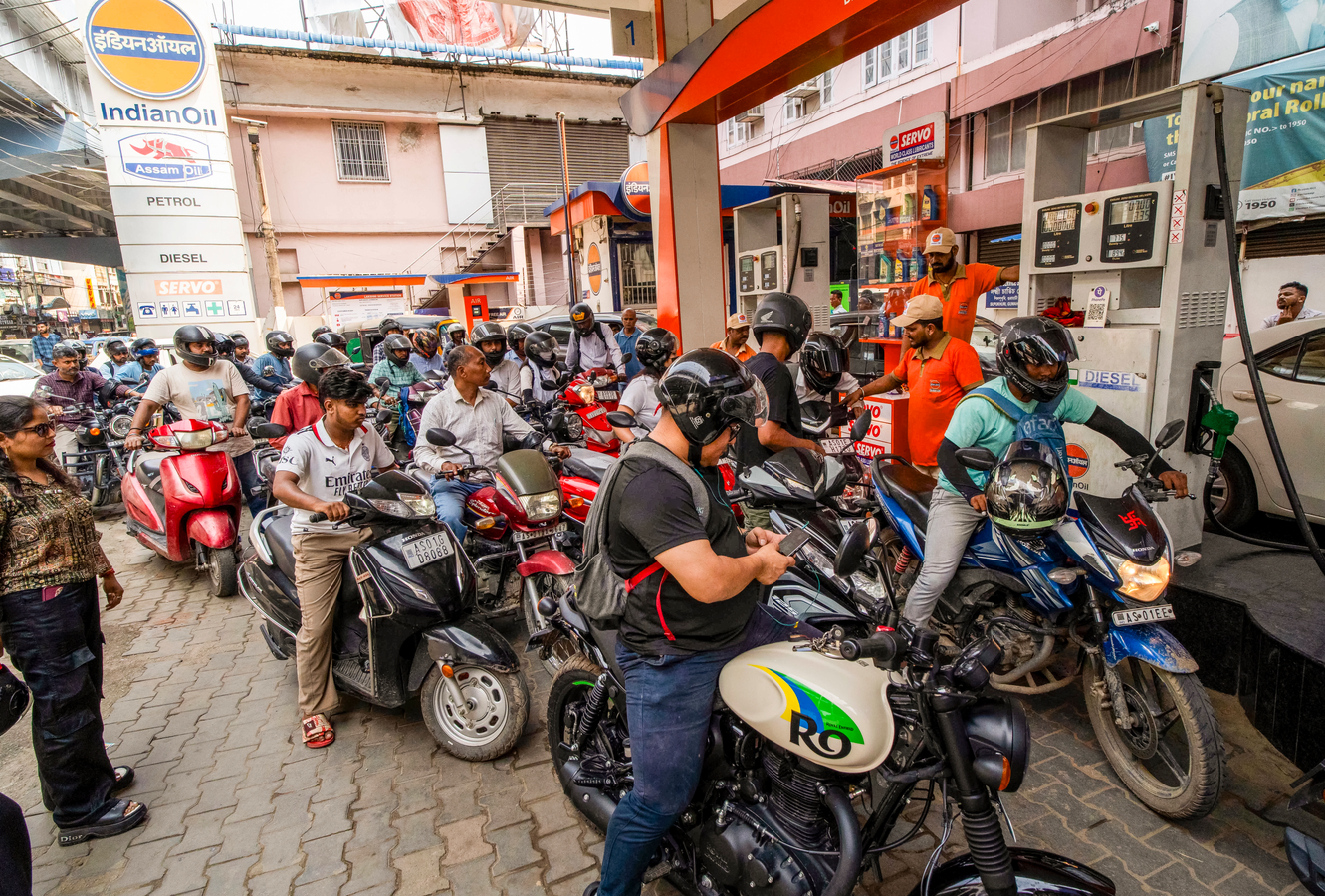
Amid reports of panic buying and long queues at petrol pumps and LPG distributors, the Ministry of Petroleum and Natural Gas released stock details of crude oil, fuels, and LPG to reassure the public.
State-owned oil marketing companies also confirmed that there are no shortages of petrol, diesel, or liquefied petroleum gas (LPG), and supplies remain stable.
The ministry stated that all petrol pumps across the country are adequately stocked and operating normally, with no rationing of petrol or diesel.
To ensure that petrol pumps have sufficient fuel, the ministry has increased credit availability for petrol pumps from one day to over three days, addressing the working capital needs of pump owners.
The ministry emphasized that there are no shortages of petrol, diesel, or LPG anywhere in the country, and that the country's petroleum and LPG supply situation is "fully secure and under control."
The ministry called on citizens to not be misled by a coordinated misinformation campaign, urging them to remain calm and avoid panic buying.
Despite the Iran-related disruptions, the country has secured enough crude supplies for the next 60 days, and fuel tanks are at optimal levels.
Regarding LPG, the ministry confirmed that 800,000 tonnes of LPG cargoes have been secured, ensuring a full month's supply.
Indian Oil Corporation (IOC), Bharat Petroleum Corporation Ltd (BPCL), and Hindustan Petroleum Corporation Ltd (HPCL) also confirmed that their petrol pumps were operating normally and that there were no shortages of any fuels.
India, a major refiner and exporter of petroleum products, has ensured domestic fuel availability and continues to supply refined fuels to over 150 countries.
The ministry stated that all retail fuel outlets are adequately stocked and operating normally, with no rationing.
Despite price increases, rationing, and other measures in other countries, India does not require such measures. The country has 74 days of total crude oil and fuel stocking capacity.
The actual stock cover is currently around 60 days (including crude, product, and strategic storage), even as the Middle East crisis continues.
Approximately two months of steady supply is available for every Indian citizen, regardless of global events. The next two months of crude procurement have also been secured.
India is completely secure for the next many months, and the quantity in strategic cavern storage becomes secondary in such a supply situation.
Any representation that India's reserves are depleted or insufficient should be dismissed, the ministry stated.
Crude supplies remain stable despite tensions around the Strait of Hormuz, with higher volumes from alternative sources offsetting any disruption. Indian refineries are operating at over 100 per cent utilisation, and crude oil supplies for the next 60 days have already been secured.
India currently has about 60 days of fuel stock cover, including crude, refined products, and strategic reserves, countering claims of critically low inventories.
LPG supplies are also sufficient, with domestic production increased and import requirements reduced. Additional cargoes have been secured from multiple countries, ensuring steady availability.
The government warned that misleading social media posts and fabricated claims of shortages or emergency measures were being spread to create unnecessary anxiety, and said action will be taken against those responsible.
All one lakh-plus retail fuel outlets across the country are open and dispensing fuel without interruption. "Not a single outlet has been asked to ration supply."
Across the world, countries are dealing with price increases, rationing, odd-even vehicle restrictions, and forced station closures. Few have declared a 'National Energy Emergency'.
India does not feel the need for any such measures. While other nations are rationing, there is no shortage of supplies in India.
Calling panic buying as "isolated instances" at "select pumps", it said "they were driven by deliberate misinformation spread by certain videos in social media".
Despite the surge in demand on such pumps, fuel was dispensed to all the consumers and oil company depots have been operational through the night to ramp up supplies.
The ministry said despite the situation at the Strait of Hormuz, India is today receiving more crude oil from its 41-plus suppliers across the world than what was previously arriving through the Straits.
"High volumes available in international markets - especially from the western hemisphere - have more than compensated for any disruption. Every Indian refinery is running at over 100 per cent utilisation. Crude oil supplies for next 60 days have already been tied up by Indian oil companies. There is no supply gap," it said.
Dismissing as misinformation reports suggesting that India had only six days of stocks, it said the country has 74 days of total reserve capacity and actual stock cover is around 60 days right now (including crude stocks, products stocks and the dedicated strategic storage in caverns).
"Nearly two months of steady supply is available for every Indian citizen regardless of what happens globally. Next 2 months of crude procurement has also been secured. India is completely secure for the next many months and the quantity in strategic cavern storage becomes secondary in such a supply situation," it said, adding any representation that India's reserves are depleted or insufficient should be dismissed with the disdain it deserves.
On LPG, it said there is no shortage.
Following government orders, domestic refinery production has been ramped up by 40 per cent, bringing daily LPG output to 50,000 tonnes (more than 60 per cent of India's requirement) against a total daily requirement of around 80,000 tonnes.
"The net daily import requirement has consequently come down to only 30,000 tonnes - meaning India is now producing much more than it needs to import," it said adding over and above domestic production, 800,000 tonnes of assured inbound LPG cargoes are already secured and en route from the United States, Russia, Australia, and other countries, arriving across India's 22 LPG import terminals - double the 11 terminals that existed in 2014.
"Approximately one full month of supply is firmly arranged, with additional procurement being finalised continuously," the statement said. "Oil companies are successfully delivering over 50 lakh cylinders every day. Cylinder demand had gone up to 89 lakh cylinders due to panic ordering by consumers and has now come down to 50 lakh cylinders again..
Commercial cylinder allocations have been raised to 50 per cent in consultation with state governments to avoid hoarding or black marketing.
On natural gas, it said India produces 92 million standard cubic meters per day of natural gas domestically out of a total daily requirement of 191 mmscmd, making India far less import-dependent on gas than on LPG. And so piped natural gas (PNG) as an alternative to LPG is being considered.
"The claim that PNG is being pushed because LPG is running out is misinformation. LPG supply is secure. PNG is simply a better, more affordable and highly convenient fuel for India's households," the statement said.