Bhopal, March 17 – The Madhya Pradesh government signed a Memorandum of Understanding (MoU) with the Ministry of Jal Shakti on Tuesday as part of the Jal Jeevan Mission (JJM) 2.0 in New Delhi.
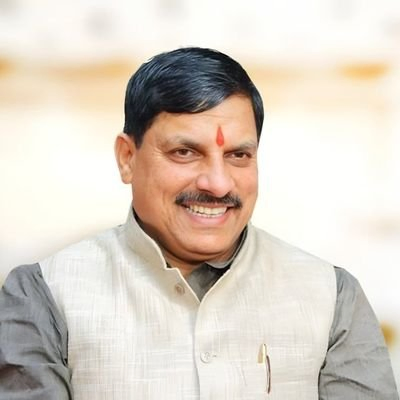
The agreement was signed in the presence of Union Minister of Jal Shakti C.R. Patil and Sampatiya Uikey, Minister, PHED, Madhya Pradesh, along with senior state officials. Chief Minister Mohan Yadav joined the ceremony virtually from Bhopal.
Responding to this development, the Chief Minister said that special emphasis would be placed on strengthening rural drinking water supply and developing a service-oriented, sustainable, and transparent system.
He shared that the budget for the Mission has been increased to Rs 8.69 lakh crore, of which the Central government will provide Rs 3.59 lakh crore.
Yadav said that the Union Ministry of Jal Shakti will undertake the entire infrastructure development, from laying pipelines to constructing necessary facilities, to ensure that drinking water reaches every rural resident.
He noted that the primary objective of the scheme is to extend water supply and water conservation initiatives to even the smallest villages through the active participation of Gram Panchayats.
Yadav expressed gratitude to Prime Minister Narendra Modi and the Centre on behalf of the people of Madhya Pradesh for approving Jal Jeevan Mission 2.0.
He said that the initiative marks a significant step toward providing safe and pure drinking water in rural areas.
He further said that all rural tap-water schemes sanctioned under the Mission in Madhya Pradesh are being implemented with a strong focus on quality, and a target has been set to complete them within the stipulated time frame.
The Chief Minister expressed confidence that, under the guidance of Union Minister C.R. Patil, the state government would complete all works under the Jal Jeevan Mission by December 2028.
He said that the MoU is a pivotal step toward ensuring regular tap-water supply to every rural household, enhancing service quality, achieving time-bound targets, strengthening digital monitoring and institutionalising transparency and accountability.