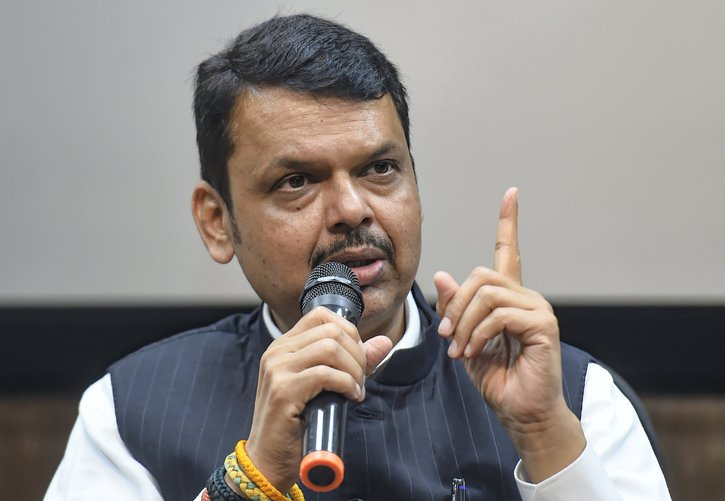
Mumbai, March 16 Maharashtra Chief Minister Devendra Fadnavis said on Monday that several women have been lured into relationships, married, and later abandoned, asserting that the bill against fraudulent religious conversion aims to address these issues and curb such practices.
Opposition parties are politicizing the issue for electoral gains, but once they carefully read the bill, they will have no objections, Fadnavis told reporters at Mantralaya.
Maharashtra was not the first state to introduce such legislation, and several states had already enacted similar laws to curb unlawful religious conversions, he noted.
If enacted, Maharashtra will join states like Uttar Pradesh, Gujarat, Madhya Pradesh, Karnataka, and Uttarakhand that have enacted similar laws to regulate religious conversions.
The government introduced the Maharashtra Freedom of Religion Bill 2026 in the state assembly on Friday, which has stringent provisions to prohibit religious conversions carried out through coercion, fraud, inducement, or marriage.
According to the Bill, those involved in unlawful conversions under the pretext of marriage will be punished with imprisonment of seven years and will also be liable for a fine of Rs 1 lakh.
Violations concerning a minor, a person of unsound mind, a woman, or a person belonging to the Scheduled Caste and the Scheduled Tribe will be punished with imprisonment of seven years and a fine of Rs 5 lakh.
"There have been many cases where women were lured, they eloped, and were abandoned after marriage. In such a situation, it raises the question of their child from such a relationship. It complicates their life. The bill is trying to find solutions to such problems," Fadnavis said.
If the Opposition parties had read the bill carefully, they would realize that it does not target any community but is aimed at preventing conversions carried out through inducement, coercion, or pressure, he said.
"The Opposition is merely trying to politicize the issue for their vote bank politics. I can guarantee you that after careful reading of the bill, the Opposition will not object to it," the CM said.
Under the proposed legislation, any person intending to convert from one religion to another, as well as any individual or institution organizing a conversion ceremony, must give a notice at least 60 days in advance to the competent authority, defined as the district magistrate or an officer authorized by the state government.
The competent authority will publicly display details of the proposed conversion at its office and at the village panchayat or local authority concerned, inviting objections from the public within 30 days.
The bill further mandates that the converted person and the individual or institution organizing the ceremony submit a declaration to the authority within 21 days after the conversion.
It also allows parents, siblings, or relatives related by blood, marriage, or adoption of the converted person to lodge a First Information Report (FIR) if they suspect unlawful conversion, and requires the police to register such complaints.