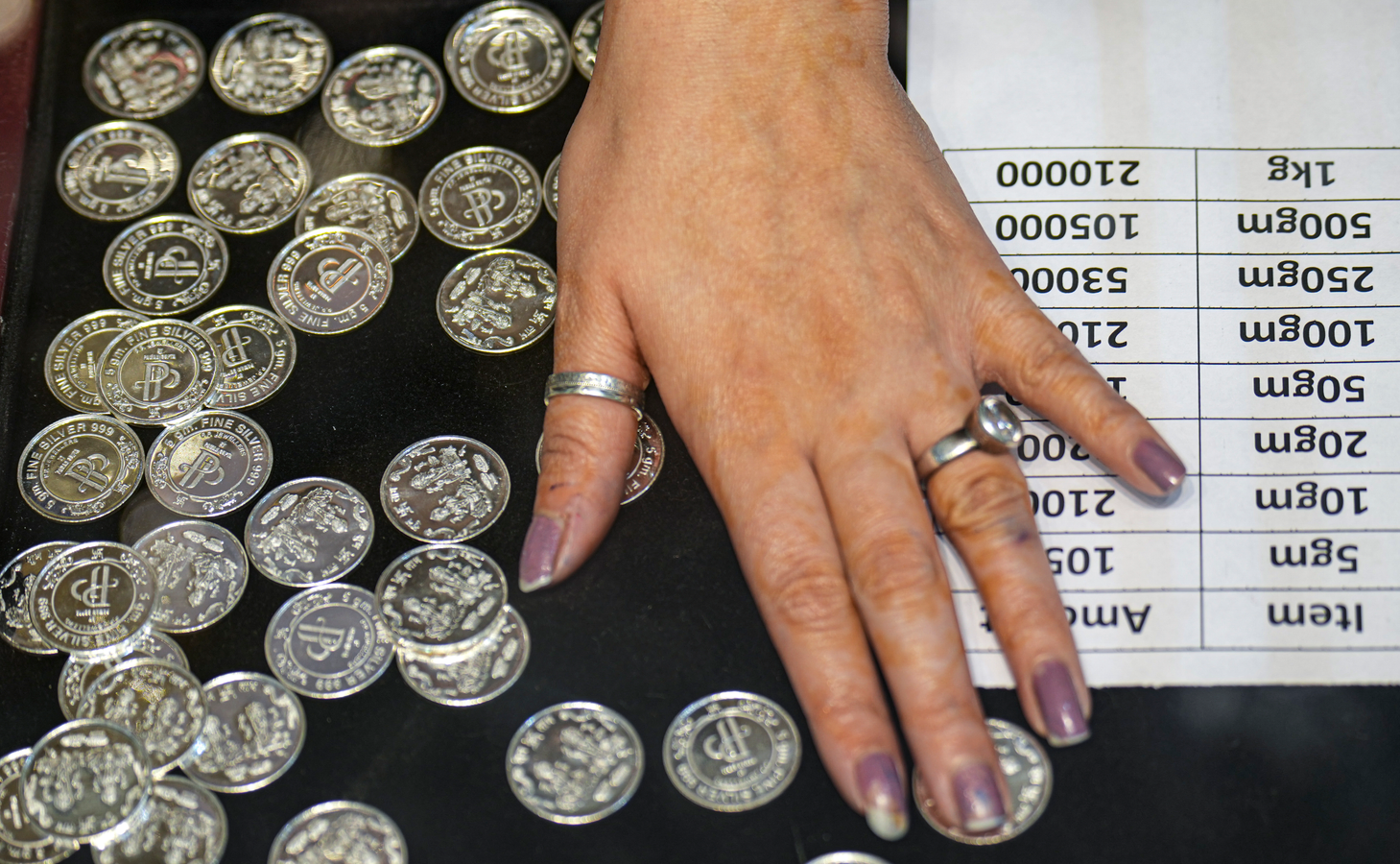
New Delhi, March 24 Silver prices remained under heavy selling pressure for the 10th consecutive session, declining by Rs 9,467 to Rs 2.15 lakh per kilogram in futures trading on Tuesday, amid heightened volatility and weak global cues.
On the Multi Commodity Exchange (MCX), the white metal for May delivery fell by Rs 9,467, or 4.2 per cent, to Rs 2,15,700 per kilogram.
In the previous session, silver had plunged by Rs 27,129, or 12 per cent, to hit an intraday low of Rs 1,99,643 per kg before trimming losses to settle at Rs 2,25,167 per kg, down Rs 1,605, or 0.71 per cent.
The precious metal has dropped by Rs 62,150, or 22.36 per cent, over the past 10 sessions from Rs 2,77,850 per kg recorded on March 10, 2026.
Analysts said the sharp decline reflects sustained liquidation in precious metals, although intermittent short-covering has offered some support at lower levels.
"Silver has rebounded from key psychological support levels near Rs 2 lakh per kg, supported by oversold conditions and short-covering," said Renisha Chainani, Head of Research at Augmont.
She added that persistent tensions in the Middle East and uncertainty over potential negotiations, along with concerns around the reopening of the Strait of Hormuz, continue to keep inflation risks elevated and weigh on investor sentiment.
Meanwhile, silver futures on the Comex also tumbled for the 10th consecutive session in the global markets. The white metal for the May contract fell by USD 1.71, or 2.47 per cent, to USD 67.64 per ounce from the previous close of USD 69.35 per ounce.
The metal has lost nearly USD 22, or 24.50 per cent, from USD 89.59 per ounce recorded on March 10, 2026.
On Monday, US President Donald Trump indicated a delay in potential military strikes on Iran's power plants and energy infrastructure and mentioned "productive discussions".
This has eased immediate safe-haven demand for the dollar. Additionally, declining global bond yields lent support to bullion.
However, Tehran has denied any ongoing talks with the US, while Israel continued its military actions in Iran.
Analysts noted that conflicting statements from the US and Iran have sustained geopolitical uncertainty, keeping market volatility elevated.
Chainani said the recent selloff reflects a classic liquidity-driven phase, where investors liquidate profitable assets like gold and silver to meet margin calls in other asset classes.
This indicates positioning-driven moves rather than a change in long-term fundamentals, she added.