Amaravati, February 26 – Fifteen people affected by milk adulteration in Rajahmundry, Andhra Pradesh, remained under treatment, officials said on Thursday.
The milk adulteration claimed five lives and left 15 others ill, who are being treated at six hospitals.
One of those undergoing treatment is on a ventilator, six are on dialysis, and eight are on a ventilator-dialysis combination.
The government revealed details of the incident on Thursday, which caused widespread concern. An official note also mentions the measures taken by various departments.
Officials said the situation is currently under control. Senior officials, including the Commissioner of Health and the Director of Food Safety, have been assigned to monitor the situation.
Further action will be taken based on laboratory confirmation and investigation findings, officials said.
The first patient was admitted on February 16. A total of 20 people were admitted by February 24. Of these, five have died.
The deceased include a six-year-old boy. Three of the deceased were in their 70s.
On February 22, the District Medical and Health Officer (DM and HO) of East Godavari received information from KIMS Hospital about multiple admissions of elderly people presenting with anuria (lack of urine output), vomiting, abdominal pain, and acute renal dysfunction requiring dialysis.
Clinical findings indicated acute renal failure with elevated blood urea and serum creatinine levels, suggesting exposure to toxins.
Preliminary epidemiological investigation indicated a strong link to milk consumption as the probable source of exposure.
Authorities found that milk was supplied to 106 families from Varalakshmi Milk Dairy in Narasapuram Village, Korukonda Mandal.
The milk supply from this dairy has been immediately stopped. A household survey was conducted on February 25.
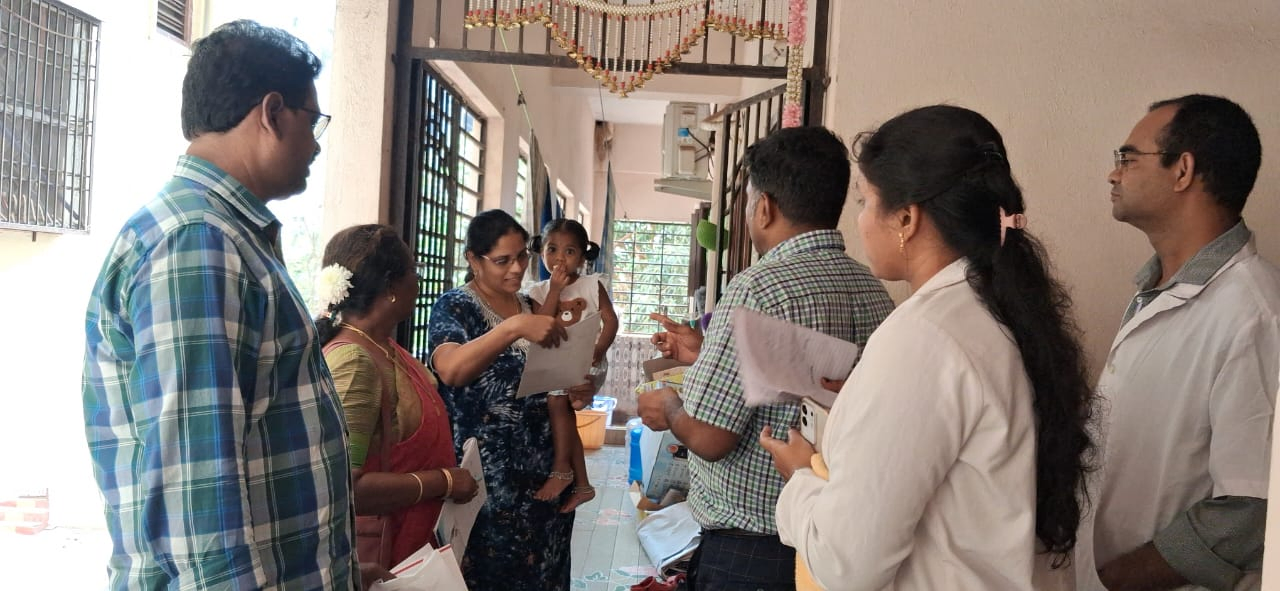
Nine medical teams were deployed to cover 110 families. A total of 307 people were covered. Six houses were found locked during the survey. The families were contacted by phone, and none were found to have any symptoms.
Blood samples were collected from 315 people for testing. Only two of them were found to have elevated results, but this was not related to the milk adulteration.
According to officials, Rapid Response Teams were constituted comprising district surveillance officers, general medicine specialists, microbiologists, pediatricians, forensic experts, epidemiologists, and nephrologists.
Fourteen field surveillance teams were deployed, visiting 679 houses and screening 957 families.
The authorities collected 12 blood samples and three urine samples were sent to the Indian Institute of Technology, Tirupati, for GCMS (Gas Chromatography-Mass Spectrometry) to detect nephron toxins.
A Food Safety Officer inspected Varalakshmi Milk Dairy in Narasapuram Village, Korukonda Mandal, from where the milk was supplied. Surveillance samples of milk (500 ml each), paneer, ghee, drinking water, and vinegar, and one enforcement sample of milk were collected.
Samples of milk and curd were also collected from affected houses. Surveillance samples of paneer, ghee, drinking water, vinegar, and milk were sent to JNTU, Kakinada.
Samples of milk and curd from affected houses, and one surveillance and enforcement sample of milk from the Narasapuram dairy, were sent to VIMTA Lab, Hyderabad.
Testing was done for microbial analysis, physico-chemical analysis, and detection of toxic adulterants.
Police registered a criminal case under Section 194 of the BNSS (Baroda Negotiable Instruments Act) and Section 174 of the Cr.P.C (Criminal Procedure Code) based on a complaint given by the son of a deceased.
A suspected milk vendor, Addala Ganeswararao, 33, resident of Narasapuram Village, was identified and taken into police custody.
Police have been conducting an investigation to identify milk suppliers, the distribution network, and affected consumers.
A team consisting of four veterinary doctors is investigating the case. They have collected 41 milk samples.
Samples of concentrate feed, water, dry and green fodder fed to the animals, have been collected for analysis of proximate principles and toxicology.
Samples have been sent to VBRI (Veterinary Biological Research Institute), Vijayawada.