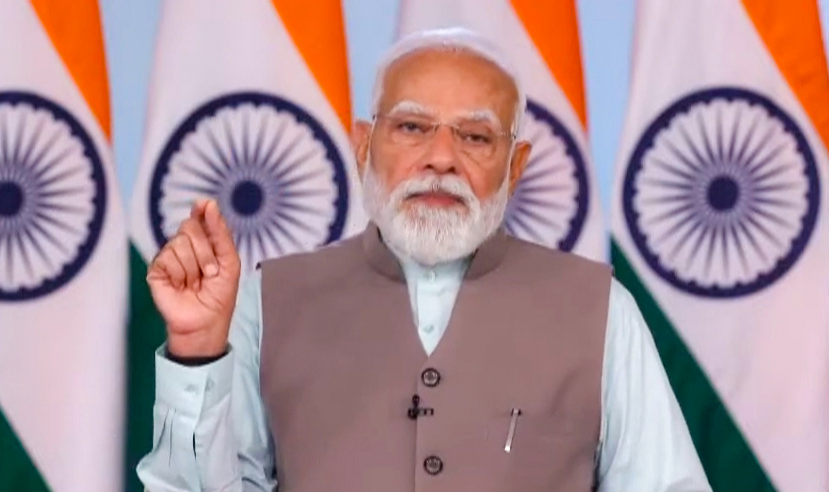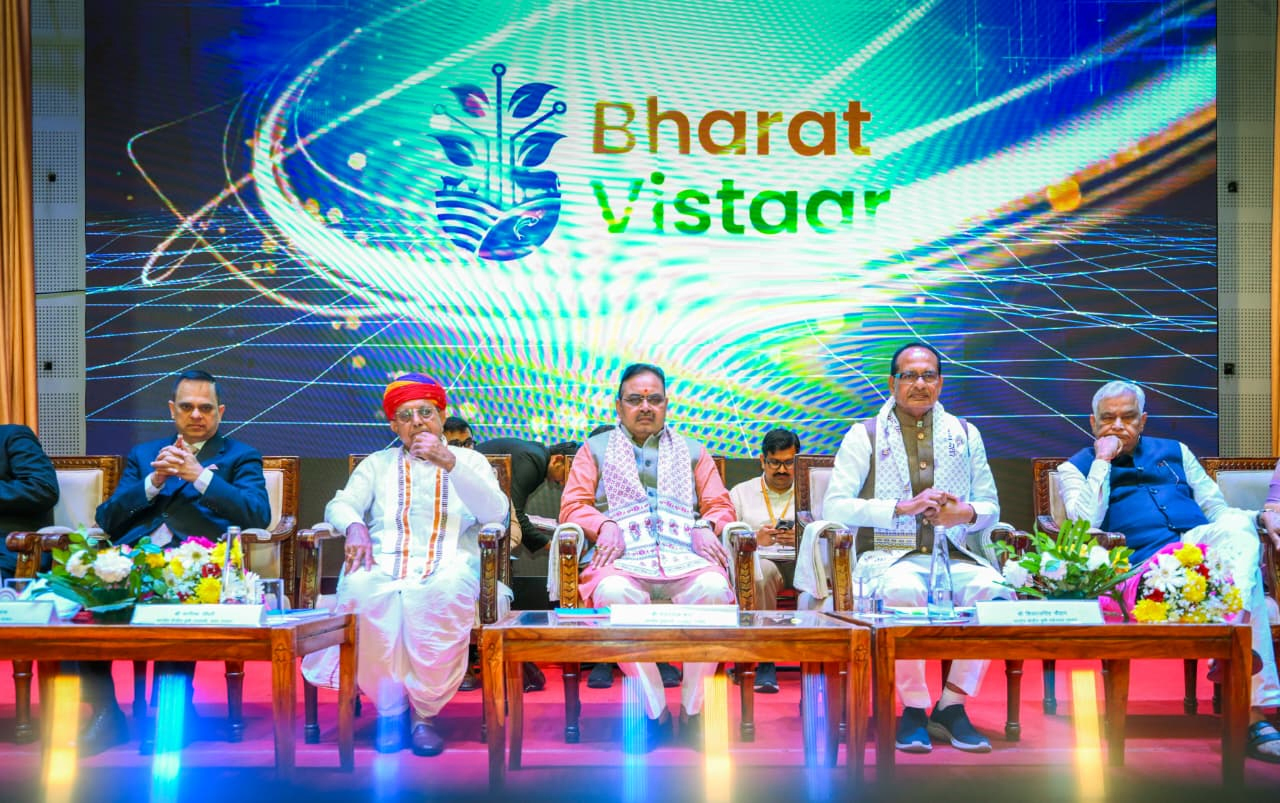
Prime Minister Narendra Modi stated that the government is placing great emphasis on fostering a "technology-driven culture" in agriculture. Addressing a post-budget webinar on the theme "Agriculture and Rural Transformation" via video conferencing today, Mr. Modi said the government is developing digital public infrastructure for agriculture through AgriStack. He highlighted the creation of Kisan IDs and digital land surveys as transformative steps.
Highlighting the role of AI-based platforms and digital surveys, the Prime Minister stated that technology only yields results when it is integrated by institutions and entrepreneurs. He called for suggestions on how to effectively merge technology with traditional systems. Mr. Modi said the government has continuously strengthened the agricultural sector. He said that major efforts have reduced the risks for farmers and provided them with basic economic security. The Prime Minister noted that 10 crore farmers have received over four lakh crore rupees under the PM Kisan Samman Nidhi, and nearly two lakh crore rupees in insurance claims have been settled under the ‘PM Fasal Bima Yojana’. He also noted that institutional credit coverage has become more than 75 per cent.
Mr. Modi said, "Agriculture remains the backbone of India's economy and a strategic pillar for the country's long-term development journey." He said that this year's Union Budget gives a strong push to agriculture and rural transformation. Mr. Modi highlighted that India is currently witnessing record production across food grains, pulses, and oilseeds.
The Prime Minister said that market access has been democratized through eNAM. Mr. Modi highlighted that the Pradhan Mantri Awas Yojana, the Swamitva Yojana, the PM Gramin Sadak Yojana, and financial assistance to self-help groups have continuously strengthened the rural economy. He added that the animal husbandry sector is a high-growth pillar of the rural economy. Mr. Modi highlighted that the government has successfully achieved the target of creating three crore Lakhpati Didis, and the country has set a target to add another three crore Lakhpati Didis by 2029.
The Prime Minister stated that India is the world's second-largest fish producer. He said that while approximately 4.5 lakh tonnes of fish are currently produced in various reservoirs and ponds, there exists a potential for an additional 20 lakh tonnes of production. He added that Fisheries can become a major platform for export growth. Mr. Modi emphasised the need for new business models in hatcheries, feed, and logistics to realize the potential of the Blue Economy. He encouraged strong coordination between the fisheries department and local communities.