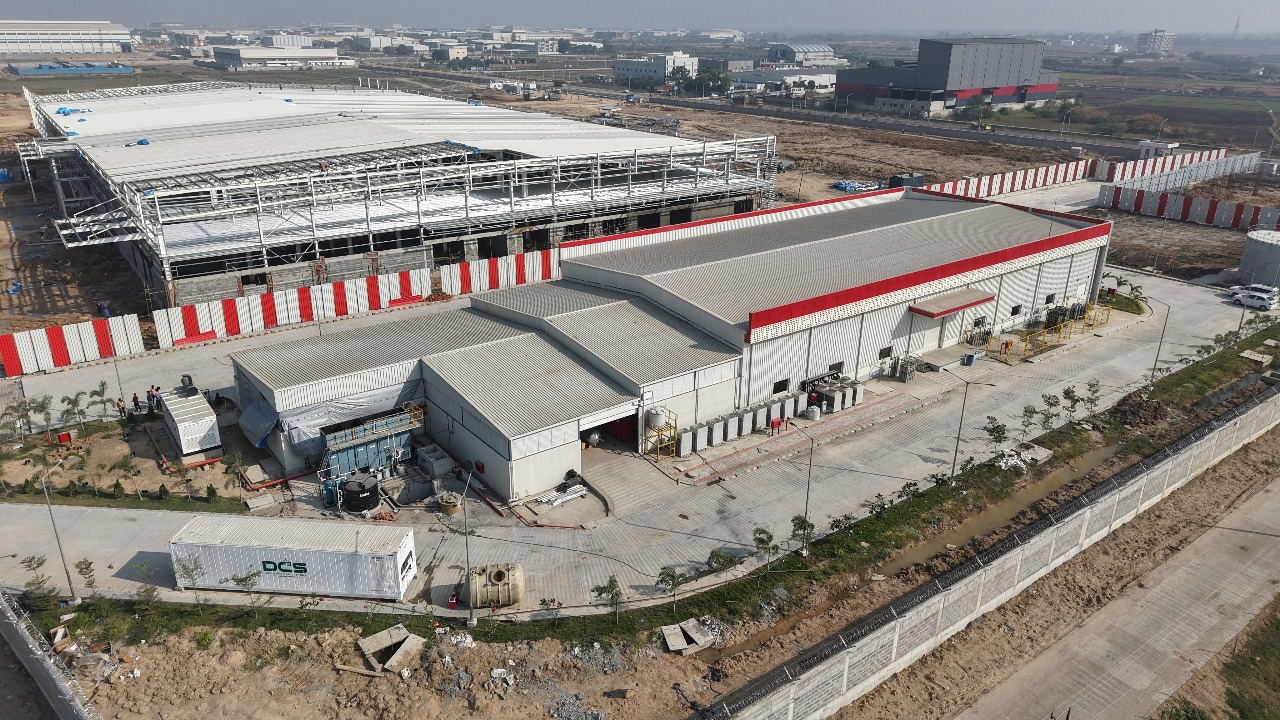
Sanand (Gujarat), March 29 – Sanand’s rapid transformation from an automobile manufacturing center into a key node in India’s ambitions for semiconductors is set to accelerate further with Prime Minister Narendra Modi scheduled to inaugurate an outsourced semiconductor assembly and test (OSAT) facility by Kaynes Semicon on March 31.
The facility, which will be established at a cost of Rs 3,300 crore, was approved by the Union Cabinet on September 23, 2024, under the National Semiconductor Mission.
Located in Sanand’s industrial area in Gujarat, the unit will undertake testing and packaging of semiconductor chips before their release into the market, completing a critical stage in the chip manufacturing value chain.
The plant is expected to have a production capacity of around 60 lakh chips per day.
The project follows the inauguration of a semiconductor facility by Micron on February 28 and forms part of a broader cluster of semiconductor investments taking shape in the region.
In addition to Kaynes Semicon and Micron, another unit is being developed by CG Semi, indicating a growing concentration of semiconductor activity in Sanand.
The Gujarat government, led by Chief Minister Bhupendra Patel, has been actively promoting the state as a hub for semiconductor manufacturing and related industries.
Officials said that the addition of the OSAT facility would further strengthen the local ecosystem and support economic activity linked to advanced manufacturing.
Referring to the pace of development in the sector, PM Modi had said, “The MoU for the Micron facility was signed in June 2023, the foundation stone was laid in September, and today, in February 2026, commercial production has already begun. Even in developed countries, such approvals and processes take years, but India has completed this seemingly impossible task in just 900 days. When intent is clear, and commitment is towards the nation’s development, policies become clear, and decisions gain momentum automatically.”
He has also emphasised the broader objective of building a comprehensive semiconductor ecosystem in the country.
“Our goal is not limited to setting up a single factory, but to build an entire ecosystem. India is now focusing on the entire semiconductor value chain, from design engineers to machine manufacturers and logistics. The announcement of ‘India Semiconductor Mission 2.0’ is a major step in this direction. As production increases, the demand for materials and components within India will also rise, creating the biggest opportunity for local industries,” he said.
Highlighting the sector’s long-term significance, the Prime Minister has stated that the development of semiconductor capabilities would make the current decade a decisive turning point for India’s technological future, while noting that the “country is becoming an increasingly important part of the global semiconductor value chain”.
According to official details, 10 major projects have so far been approved under the Semicon India programme, of which four are being developed in Gujarat.
The clustering of such projects in Sanand has drawn comparisons with established semiconductor hubs such as Hsinchu in Taiwan and Gyeonggi in South Korea.