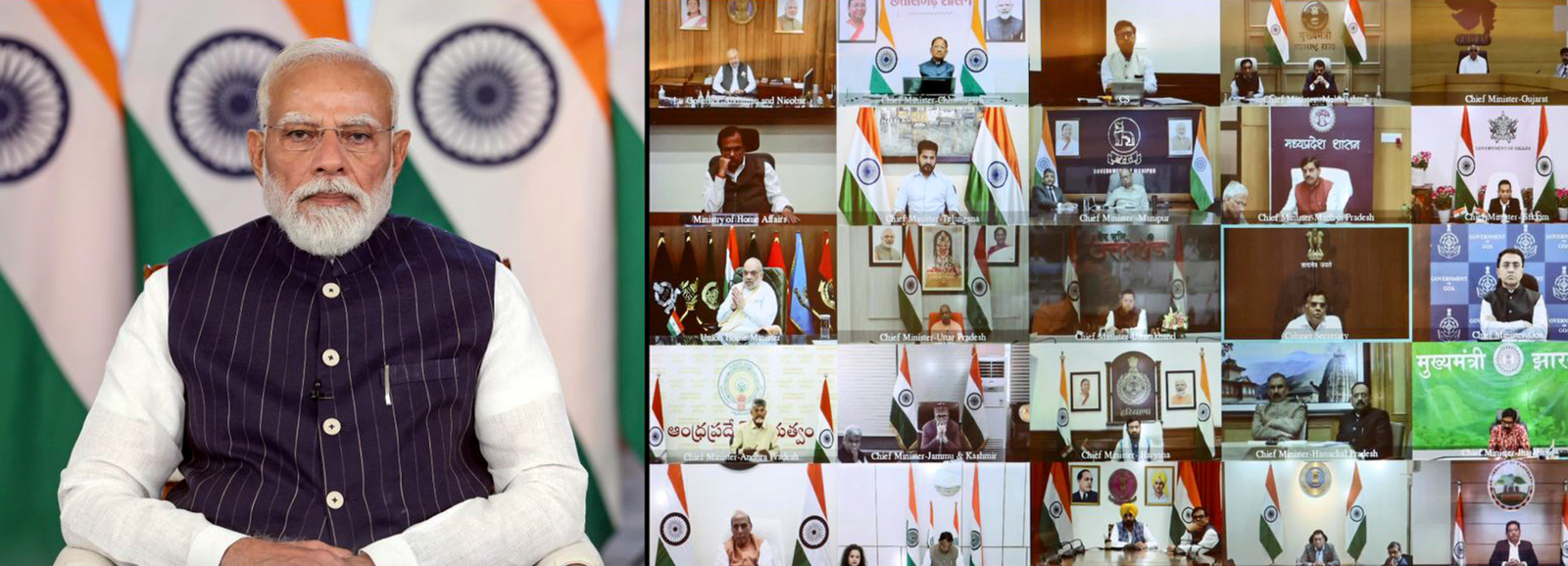
New Delhi, March 27 – Prime Minister Narendra Modi on Friday said the global situation stemming from the West Asia conflict remains dynamic, and emphasized that maintaining economic and trade stability, ensuring energy security, strengthening industry and supply chains, and safeguarding citizens' interests remain the government's top priorities.
Addressing a virtual meeting of chief ministers, Modi said the situation necessitates continuous monitoring and adaptive strategies, as he called for constant communication and coordination between the Centre and the states, along with timely sharing of information and joint decision-making, so that responses are swift and well-aligned.
Urging the chief ministers to ensure the smooth functioning of supply chains and to take strict measures against hoarding and profiteering, Modi cautioned against the spread of misinformation and rumors, asserting that timely dissemination of accurate and credible information is essential to prevent panic.
The meeting with chief ministers and lieutenant governors was convened to review preparedness in light of the situation arising from the West Asia conflict and its potential impact on India.
The prime minister said India has prior experience in dealing with similar global disruptions, recalling the collective response during the Covid-19 pandemic, when the Centre and the states worked together as 'Team India' to mitigate the impacts on supply chains, trade, and daily life.
During the pandemic, the prime minister held regular meetings with the chief ministers to review the situation and take action accordingly.
The same spirit of cooperation and coordination remains India's greatest strength in navigating the present situation, Modi said.
The prime minister added that the situation remains dynamic, necessitating continuous monitoring and adaptive strategies, an official statement said.
He also said that an inter-ministerial group has been operational since March 3, reviewing the situation on a daily basis and taking timely decisions.
Modi stressed that maintaining economic and trade stability, ensuring energy security, protecting the interests of the citizens, and strengthening the industry and supply chains remain the government's main priorities.
He also advised vigilance against online fraud and fake agents and called for special attention in the border and coastal states to address any emerging challenges related to shipping, essential supplies, and maritime operations.
Modi underscored the importance of maintaining public confidence, noting that assurance about the availability of essential commodities will help prevent unnecessary panic among citizens.
The chief ministers who attended the meeting included N Chandra Babu Naidu (Andhra Pradesh), Yogi Adityanath (Uttar Pradesh), Revanth Reddy (Telangana), Bhagwant Mann (Punjab), Bhupendra Patel (Gujarat), Omar Abdullah (Jammu and Kashmir), Sukhvinder Singh Sukhu (Himachal Pradesh), and Pema Khandu (Arunachal Pradesh), among others.
Defence Minister Rajnath Singh and Home Minister Amit Shah were also present.
This was the first time that the prime minister held a meeting with the chief ministers on the West Asia conflict, which started on February 28 with attacks by the US-Israel combine on Iran, prompting retaliatory action by Tehran on its Gulf neighbours and Israel.
Modi suggested that states with Indian citizens in West Asia should activate helplines, appoint nodal officers, and establish district support systems to assist the affected families and ensure the timely flow of information.
The prime minister also expressed his appreciation for the valuable suggestions shared by the chief ministers, noting that the inputs would be instrumental in effectively managing the evolving situation.
He emphasised the need for vigilance, preparedness, and coordinated action to address the challenges ahead.
Emphasising the critical role of states, Modi noted that effective implementation of decisions takes place at the state level.
The prime minister also highlighted the importance of activating control rooms at the state and district levels, and stressed the need for advance planning in the agriculture sector.
He said efforts undertaken in recent years to strengthen India's economic and supply systems are proving beneficial in the current context, and called for continued engagement with the industry and MSMEs to address their concerns.
Modi also called for a parallel focus on immediate response and long-term preparedness and urged the states to accelerate efforts in promoting alternative energy sources such as biofuels, solar energy.
He highlighted the importance of enhancing domestic exploration of oil and natural gas, with active cooperation from the states.
Modi reiterated that addressing challenges is a shared responsibility and expressed confidence that, working together as 'Team India', the nation will successfully overcome the situation.
Rajnath Singh highlighted that the government has been working actively under the prime minister to tackle the crisis, taking positive steps such as ensuring the timely availability of LPG cylinders and reducing excise duties on petrol and diesel.
Cabinet Secretary T V Somanathan made a presentation on the current situation and enumerated steps and recommendations for the states to tackle the situation.
The chief ministers appreciated the steps taken by the Centre to tackle the situation. They also praised the diplomatic outreach of the prime minister to different countries to ensure the well-being of Indian citizens abroad, officials said.
The chief ministers expressed confidence that the situation remains stable, with adequate availability of petrol, diesel and LPG, and continuous monitoring mechanisms in place to ensure uninterrupted supply of essential commodities, they said.
The chief ministers also welcomed the decision to reduce excise duty on fuel, noting that it will provide significant relief to citizens amid global uncertainties, the officials said.
The Cabinet Secretariat is going to hold a separate meeting with the chief secretaries of poll-bound Tamil Nadu, West Bengal, Assam, Kerala and Puducherry.
On March 25, the government held an all-party meeting to brief leaders on the West Asia crisis, where a detailed presentation was made about the steps taken by the government to deal with the situation.
Making a statement in the Lok Sabha on March 23, the prime minister had said that the difficult global conditions caused by the West Asia conflict are likely to persist for a long time, and called upon the nation to remain prepared and united, just as it stood together during the Covid-19 pandemic.