New Delhi, April 7 Many passenger associations across the country have demanded an increase in the frequency of Amrit Bharat trains to ease travel for millions of low-income passengers.
Launched on December 30, 2023, by Prime Minister Narendra Modi, the Amrit Bharat is a non-air-conditioned train with only sleeper and second-class coaches, offering modern facilities and enhanced safety along with several passenger amenities.
Passenger groups said that of the 30 pairs of Amrit Bharat trains operating between 60 originating and destination stations, only one runs daily.
Of the remaining 29 pairs, 22 run weekly, four operate twice a week, and three run thrice a week.
They said these trains provide one of the most affordable and convenient travel options for low-income passengers, but the limited frequency reduces their accessibility.
“Only one pair of Amrit Bharat trains, numbers 22361 and 22362, operates daily between Rajendranagar (Patna) and New Delhi. The rest operate either weekly, bi-weekly, or tri-weekly,” said M Jameel Ahamed of the Coimbatore District Railway Passengers' Welfare Association.
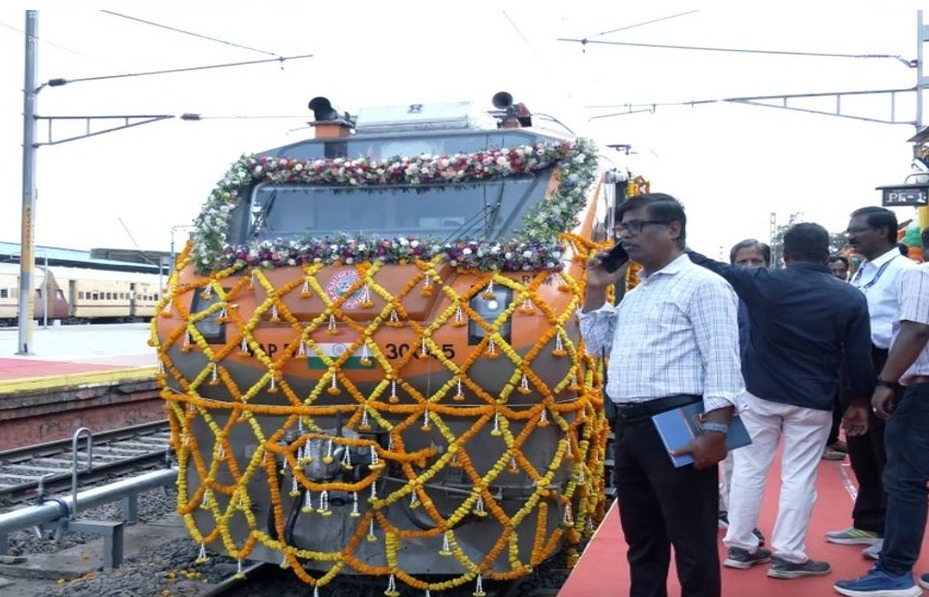
Ahamed, who attended the flag-off event of the 16619/16620 Podanur–Dhanbad Amrit Bharat Express on March 11 in Podanur (Coimbatore), said the train operates every Saturday from Podanur and is in high demand.
“You can see the waiting list, which often exceeds 120 bookings before departure. While Vande Bharat trains, meant for affluent passengers, run daily, Amrit Bharat trains, used by low-income groups, are operated only weekly,” Ahamed complained.
“There is no point in operating a train just for the sake of numbers,” he added.
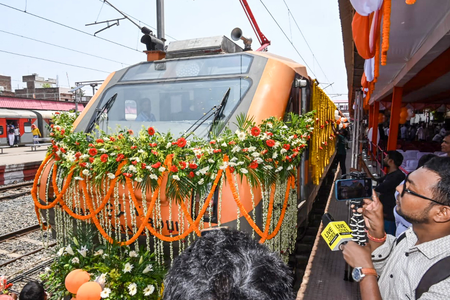
Recently, Prime Minister Narendra Modi flagged off two Amrit Bharat trains.
Both – 15673/15674 Charlapalli–Kamakhya Amrit Bharat Express, inaugurated on March 13, and 16357/16358 Nagercoil–Charlapalli Amrit Bharat Express, launched on March 11, 2026, operate on a weekly basis.
Basant Kumar Shukla, Secretary of the Nagpur-based passenger group Bhartiya Yatri Kendra, said all Amrit Bharat trains operate on high-demand routes.
“Passengers trying to book tickets on the 11015/11016 Lokmanya Tilak (T)–Saharsa Amrit Bharat Express, flagged off on April 24, 2025, often get ‘regret’ status. They can’t even get a waiting ticket, and the same is true for many other trains as well,” Shukla said.
He also demanded that all Amrit Bharat trains be made daily.
Railway officials said the frequency of these trains is being increased depending on demand, route availability, and operational feasibility.
For instance, train numbers 19021 and 19022, operating between Udhna and Brahmapur, were introduced as weekly services in September 2025 but have now been upgraded to tri-weekly due to high demand.
“We are also exploring the possibility of making it a daily service,” said a railway official, adding that both the Railway Board and zonal railways are continuously monitoring passenger demand and operational feasibility.
“There are many other routes where frequency will be increased gradually,” he added.
The fares of the Amrit Bharat trains are approximately 15 to 17 per cent higher than those of regular Mail and Express trains.
The Railway Ministry has justified the higher fares by citing features such as higher speed, improved safety standards, better aesthetics of seats and berths (similar to Vande Bharat Sleeper), jerk-free travel, CCTV in all coaches, improved toilet designs, and better ladder designs for easier access to berths.
Recently, Railway Minister Ashwini Vaishnaw inspected sample coaches of the next-generation Amrit Bharat trains at New Delhi Railway Station and shared a video on social media.
“These sample coaches have been thoughtfully designed to enhance passenger comfort, aesthetics, and overall travel experience,” a Railway Ministry press note said.