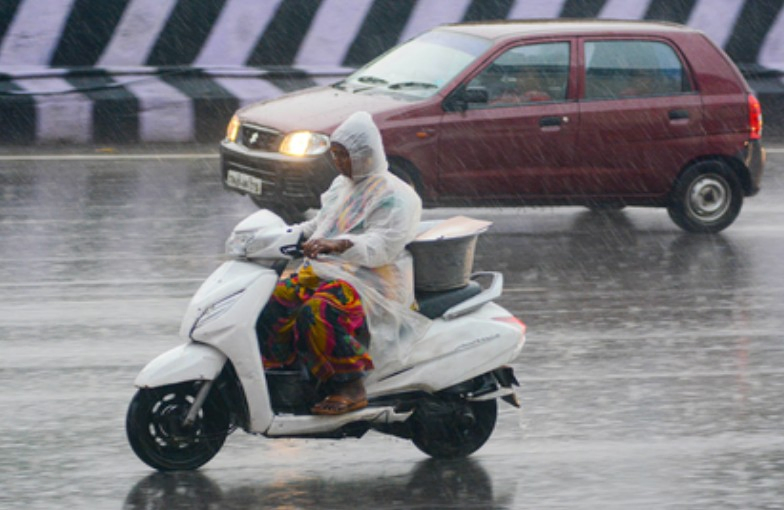
Bhopal, February 19 – Madhya Pradesh experienced a mix of unusual weather patterns over the past 24 hours, influenced by a persistent Western Disturbance over north Rajasthan and adjoining Punjab-Haryana regions, according to the India Meteorological Department (IMD) Bhopal center.
Rainfall occurred in isolated areas in the Sagar division, a few spots in Bhopal, Indore, Ujjain, and Chambal, and many areas in Gwalior, while the rest of the state remained dry.
Maximum temperatures plummeted significantly by 6.2°C to 11.4°C in the Gwalior and Chambal districts, making them noticeably below normal, down by 3.1°C in Gwalior and 7.3°C in Chambal.
In contrast, the Indore and Narmadapuram divisions saw highs 2.5-2.6°C above normal, while normal conditions prevailed elsewhere. Minimum temperatures dipped by 2.5-2.8°C in Ujjain and Chambal, but remained above normal by 1.9-3.0°C across Indore, Narmadapuram, Ujjain, Gwalior, and Chambal.
Statewide, the highest maximum temperature was 34.1°C in Khandwa, and the lowest minimum temperature was 9.2°C in Khajuraho. The heaviest rainfall amounts were 26.2 mm in Nalcha, 11.0 mm in Karhal, and 10.0 mm in Kolaras, with lighter showers in Indore (7.3 mm) and Bhopal (1.3 mm).
Gusty winds reached 63 km/h in Sheopur Kalan, accompanied by thunderstorms, lightning, and rainfall in districts like Morena, Bhind, Gwalior, and Indore.
Hailstorms struck Neemuch, Mandsaur, Sheopur Kalan, and Rajgarh. Analysis of IMD visuals reveals stark regional differences. Observed maximum temperature anomaly maps show northern Madhya Pradesh in cooler blues (below normal by up to 7°C), transitioning to warmer yellows and oranges in the south (above normal).
Minimum temperature maps indicate patchy pockets of above-normal temperatures centrally. Forecast rainfall distribution maps for February 19-20 depict isolated rain at places over northern and central districts, such as Rewa, Sagar, and Gwalior, fading southward by February 21-23.
Warning overlays highlight yellow zones for thunderstorms in isolated northern areas, aligning with synoptic systems like a trough from Gujarat to Haryana and a subtropical jet stream over northeast India.
Looking ahead, isolated rainfall or drizzle with thunderstorms/lightning is expected in Vidisha, Raisen, Ashoknagar, Shivpuri, Gwalior, Datia, Bhind, Rewa, Mauganj, Satna, Panna, Damoh, Sagar, Chhatarpur, Tikamgarh, Niwari, and Maihar until February 20 morning, with dry conditions elsewhere.
Warnings include gusty winds (30-40 km/h) with thunderstorms in Vidisha, Rewa, and Sagar clusters, and lightning in Gwalior and Chhatarpur groups. The IMD advises staying indoors during storms, avoiding trees and water bodies, unplugging electronics, and securing livestock.
Farmers should protect crops, suspend field work, irrigate as needed, and prepare for summer sowing of sugarcane, groundnut, soybean, and maize. Northern maximum temperatures will gradually rise by 2-4°C in 48 hours, then stabilize; minimums will remain unchanged for five days.
In Bhopal, expect partly cloudy skies with haze, winds at 20-22 km/h, and 26°C/14°C. This weather shift, driven by a feeble disturbance approaching the Himalayas from February 22, urges residents, especially in Indore, where light rain fell, to monitor alerts for safety.