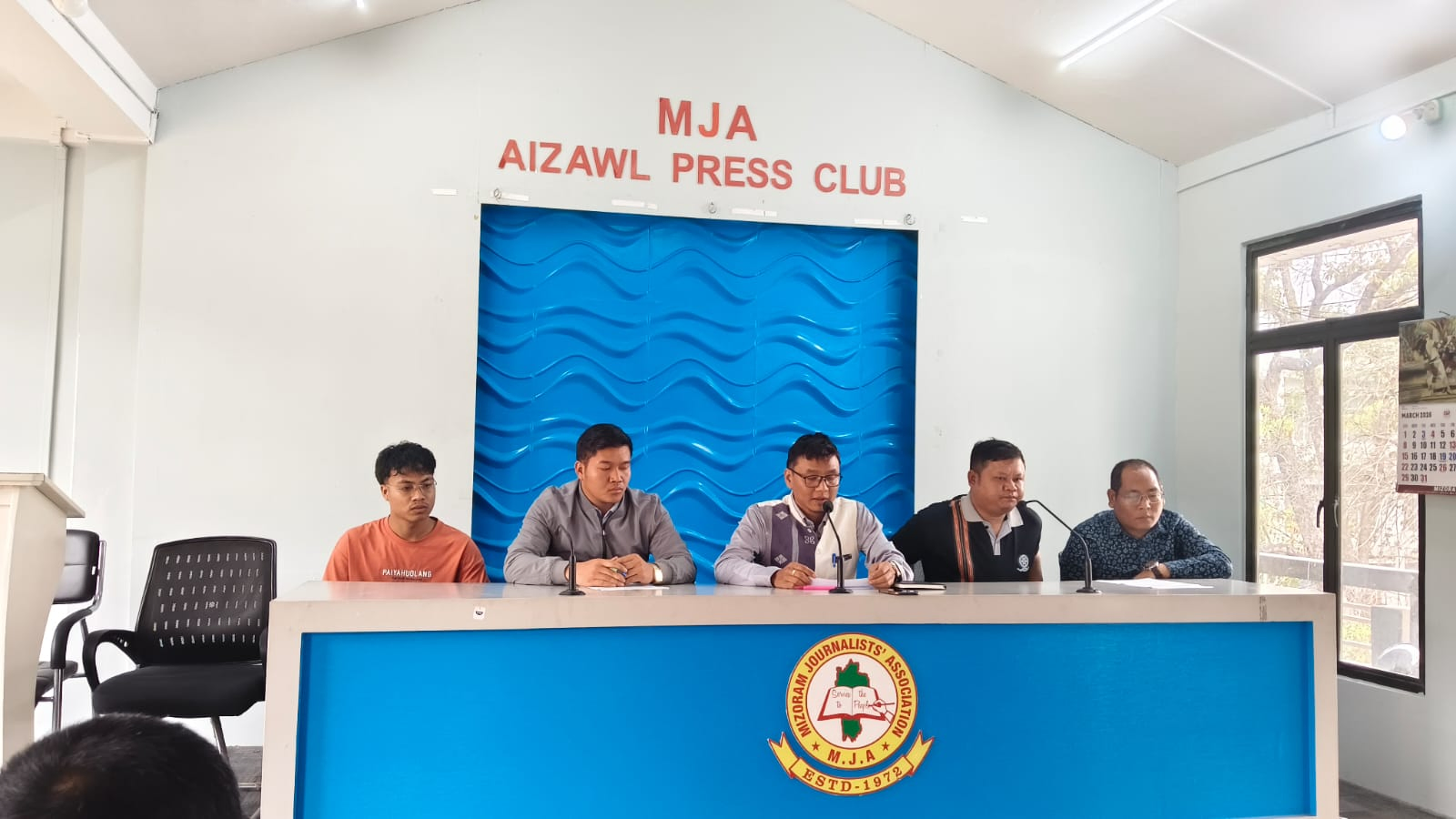
The Mizo Zirlai Pawl (MZP), the apex students' organization in Mizoram, strongly opposed the proposal to make the singing of "Vande Mataram" mandatory in educational institutions, cautioning that such a move would be inappropriate and insensitive to the socio-religious realities of the state, which is predominantly Christian.
Addressing a press conference in Aizawl, the powerful student body said that the idea of introducing daily singing or playing of the national song "Vande Mataram" in schools and colleges, as well as official functions, requires careful reconsideration. They emphasized that educational institutions should remain spaces dedicated to learning and intellectual growth, rather than platforms for practices unrelated to academic development.
The MZP noted that schools and colleges are meant to cultivate knowledge and skills that contribute to the advancement of society. They criticized the introduction of such measures without meaningful consultation, arguing that directives which do not directly contribute to the educational objectives of institutions should not be imposed upon students and academic establishments.
The organization made it clear that it would oppose any attempt to utilize educational institutions for purposes that it perceives as politically driven or religiously motivated.
Urging restraint, the MZP called on the Mizoram government, the authorities in the Education Department, and heads of institutions across the state not to hastily implement any directives from the Ministry of Home Affairs requiring students to sing or listen to "Vande Mataram." They appealed to them to take into account the distinctive cultural and religious context of Mizoram before enforcing such measures.
According to the statement, the government should first undertake a careful assessment of Mizoram's unique position within the Indian Union and adopt a clear and considered stance before allowing such directives to take effect.
The students' body also underscored its long-standing role in safeguarding the identity, culture, and traditions of the Mizo people. They warned that educational institutions should not become arenas for the propagation of political ideologies or the imposition of religious symbolism.
MZP leaders also pointed out that "Vande Mataram" contains several Bengali phrases and references, including imagery associated with temple worship, which they said may not resonate with many people in Mizoram where Christianity is the dominant faith.
As an alternative, the organization suggested that authorities consider promoting songs that reflect the cultural and spiritual identity of the people of the state. They cited the example of the Mizoram Legislative Assembly, where the hymn "Ro Min Rel Sak Ang Che", which praises the Living God, is sung or played during proceedings.
The MZP urged the state government and relevant authorities to explore the possibility of allowing such songs to be sung or played in educational institutions instead.
Meanwhile, the Naga Students' Federation has also expressed similar reservations, stating that attempts to enforce the singing of "Vande Mataram" in educational institutions overlook the cultural and religious diversity of the Northeast.