New Delhi, April 3 Ganga water meets bathing standards at all monitored locations, and pollution levels in the river are declining, according to the government.
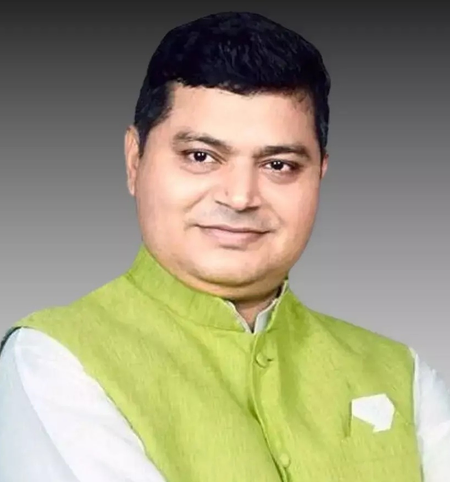
In a written reply to a question in the Lok Sabha, Minister of State for Jal Shakti Raj Bhushan Choudhary said on Thursday that the pH and dissolved oxygen levels of the river meet the required norms for bathing criteria across all locations, based on median water quality data for 2025 (January to August).
He said the Central Pollution Control Board (CPCB) monitors the water quality of the River Ganga at 112 locations across five main-stem states of Uttarakhand (19), Uttar Pradesh (41), Bihar (33), Jharkhand (4) and West Bengal (15).
The minister said that water quality with respect to biochemical oxygen demand (BOD) conforms to bathing criteria throughout the entire stretch of the river in Uttarakhand, Jharkhand, Bihar and West Bengal, except for certain stretches in Uttar Pradesh, including Farrukhabad to Purana Rajapur in Kanpur, Dalmau in Raebareli, and downstream Mirzapur to Tarighat in Ghazipur.
He said that bio-monitoring conducted during 2024-25 at 50 locations along the River Ganga and its tributaries, and 26 locations along the River Yamuna indicates that the biological water quality predominantly ranges from "good" to "moderate", reflecting the ecological potential of the rivers to sustain aquatic life.
The minister said that a "diverse and holistic set of interventions" have been undertaken under the Namami Gange Programme for cleaning and rejuvenation of the Ganga and its tributaries, including waste water treatment, river front management, ensuring e-flow, rural sanitation, afforestation, biodiversity conservation and public participation.
As of February 2026, a total of 524 projects have been sanctioned at a cost of Rs 43,030 crore, of which 355 have been completed, he said.
He said that of these, 218 sewerage infrastructure projects costing Rs 35,794 crore have been taken up for remediation of polluted river areas with a treatment capacity of 6,610 MLD, of which 138 sewage treatment plant projects with a capacity of 4,050 MLD have been completed and made operational.
The minister said that science-based species restoration, rescue and rehabilitation programmes for aquatic species such as dolphins, otters, hilsa, turtles and gharials, undertaken in collaboration with the Wildlife Institute of India and state forest departments, have shown marked improvements in biodiversity, with increased sightings of riverine species.
On industrial pollution abatement, he said that three common effluent treatment plants -- Jajmau (20 MLD), Banther (4.5 MLD) and Mathura (6.25 MLD) -- have been sanctioned, of which two have been completed.
He said that annual inspections of grossly polluting industries, started in 2017, have resulted in a reduction in biochemical oxygen demand load from 26 tonnes per day in 2017 to 10.75 tonnes per day in 2024, and about 23.9 per cent reduction in effluent discharge from 349 MLD in 2017 to 265.56 MLD in 2024.
He added that pollution abatement in other rivers is being taken up under the National River Conservation Plan (NRCP).
So far, NRCP has covered 58 rivers in 100 towns across 17 States in the country at a total sanctioned cost of Rs 8,970.51 crore, and sewage treatment capacity of 3,019 MLD has been created.