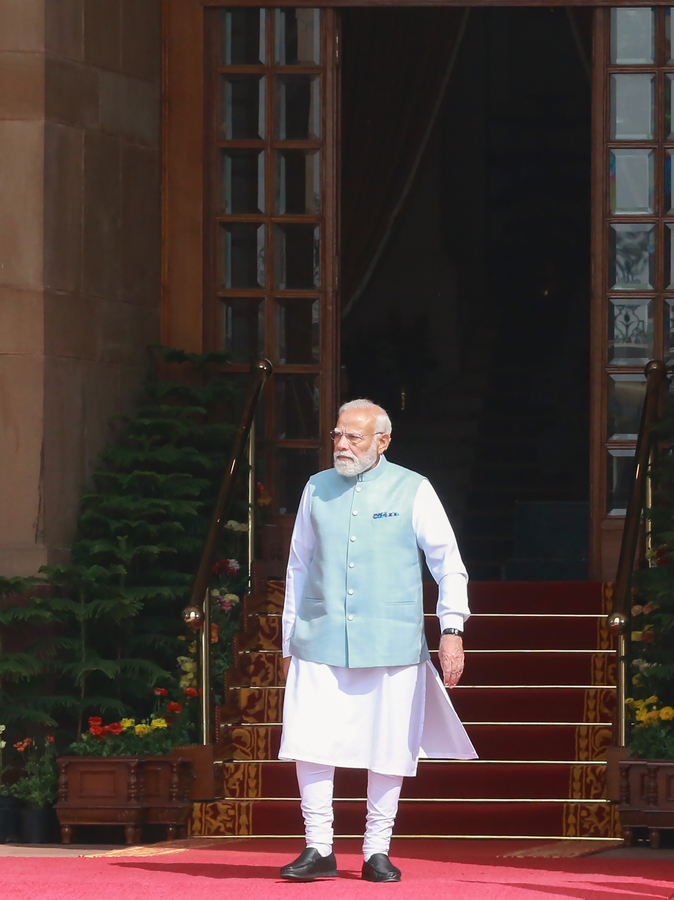
New Delhi, February 21 – Prime Minister Narendra Modi will visit Meerut in western Uttar Pradesh on Sunday to inaugurate and dedicate a series of major infrastructure projects worth approximately Rs 12,930 crore to the nation. These projects are aimed at transforming regional connectivity and urban mobility in the National Capital Region (NCR).
During the visit, the Prime Minister will flag off the Meerut Metro and the Namo Bharat train at the Shatabdi Nagar Namo Bharat Station around 12:30 PM on Sunday. He will then take a Metro ride to the Meerut South Station before addressing a public gathering at approximately 1 PM, according to an official statement.
A key highlight of the visit will be the dedication of the entire 82-km Delhi–Meerut Namo Bharat Corridor – India’s first Regional Rapid Transit System (RRTS) – to the nation. The Prime Minister will also inaugurate the remaining operational sections, including the 5-km stretch between Sarai Kale Khan and New Ashok Nagar in Delhi and the 21-km stretch between Meerut South and Modipuram in Uttar Pradesh.
Designed for speeds of up to 180 kmph, the Namo Bharat system is expected to significantly reduce travel time between Delhi and major urban centers such as Sahibabad, Ghaziabad, Modinagar, and Meerut.
The Shatabdi Nagar station, the starting point of the corridor, has been developed as a major multimodal hub, linking Hazrat Nizamuddin Railway Station, the Delhi Metro's Pink Line, Veer Haqeeqat Rai ISBT, and the Ring Road. Three additional stations – Shatabdi Nagar, Begumpul, and Modipuram – located in Meerut, will also be commissioned.
The Prime Minister will additionally inaugurate the Meerut Metro services between Meerut South and Modipuram. In a first-of-its-kind initiative in India, the Metro will operate on the same infrastructure as the Namo Bharat RRTS. With a maximum operational speed of around 120 kmph, it will be the country’s fastest Metro system, covering the stretch in about 30 minutes with all scheduled stops.
Officials said that the integrated operation of regional rapid transit and urban Metro services on shared infrastructure sets a new benchmark for multimodal public transport. The projects are expected to decongest road traffic, reduce vehicular emissions, and provide faster, sustainable mobility across the region.
These initiatives are part of the government's broader push to modernize public transport and enhance ease of living through efficient, environmentally-sustainable infrastructure.