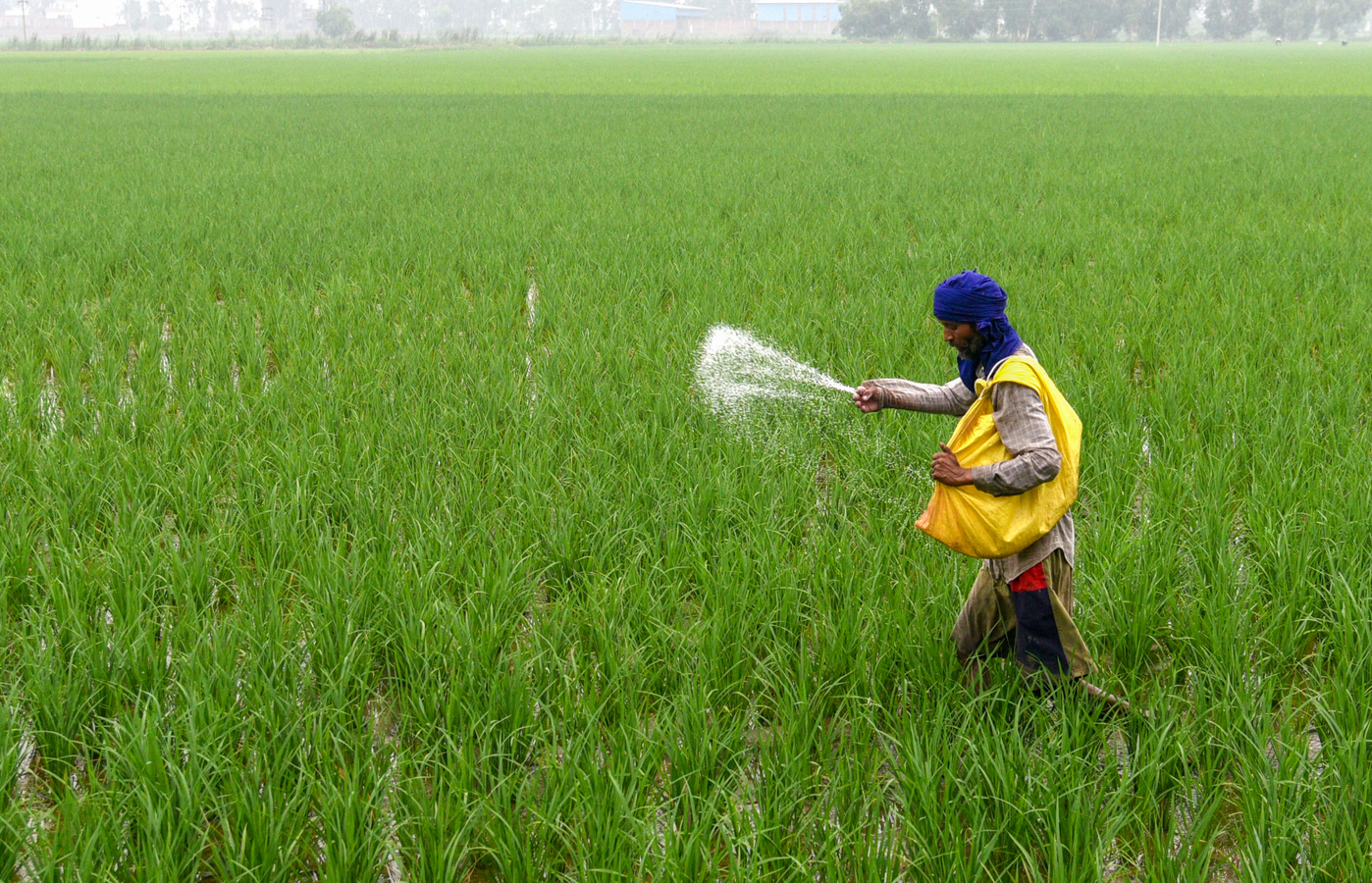
New Delhi, March 20 – The government clarified in Parliament on Friday that there is no proposal to increase the price of urea. The reduction in the size of urea bags has been undertaken as a policy measure to promote balanced fertilizer usage and improve soil health.
The reduction in bag size, from 50 kg to 45 kg, and in certain cases to 40 kg, has been implemented with the objective of curbing excessive consumption of urea and encouraging judicious and efficient application of fertilizers by farmers, said Anupriya Patel, Minister of State for Chemicals and Fertilizers, in a written reply to a question in the Lok Sabha.
Currently, the maximum retail price (MRP) of a 45 kg bag of neem-coated urea is Rs 242 per bag (excluding neem coating charges and applicable taxes). Similarly, the MRP of sulphur-coated urea is Rs 254 per 40 kg bag (excluding Central and State levies/GST).
The government has emphasized that these measures are aimed at ensuring sustainable agricultural practices without imposing any additional financial burden on farmers.
In response to another question, the minister said that there has been a substantial increase in the adoption of nano-fertilizers, with cumulative sales reaching 1,593.37 lakh bottles of 500ml each since their inception. This total includes 1,219.27 lakh bottles of Nano Urea and 374.10 lakh bottles of Nano DAP.
Field trials conducted by institutions under the Indian Council of Agricultural Research (ICAR) and State Agricultural Universities (SAUs) have demonstrated the effectiveness of nano fertilizers. Studies indicate that the application of Nano Urea as a foliar spray, along with the recommended basal dose of conventional fertilizers, can achieve comparable yields while reducing urea consumption by 25–50 per cent, with yield gains ranging from 3 to 8 per cent in various crops. Similarly, trials on Nano DAP have shown that partial substitution of phosphorus fertilizers (up to 50 per cent), combined with appropriate application methods, can result in comparable crop yields in certain cases, such as potato cultivation.
To ensure the long-term effectiveness of these inputs, the government has initiated several research projects, including a Phase-II study with the National Productivity Council, signed on November 14, 2025, to evaluate the extent of replacement of conventional urea. Additionally, a five-year network project was launched with ICAR on November 3, 2025, to evaluate nitrogen use efficiency across diverse agro-ecological zones. While studies have shown comparable productivity with partial substitution, the government is addressing concerns regarding inconsistent performance and nutrient deficiencies observed at higher substitution levels, such as 50 per cent, particularly in low-fertility soils. Corrective measures include standardizing application protocols and promoting balanced fertilizer use through extensive awareness programmes and demonstrations.