Tel Aviv, February 24 – Israel and India should prioritize vigilance over alarmism through deeper strategic dialogue with NATO partners, stronger non-proliferation mechanisms, and robust regional diplomacy, as "quiet preventive measures often prove more effective than public confrontation," a report said on Tuesday.
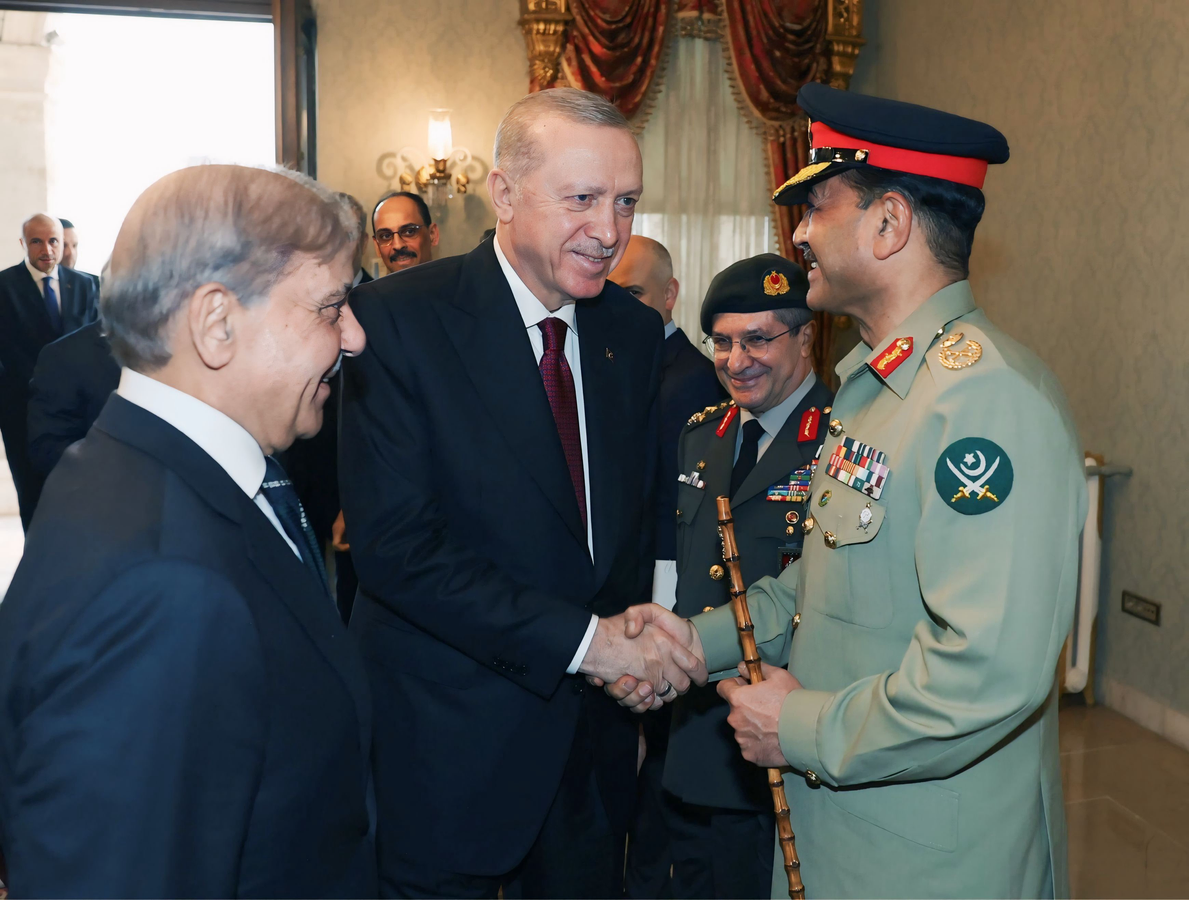
Writing for ‘Times of Israel’, Sergio Restelli, an Italian political advisor, author, and geopolitical expert, said that both Jerusalem and New Delhi should closely monitor Prime Minister Narendra Modi's upcoming visit to Israel, with the Turkish-Pakistani dynamics and potential issues such as Turkish nuclear ambitions warranting closer scrutiny.
"When policymakers discuss nuclear proliferation, attention usually turns to Iran or North Korea. However, a growing concern—still under-examined in global discourse—is the possibility of a future Turkish nuclear weapon," Restelli stated.
He cited Michael Rubin, Director of policy analysis at the Middle East Forum and senior fellow at the American Enterprise Institute, who argued that India, in particular, should not overlook this scenario—a warning that deserves broader scrutiny—in both New Delhi and Jerusalem.
"Turkey is a NATO member and a long-standing participant in the global non-proliferation regime. It is also home to US tactical nuclear weapons under NATO's nuclear-sharing arrangements. Formally, Ankara remains bound by the Nuclear Non-Proliferation Treaty (NPT). However, President Recep Tayyip Erdogan has in the past publicly questioned why some states are permitted nuclear weapons while others are not," Restelli detailed.
"Combined with Turkey's increasingly assertive regional posture—from Syria to Libya to the Eastern Mediterranean—this rhetoric has raised questions among security analysts about Ankara's long-term ambitions," he added.
According to the report, the implications for Israel are "immediate and strategic."
Israel, it said, followed a policy of nuclear ambiguity, using deterrence without formal declaration, while its security doctrine emphasizes preserving qualitative military superiority in a volatile region.
"A Turkish nuclear capability—even if framed as defensive—could reshape regional calculations. Turkey is not a peripheral actor; it has deep influence across the Levant, maintains close ties with certain Islamist political movements, and has experienced strained relations with Jerusalem over the past decade," the report mentioned.
The report highlighted that India’s concerns are different yet equally serious, with its strategic landscape defined by two nuclear-armed neighbours Pakistan and China.
"Ankara's growing alignment with Islamabad on several diplomatic and defence issues has not gone unnoticed in New Delhi. A Turkish nuclear capability, particularly if accompanied by expanded defence cooperation with Pakistan, would complicate India's security calculus across West Asia and beyond," it noted.
Asserting that the question is not whether Turkey will build a nuclear weapon tomorrow, the report said, "The question is whether the international community is prepared for the geopolitical shockwave if it ever chooses to do so. In a world already struggling to contain proliferation pressures, a new nuclear-armed power at the crossroads of Europe and the Middle East would not merely shift regional balances—it could accelerate the unravelling of the global non-proliferation order itself."