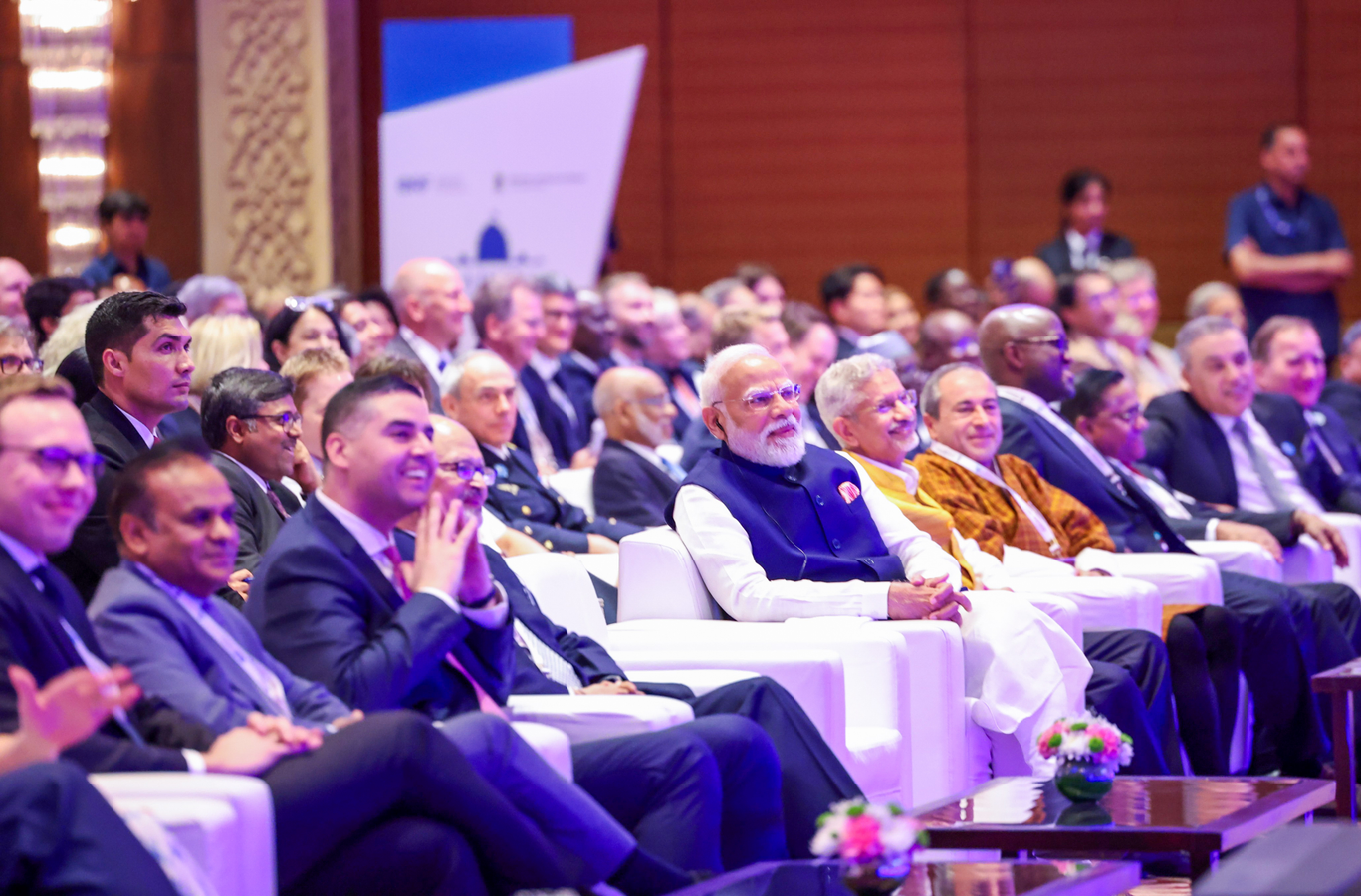
Tel Aviv, March 10 – The recently concluded Raisina Dialogue in New Delhi reflected India’s broader diplomatic approach by hosting voices from both Israel and Iran on the same strategic platform amidst the escalating conflict between the two countries. In doing so, New Delhi demonstrated its willingness to engage with both sides without formally aligning with either, according to a report on Tuesday.
Writing for ‘The Times of Israel’, Sergio Restelli, an Italian political advisor, author, and geopolitical expert, said that the “juxtaposition” of the Israeli and Iranian perspectives in the same forum demonstrated India’s commitment to maintaining diplomatic engagement with rival actors despite ongoing hostilities.
“The Raisina Dialogue has increasingly become more than just a conference. It functions as a platform where India signals the principles guiding its foreign policy. The sequence of events this year – the virtual participation of Israeli Foreign Minister Gideon Sa’ar, followed by the appearance of Iran’s Deputy Foreign Minister Saeed Khatibzadeh in Delhi – offered a particularly clear illustration of how New Delhi manages competing relationships in a polarized geopolitical environment,” Restelli stated.
“The order of appearances was itself revealing. Israel’s foreign minister addressed the conference virtually first, outlining Israel’s security concerns and defending the military campaign launched against Iran. Shortly thereafter, Iran’s Deputy Foreign Minister appeared in Delhi and used the same platform to sharply criticize the war and warn that Tehran viewed the confrontation as existential,” he added.
According to the report, the Raisina Dialogue this year unfolded against a backdrop of conflict in West Asia, highlighting the complexity of India’s diplomatic stance.
“For India, this convergence of events created a delicate diplomatic moment. Within a matter of days, New Delhi had reaffirmed its partnership with Israel, hosted an Iranian warship as part of its naval diplomacy, witnessed the ship’s destruction during the escalation of the war, and then welcomed an Iranian deputy foreign minister to speak at its flagship strategic conference,” it stated.
“The result illustrates the defining characteristic of India’s foreign policy: strategic autonomy. India has steadily expanded its partnership with Israel, particularly in defense technology, intelligence cooperation, and innovation. At the same time, it maintains long-standing ties with Iran rooted in geography, energy interests, and connectivity projects such as the development of the Chabahar port. Both relationships serve critical Indian interests,” it further mentioned.
The war between Israel and Iran, the report said, is not just a regional security crisis but a “potential disruption to the connectivity architecture that India is attempting to build across the Indo-Mediterranean.”
“India’s response has not been to position itself as a mediator, nor to adopt neutrality in the classical sense. Instead, New Delhi is pursuing influence through continued engagement with all sides,” it noted.