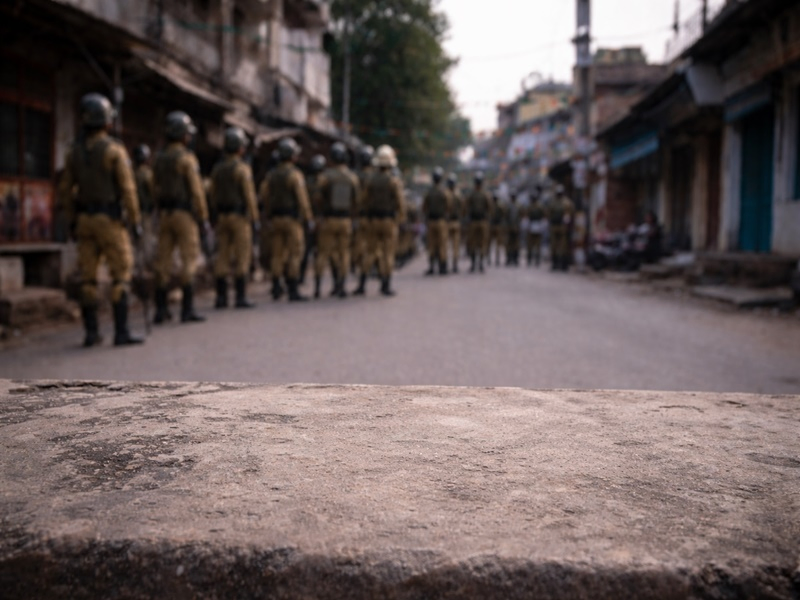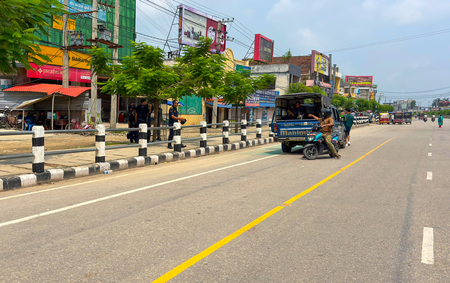
Tensions between the two communities in Birgunj arose a few days after similar clashes erupted in Gaur, the district headquarters of another southern border district, Rautahat.
These incidents occurred just days before the scheduled elections for the House of Representatives on March 5.
The District Administration Office (DAO), Parsa, said the curfew has been enforced within the boundaries of Birgunj Bypass to the east, the Sirsiya River to the west, Gandak Chowk to the north, and Shankaracharya Gate to the south.
"The order is in effect from 9:45 am on Monday until further notice," the DAO said. During this period, all gatherings, processions, demonstrations, assemblies, meetings, and sit-ins within the designated areas have been prohibited.
Chief District Officer Bhola Dahal told reporters that the prohibitory order was issued following a dispute over road parking that threatened to turn into religious strife. "On Sunday evening, a four-wheeler driven by a Muslim man could not pass through a road due to motorcycles parked by some Hindu youths in Shripur. The local dispute threatened to escalate into a Hindu-Muslim confrontation due to insulting chants exchanged between the two sides," said Deputy Superintendent of Police Hari Bahadur Basnet, spokesperson for the District Police Office, Parsa.
He said that the situation has come under control following the enforcement of the curfew.
Birgunj, which borders India's Raxaul town, is the main gateway for Nepal's exports and imports and one of the key entry points between the two countries. The city, home to both Hindu and Muslim communities, has witnessed sporadic religious tensions.
In early January, a curfew was imposed in Birgunj following vandalism of a mosque in Dhanusha district, another district of southern Madhesh Province, to prevent potential religious unrest amid protests by Muslim groups.
In Gaur city of Rautahat, clashes between Hindu and Muslim groups erupted late last week after a Hindu wedding procession came into conflict with members of the Muslim community performing religious rituals during the month of Ramadan.
Basnet said the prohibitory order was necessary to prevent a minor local dispute from escalating into a wider Hindu-Muslim conflict and polarization.