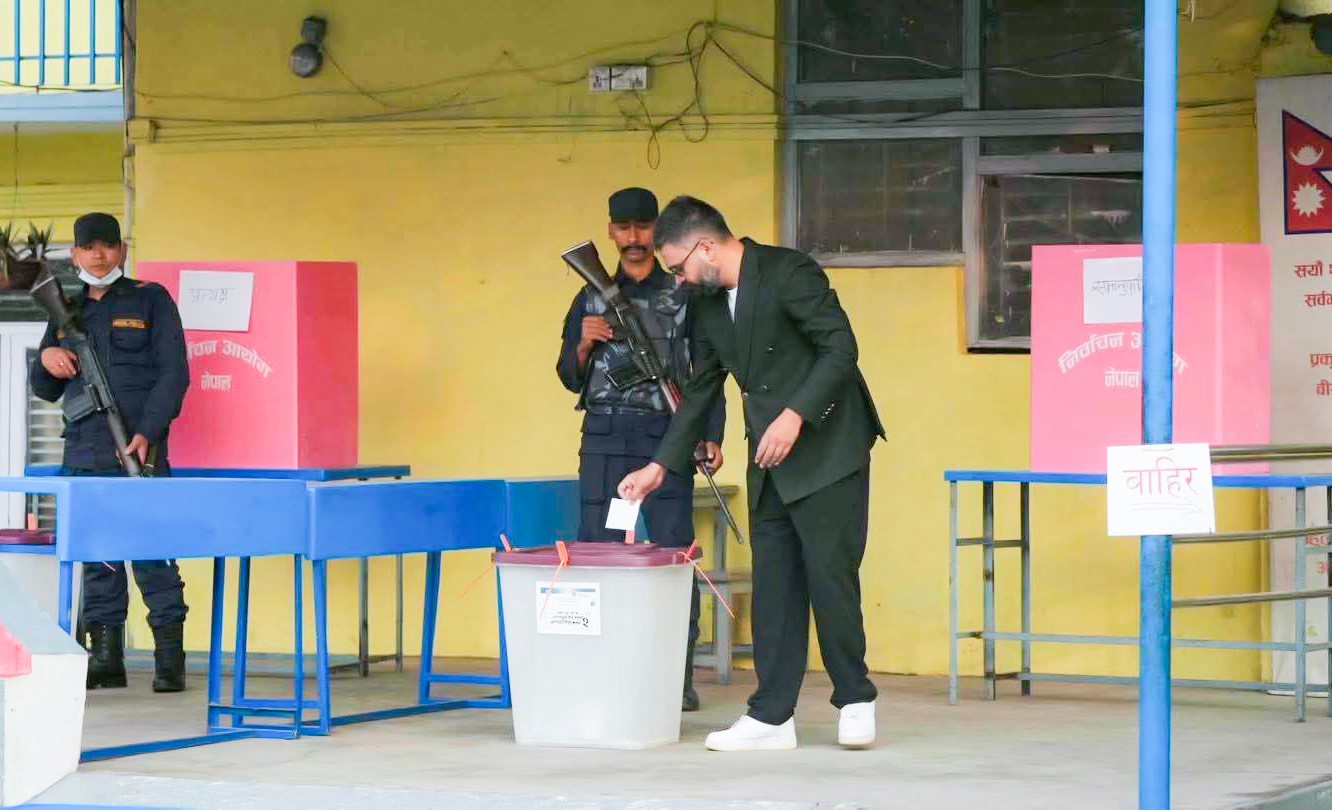
Kathmandu, March 11 – The clear majority secured by the Rastriya Swatantra Party (RSP) in Nepal's recent parliamentary elections is likely to reduce near-term political uncertainty and improve policy predictability in the Himalayan nation, Fitch Ratings said on Wednesday.
“This provides an opportunity for enhanced policy predictability and the implementation of governance and economic reforms,” the international rating agency added. The three-and-a-half-year-old party won 125 out of 165 seats under the First-Past-the-Post (FPTP) electoral system and secured nearly 48 per cent of votes under the proportional electoral system, according to the Election Commission of Nepal. These results would give it close to two-thirds of seats — 184 out of 275 — in the House of Representatives, the lower house of parliament.
Fitch noted that the election outcome should lower the risk of prolonged coalition negotiations following severe unrest last year, reduce the likelihood of frequent government changes seen in recent years, and potentially boost investor sentiment over time if signals point to tangible improvements in governance and economic reform delivery.
Following the fractured mandates of the 2022 parliamentary elections, Nepal saw several governments over the past three years, as traditional political parties prioritized forming—and then dissolving—coalitions. Public perception that political leaders were engaged in corruption triggered massive Gen Z protests in September last year, which led to the fall of the government led by then-Prime Minister KP Sharma Oli, chairperson of the Communist Party of Nepal (Unified Marxist-Leninist) or CPN (UML).
An interim government, headed by Sushila Karki, subsequently organised elections to the House of Representatives on March 5, granting the RSP a new mandate to form the next government, potentially led by senior party leader Balen Shah.
“The scale of the RSP’s victory reflects a voter mandate to break with the status quo politics of power-sharing,” Fitch noted. With the Nepali Congress and the CPN-UML losing seats, a single-party majority—pending final certification by the Election Commission—could shorten the political transition and help sustain reform momentum, particularly in translating hydropower-led investment into broader economic growth.
The RSP has set an ambitious target of around seven per cent average real economic growth over the next five years, aiming to raise per capita income above USD 3,000. Fitch said the new government’s policy agenda will be crucial in determining whether growth can surpass the agency’s current forecast of 4.5 per cent for the fiscal year ending July 15, 2027. The party plans to focus on productivity gains, formal job creation to curb emigration, and private-sector-led investment across infrastructure, agriculture, services, digital, and innovative industries.
Fitch reaffirmed Nepal’s ‘BB-’ sovereign rating with a Stable Outlook in November 2025, highlighting that strong, sustainable growth supported by governance improvements and investment-friendly regulations could enhance Nepal’s credit profile. However, the agency cautioned that implementation capacity could pose risks. “Nepal’s weak government effectiveness and regulatory quality scores compared with peers could constrain execution, particularly if reform sequencing is unclear or governance outcomes lag expectations,” Fitch said. The agency added that private and foreign investment will depend on tangible improvements in the business environment, accountability frameworks, and sustained anti-corruption measures.