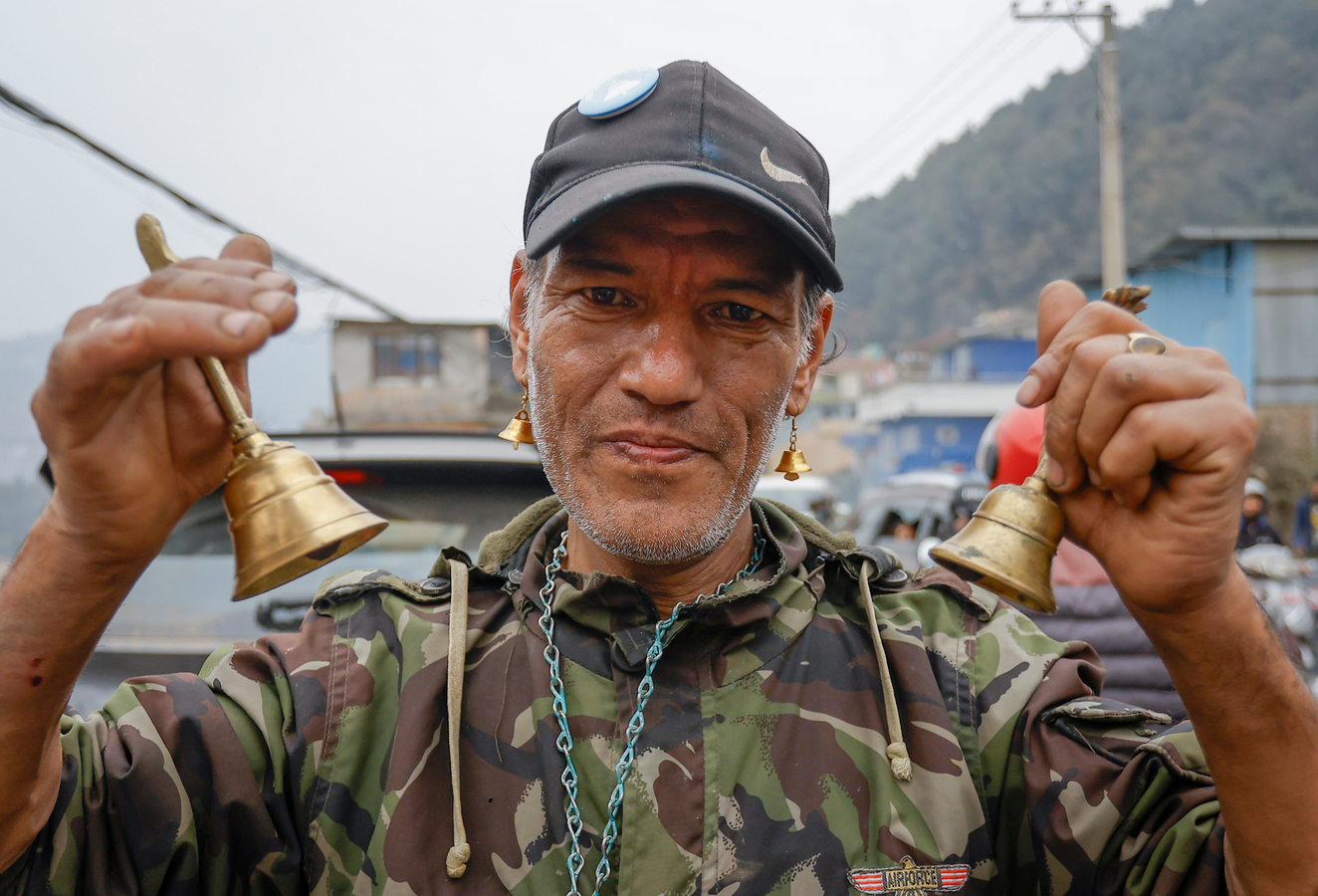
Kathmandu, March 7 Balendra Shah, a rapper turned politician, and his newly formed Rastriya Swatantra Party (RSP) are poised for a landslide victory in Nepal's first general elections since the violent Gen Z protests, significantly impacting the dominance of established political parties.
The RSP, formed in 2022 by Ravi Lamichhane, has won 39 of the 50 seats declared so far, including a clean sweep in 10 constituencies of Kathmandu district, and is leading in another 80. According to the Election Commission.
The party, which nominated Balendra Shah as its prime ministerial candidate and held its first election campaign in Janakpur of Dhanusha district, is on track to win a majority of seats in the province.
"Balen," as he is known, presented himself as the "son of Madhesh" during the campaign, and the party launched the campaign "Ab ki bar Balendra Sarkar" (This time there will be Balendra's government).
Out of the total 32 seats in eight districts of Madhesh province, the RSP has won seven and is leading in 23 other constituencies.
The party is also winning convincingly in the Kathmandu Valley, securing all 10 seats in Kathmandu district and two in Bhaktapur, and one in Lalitpur.
The party is leading in the two remaining seats in the Kathmandu Valley as well.
The party held a road show led by Balen in all 15 constituencies of the Kathmandu Valley on the last day of the election campaign.
The Nepali Congress has secured victory in six seats and is leading in another 12. The Nepali Communist Party has won two seats and is leading in another six.
The Communist Party of Nepal (Unified Marxist–Leninist) of ousted prime minister K P Sharma Oli has won two seats and is leading in eight.
The Shram Sanskriti Party and the Rastriya Prajatantra Party are leading in four seats each.
One seat was won by an independent. Vote counting is in progress in 162 of the 165 constituencies, according to the Election Commission.
Ravi Lamichhane, the RSP chairman, won with a significant margin in the Chitwan-2 constituency, securing his third consecutive victory.
The former home minister received 54,402 votes against his closest rival Mina Kumari Kharel from Nepali Congress, who received 14,564 votes.
Balendra Shah, who was the mayor of Kathmandu until recently, received 52,069 votes in Jhapa-5 constituency against four-time prime minister and CPN-UML chair K P Sharma Oli, who has a strong base in the area. Oli received just 14,031 votes so far.
The 35-year-old engineer is expected to be the next prime minister of Nepal, reflecting a public mood of rejection of established parties. Nepal has had 14 governments in the last 18 years.
According to the Election Commission, former premier Pushpa Kamal Dahal Prachanda won from Rukum Purba district. The Nepali Communist Party leader secured 10,240 votes against his rival Lilamani Gautam of CPN (UML), who got 3,462 votes.
The RSP is also leading in proportional voting system with the party bagging 126,503 votes followed by Nepali Congress with 38,343.
The CPN (UML) has received 28,721, Rastriya Prajatantra Party 10,962, Nepali Communist Party 10,794 and Shrama Shakti Party 6,474 votes till now.
Under the proportional voting system, candidates cast their votes for the political party and the seats are allotted on the basis of proportion of votes cast in favour of a certain party. Altogether 110 seats are allotted under proportional voting system.
The election is being closely watched by India, which hopes for a stable government in the politically fragile Himalayan nation to take forward the developmental partnership between the two sides.
"We look forward to working with the new Government of Nepal to further build on the robust multifaceted ties between our two countries and peoples for mutual benefit," Ministry of External Affairs Spokesperson Randhir Jaiswal had said in Delhi on Thursday.
He said India has "consistently supported peace, progress and stability in Nepal and in keeping with our commitment, provided logistical supplies as per request from the Government of Nepal for these elections".
Out of a total of 275 members of the Parliament, 165 will be elected through direct voting, while the remaining 110 will be elected through a proportionate method.
In the Nepal elections, about 18.9 million voters were eligible to elect 275 members of the House of Representatives, with around 60 per cent of them turning out to vote on Thursday.
Around 3,400 candidates are vying for 165 seats under direct voting, and 3,135 candidates for 110 seats through proportionate voting.
The Gen Z youth, through their two-day intensified protests on September 8 and 9 last year, ousted Prime Minister Oli, who was heading a coalition government with the backing of Nepali Congress that enjoyed nearly two-thirds majority support.
Balen was a popular choice to lead the interim government after Gen Z youths toppled the Oli-led coalition government.
But Balen declined to lead the interim administration, saying he would rather head the government by contesting the parliamentary election for a full term.
In January, he joined the RSP, which was formed in 2022 by Ravi Lamichhane, and was soon declared the party's prime ministerial candidate. The RSP received significant support during the campaign.
Nepali Congress president Gagan Thapa was the prime ministerial candidate of his party, whereas the CPN (UML) projected Oli as its PM face. Both Nepali Congress and CPN (UML) were part of the government toppled by the Gen Z last year.
After Oli's ouster, President Ramchandra Paudel dissolved the House of Representatives on September 12 and appointed Sushila Karki as the caretaker PM.
The major issues raised by Gen Z are anti-corruption, good governance, an end to nepotism, generational change in political leadership, etc.