Kathmandu, March 7 RSP leader and rapper-turned-politician Balendra Shah 'Balen' defeated four-time prime minister K P Sharma Oli by a significant margin of about 50,000 votes in the Jhapa-5 constituency, the traditional stronghold of the CPN-UML.
The Rashtriya Swatantrata Party (RSP) leader and former Kathmandu Mayor, popularly known as Balen, is his party's candidate for prime minister, while Oli was also projected as the PM candidate for his party, the Communist Party of Nepal (Unified Marxist–Leninist).
Balen, 35, secured 68,348 votes against 18,734 votes for the 74-year-old Oli in the constituency, where the former prime minister had remained undefeated for years, the Election Commission (EC) said.
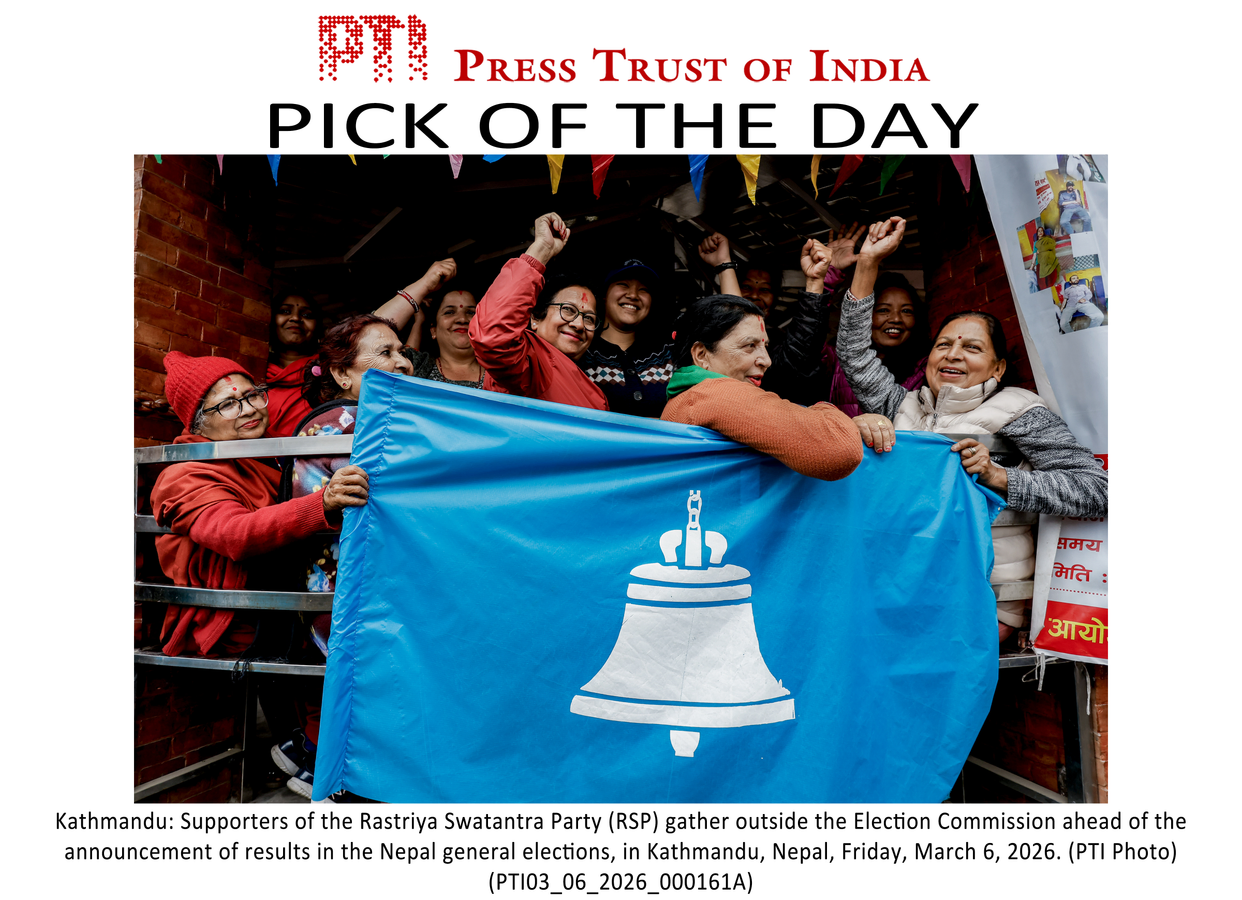
As of 6:30 pm, the RSP had won 62 seats out of the 78 for which results have been declared and is leading in 60 seats.
Balen joined the Rastriya Swatantra Party (RSP), led by Ravi Lamichhane, in January and was soon declared the party's candidate for prime minister.
The RSP is almost certain to achieve a clear majority in the parliamentary elections, as it is heading towards close to two-thirds majority, evident from the leading positions of the party and the votes it secured under the proportional voting system.
Nepal voted on Thursday in the first general elections since the violent Gen Z protests last year that demanded a generational change in politics and a corruption-free regime in the Himalayan nation.
Balen, who is from Kathmandu, chose Jhapa 5 to challenge Oli, the former prime minister and chair of CPN-UML.
The RSP, in fact, created a wave not only in the Kathmandu Valley, but its influence extended to Koshi Province in the east to Sudur Paschim in western Nepal as well as Madhes Province and central Nepal.
Across the country, the RSP dismantled many strongholds, pockets and core areas of Nepal's two big parties, the Nepali Congress (NC) and the CPN-UML.
Some 11 office bearers of the CPN-UML suffered humiliating defeats at the hands of RSP candidates while more than a dozen NC strongmen also lost the election, the EC data showed.
Sunil Babu Pant, former MP and a political analyst, said, "The victory of Rastriya Swatantrata Party in the March 5 elections and the expectation that Balen Shah could emerge as Nepal's next Prime Minister reflects the people's deep-rooted frustration with the old political order and their hope for a new direction."
"As Balen assumes the country's leadership, his first responsibility must be to demonstrate that corruption will not be tolerated under any circumstances," he said.
Balen will also face a complex geopolitical challenge, Pant said, adding, "He must prove that he is not a puppet of any external power, western or otherwise. Nepal's leadership must carefully balance relations with all global actors and pursue an independent foreign policy that prioritises the national interest."