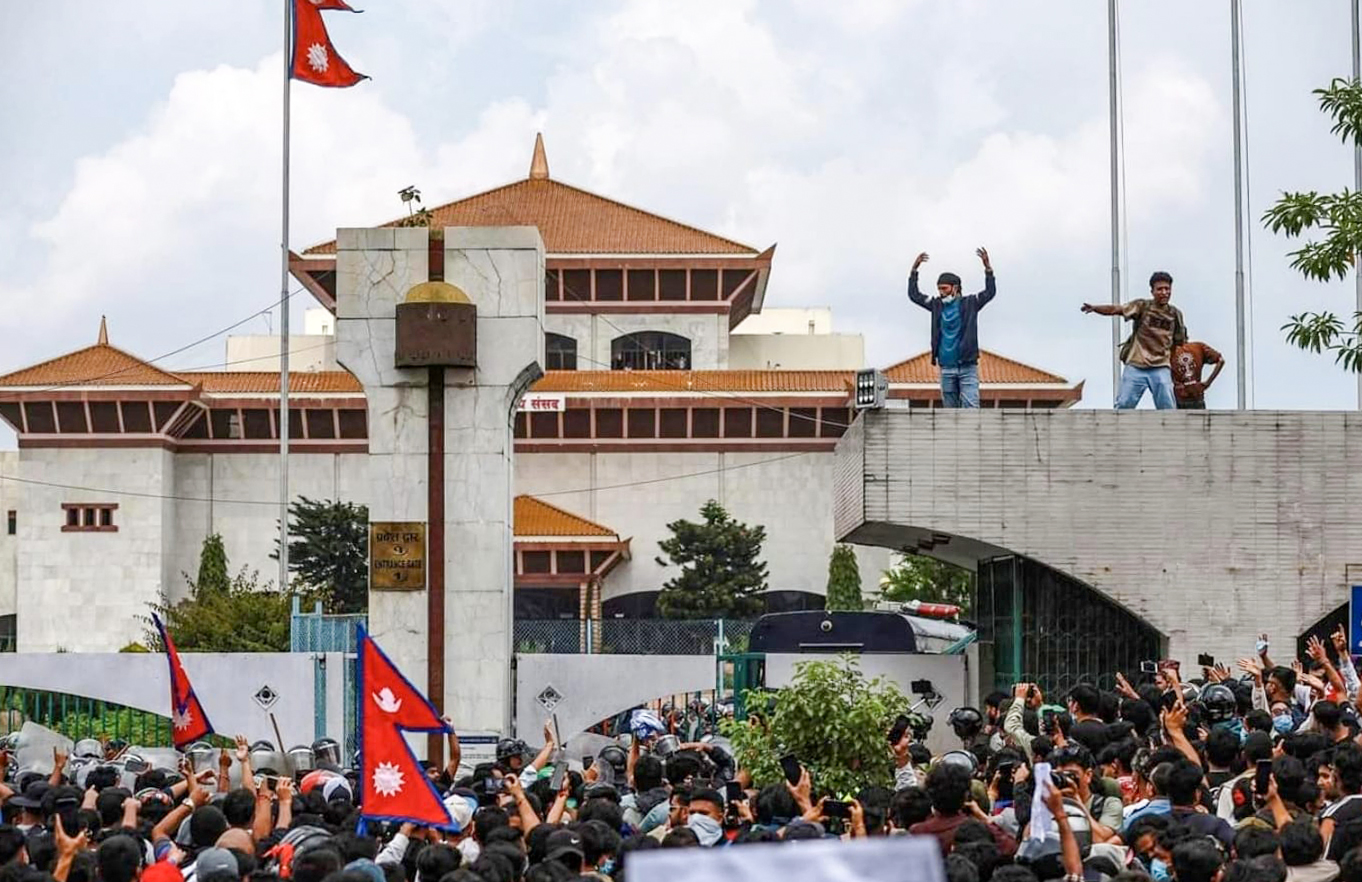
New Delhi, February 25 – As Nepal prepares for elections on March 5, security agencies have warned of several challenges, including political clashes, communal disturbances, and prison escapes during last year's Gen Z protests, according to reports from Kathmandu on Wednesday.
Some communist factions and groups advocating for the restoration of the monarchy are opposing the elections, leading security agencies to closely monitor them, reported the Kathmandu Post.
"Security agencies have identified a dozen security challenges, including clashes between supporters of various political parties, communal disturbances, religious tensions, activities of monarchist factions, prisoners who escaped from jails during the Gen Z protests in September, and activities of various political parties that have boycotted the election," the report stated.
In a separate report published on Wednesday, the newspaper raised doubts about "whether the snap election will take place as scheduled."
It added that controversial monarchist Durga Prasain and his supporters have been expressing opposition to holding the election.
Referring to the tightened security measures, the newspaper recalled former King Gyanendra, in a video message released on February 18, stating that holding polls under the current circumstances would not provide a solution for the country.
His remarks, according to the report, have added to the growing uncertainty about whether the election could be held as scheduled.
Incidentally, thousands of supporters had gathered at the Kathmandu airport on February 13 to welcome the former king when he returned from a trip to eastern Nepal.
Chanting "Bring back the king. We love our king more than our own selves. Restore constitutional monarchy," the crowd lined the route to Gyanendra's residence.
The show of support at the airport, ahead of the crucial March poll, had police officers in riot gear struggling to control the supporters.
In 2006, massive street protests forced Gyanendra to relinquish power, and two years later, Nepal's Parliament voted to abolish the monarchy, as the former king left the Royal Palace to live as a commoner.
However, even as doubts about the snap poll grow on social media, the Kathmandu Post report contends that both the government and political parties participating in the process have affirmed that the election will be held on the stipulated date.
"We have essentially identified the elements that can pose security challenges, but those who spread rumors on social media, whether inside or outside the country, remain the major challenge that needs to be addressed," a senior unnamed security official told the newspaper.
The report added that with the election to the House of Representatives approaching, "the government has started expediting security updates at the highest levels on a daily basis."
On Tuesday, interim Prime Minister Sushila Karki and Home Minister Om Prakash Aryal held back-to-back security briefings and reviewed the security situation, focusing on the election, it added.
The Prime Minister was also briefed by chiefs of all security agencies regarding election preparations and the overall security situation, according to a notice issued by Karki's private secretariat.
The parliamentary election was scheduled under an interim government, which was constituted after the resignation of then Prime Minister K.P. Sharma Oli, who was facing widespread Gen Z anti-corruption protests in September last year.