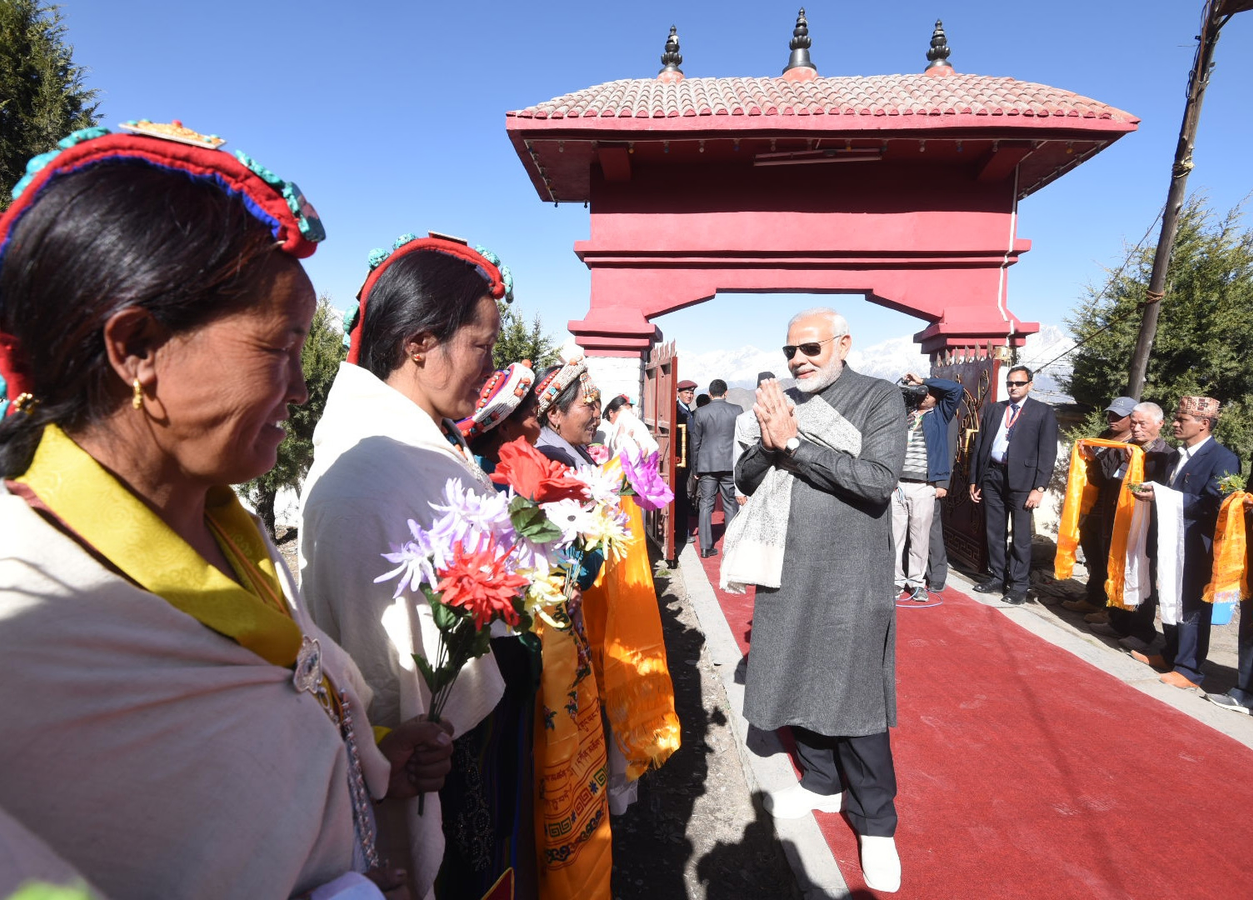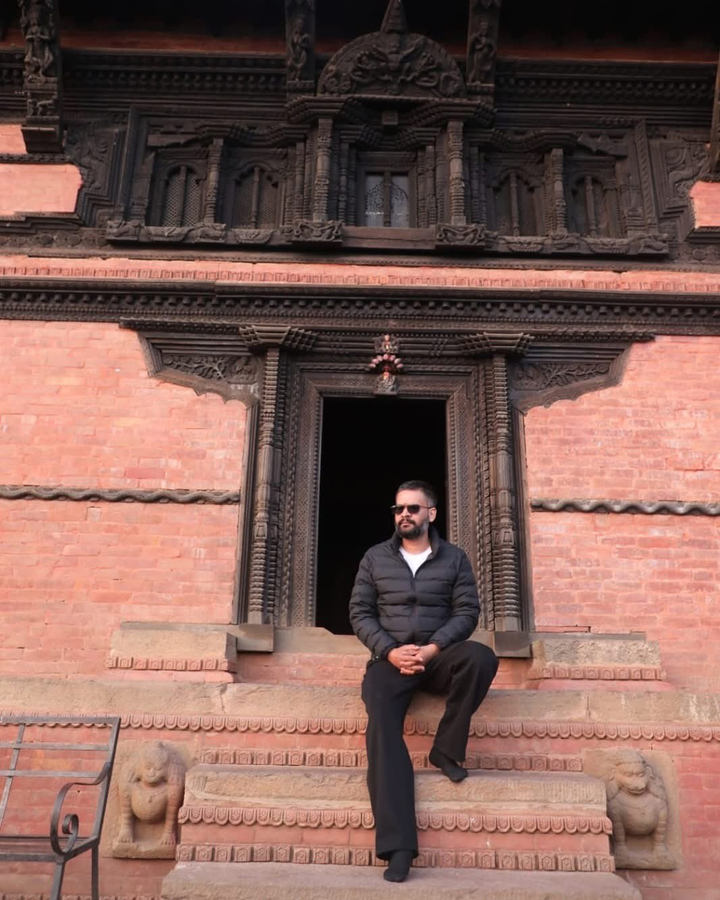
Kathmandu, March 8 – Nepal's election results may offer a chance to reset Kathmandu's relations with India, which have been strained recently, with a strong government expected in the Himalayan nation that can provide the impetus needed to improve relations.
The 1950 India-Nepal Treaty of Peace and Friendship forms the basis of bilateral relations, emphasizing open borders and cultural ties. India has been a key development partner for Nepal, contributing to trade and investment initiatives. Additionally, the relationship is rooted in social and cultural connections, with significant people-to-people interactions.
Despite the strong ties, the relationship has faced challenges, influenced by political changes in Nepal. Key issues, such as unresolved border disputes, a growing lack of trust, security concerns, and political interference, have added complexity to the bilateral relationship.
"India has consistently supported peace, progress, and stability in Nepal, and, in keeping with our commitment, we have provided logistical supplies as requested by the Government of Nepal for these elections," said India's Ministry of External Affairs, welcoming the successful conduct of the elections on March 5.
"We look forward to working with the new Government of Nepal to further strengthen the robust, multifaceted ties between our two countries and peoples for mutual benefit," the statement added, congratulating the government and the people of Nepal.
When the election results were emerging, Jayant Prasad, former Ambassador to Nepal, told IANS, "The only hope and wish, and some confidence I have is: The election throws up a clear mandate that provides good governance for Nepal."
In recent years, China's influence has been growing, raising concerns in New Delhi. Even with the Rastriya Swatantra Party (RSP) now set to form the next government in Nepal, it would be pragmatic not to expect an overnight shift in diplomatic relations.
When the party failed to mention a major project in the eastern district of Jhapa, near the border with India's sensitive Siliguri corridor, it was seen as a significant departure from former Prime Minister K.P. Sharma Oli's "pro-China" stance.
The Damak Industrial Park was part of Beijing's ambitious Belt and Road Initiative (BRI), which New Delhi had flagged, considering its sensitivity at the strategic border point. However, in the same manifesto, the RSP also promised to review the exchange rate with India. Since 1993, 100 Indian rupees have always equaled 160 Nepali rupees, regardless of global economic conditions.
The party announced in the run-up to the election that it would change the currency exchange rate with India if it came to power. "Since the exchange rate with the Indian rupee has been stable for three decades, we will study and review this system with the participation of prominent international academics," stated the RSP pledge. It said the party will seek the opinion of prominent international experts for a detailed study reassessing the exchange rate framework with India.
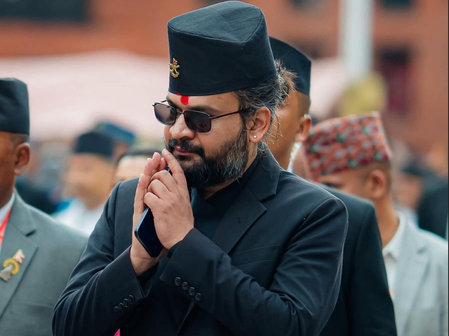
While earlier governments were largely seen as "pro-India" or "pro-China" in their respective policies, RSP's projected PM candidate Balen Shah is considered a strong nationalist. Like many among his generation, he would prefer keeping an equal distance from the two neighbouring giants without taking sides in case of a rift.
As with the party he now represents, Balen has raised the "Nepal First" rhetoric to woo electors in the run-up to the poll.
He earlier expressed sentiments for other nations on social media using words that any politician or diplomat would simply abhor. But that was earlier. Though reports link his student days in India, his supporters see Balen as someone who will work only for Nepal's interests.
The engineer-rapper had put up a "Greater Nepal" map in his mayoral office that included certain Indian territories. It was referred to as a symbolic reply to India, exhibiting the "Akhand Bharat" mural in the new Parliament building.
Balen had also called for a ban on Indian movies, criticising a film describing Goddess Sita as "India's daughter". He contested the claim, highlighting traditions that put her birthplace in what is Nepal’s territory or close to its border with Bihar.
When he assumes office, it will be as the head of a single-party government, marking the first time since Nepal adopted its constitution in 2015.
With employment and economy being the key issues, RSP leaders will follow the 'Nepal First' policy. According to World Bank data, India is Nepal's largest trading partner, accounting for USD 8.6 billion or 63 per cent of imports; China follows at USD 1.8 billion or 13 per cent.