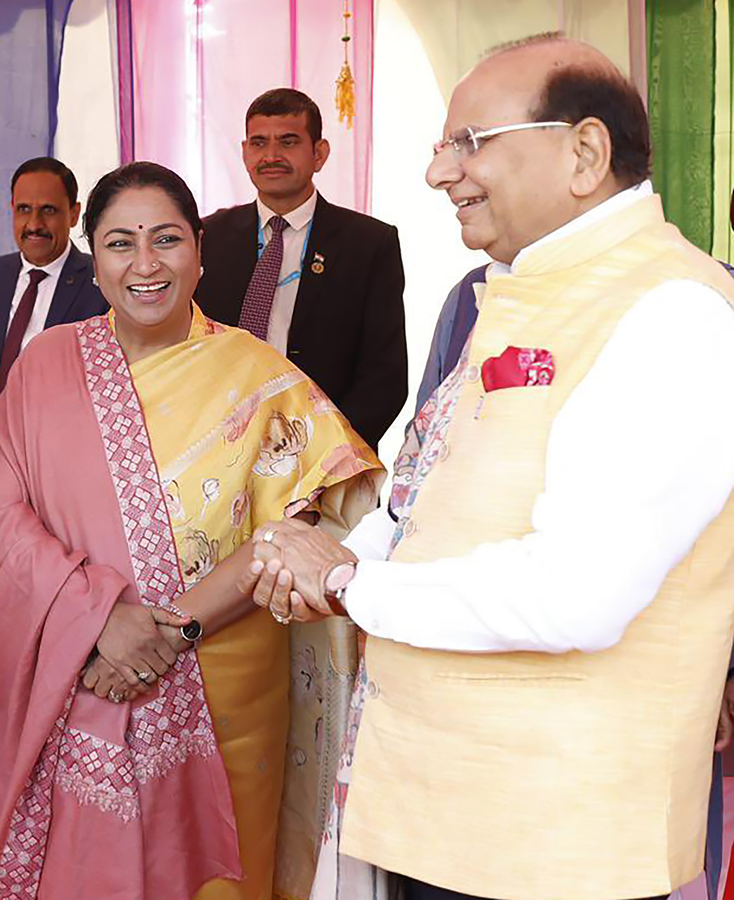
New Delhi, February 24 – Delhi Lieutenant Governor V.K. Saxena has approved the creation of 272 additional posts, including two District Magistrates and eight Sub-Divisional Magistrates, in the Revenue Department, in light of the newly created districts and sub-divisions, an official said on Tuesday.
The newly sanctioned posts include two Assistant Commissioners, six Sub-Registrars, 16 Tehsildars/SOs, 22 Naib Tehsildars, 42 each of Senior Assistants and Junior Assistants, and 52 MTS, as well as several posts in the Accounts, Planning, DSS, and Steno cadres, the official said in a statement.
Before the creation of the two new districts, there were 1,553 sanctioned posts in the 11 districts of the Revenue Department. After the creation of the 272 posts, the total sanctioned posts in the 13 districts have increased to 1,825.
The Delhi Cabinet approved the reorganization of Revenue Districts in the National Capital from 11 to 13 districts, along with the corresponding increase in Sub-Divisions (from 33 to 39) and the establishment of 39 Sub-Registrar offices, making Revenue Districts co-terminus with MCD Zones/NDMC/Cantonment Board, on December 11, 2025.
The reorganization has been finalized and mapped in accordance with the Cabinet approval and is aligned with the direction of the Deregulation Cell, Ministry of Home Affairs (MHA), as well as the Government of India’s Ease of Living mandate, said the statement.
The reorganization has significantly enhanced the statutory responsibilities of the Revenue Department, including expanded judicial and administrative workloads under the BNSS, 2023, intensified field-level operations for land record management, Disaster Management work, Election duties, Public Welfare schemes, Issuance of Certificates, and year-round festival management, said a statement.
Saxena’s approval for these additional posts in the Revenue Department will strengthen field-level administration, reduce staff shortages, and improve service delivery to citizens, said the statement.
With the Revenue Department having the maximum public interface, these measures are intended to directly enhance efficiency and reduce administrative hurdles.
As part of a digital push and to bridge the digital divide, the government has integrated e-District services with the Common Service Centre (CSC) network.
Citizens will no longer need to visit multiple government offices for minor tasks. Over 7,000 active CSC centres across Delhi will provide services locally, said a government statement.
Under this initiative, approximately 75 e-District services, including income, caste, and residence certificates; birth and death certificates; services related to social welfare, food and civil supplies, labour, and education, will be available.
Each service will carry a nominal fee of Rs 30, ensuring transparency and equal accessibility. Chief Minister Rekha Gupta described this as a historic step that will curb financial exploitation by private cyber cafes and ensure affordable, simple, and transparent government services across the national Capital.