Gandhinagar, March 27. Mandatory registration of live-in relationships and equal inheritance rights for sons and daughters are part of the Gujarat government's recently detailed framework under the Uniform Civil Code Bill, 2026.
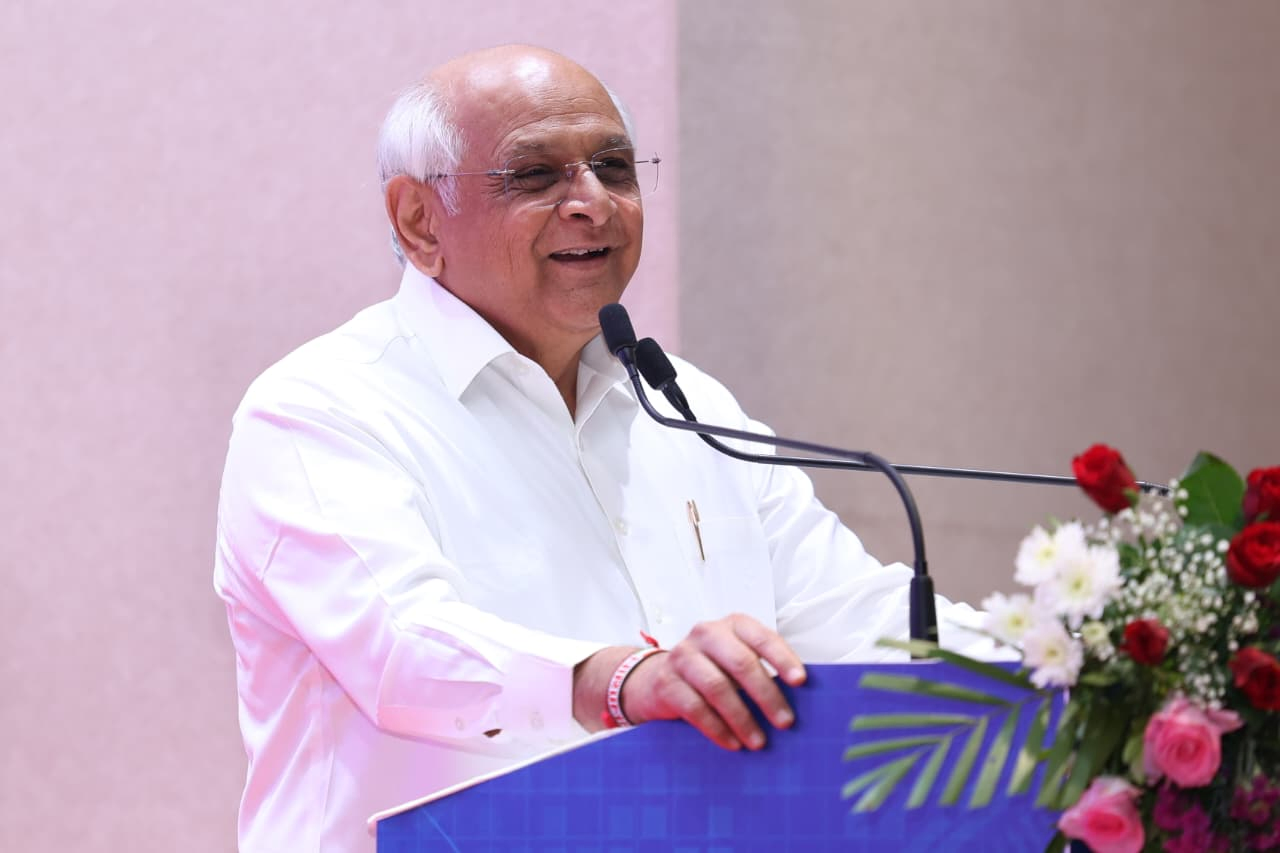
Chief Minister Bhupendra Patel stated that the provisions are designed to strengthen legal protection for women.
The legislation, passed earlier this week in the state Legislative Assembly, requires live-in relationships to be registered, with non-compliance punishable by up to three months' imprisonment or a fine of Rs 10,000.
In cases where individuals in such relationships are between 18 and 21 years of age, their parents will be informed of the registration.
The bill provides for strict penalties where consent is obtained through force, intimidation or fraud, and prescribes action under the Protection of Children from Sexual Offences Act (POCSO) in cases involving minors.
It also includes penalties for individuals who enter into live-in relationships while already married.
Under the provisions, women in live-in relationships are entitled to maintenance in cases of abandonment, while children born from such relationships are granted legal recognition, including rights related to identity, maintenance and inheritance.
The government said registration would help regulate such relationships and protect the rights of women and children.
The bill also introduces a uniform framework governing marriage, divorce and inheritance. It mandates registration of marriages within 60 days, with a penalty of up to Rs 10,000 for failure to comply.
Marriages conducted through force, coercion or fraud, as well as cases involving multiple marriages, may attract prison sentences of up to seven years.
The government said compulsory registration would provide legal recognition and help establish verified marital status, reducing the scope for fraud.
Divorce under the law must be processed through the courts and subsequently registered; divorces carried out outside the legal system are deemed invalid.
Violations may result in a sentence of up to 3 years' imprisonment.
The provisions also allow women to remarry without conditions following a legally recognised divorce.
According to the government, these measures are intended to prevent fraudulent separations, illegal divorces and misrepresentation of marital status while ensuring transparency in future marriages.
The legislation establishes uniform maintenance provisions across all religions and grants equal inheritance rights to sons and daughters.
The government said this would promote gender equality, strengthen women’s economic security and ensure a more equitable family structure.
While presenting the bill in the assembly, Chief Minister Patel said the measure reflected a wider commitment to equality.
“This is not merely a legal process, but our firm resolve to further strengthen the national commitment to equality, justice and unity under the leadership of the Prime Minister,” he said.
Referring to the broader framework, he added, “Prime Minister Narendra Modi has given the idea of ‘Ek Bharat Shreshtha Bharat’ to realise Sardar Patel Saheb’s dream of a united and indivisible India. That ‘Ek Bharat Shreshtha Bharat’ is the essence of the Uniform Civil Code. If there are no equal laws and equal opportunities for development in the country, then this aim cannot be achieved.”
The government stated that the bill had been prepared following a detailed study of existing Indian laws, including the Hindu Marriage Act, the Special Marriage Act and the Indian Succession Act, as well as judgments of the Supreme Court and High Courts.
Among the cases examined were Mohammed Ahmed Khan v. Shah Bano Begum (1985), Sarla Mudgal v. Union of India (1995), Shayara Bano v. Union of India (2017) and Shabnam Hashmi v. Union of India (2014), among others.
It also said the framework drew on the Uniform Civil Code implemented in Uttarakhand and comparable legal models in other countries, including the French Civil Code, the German Bürgerliches Gesetzbuch and the Turkish Civil Code.
Officials said the legislation would not interfere with religious rituals and traditions, and would be limited to regulating civil legal aspects.