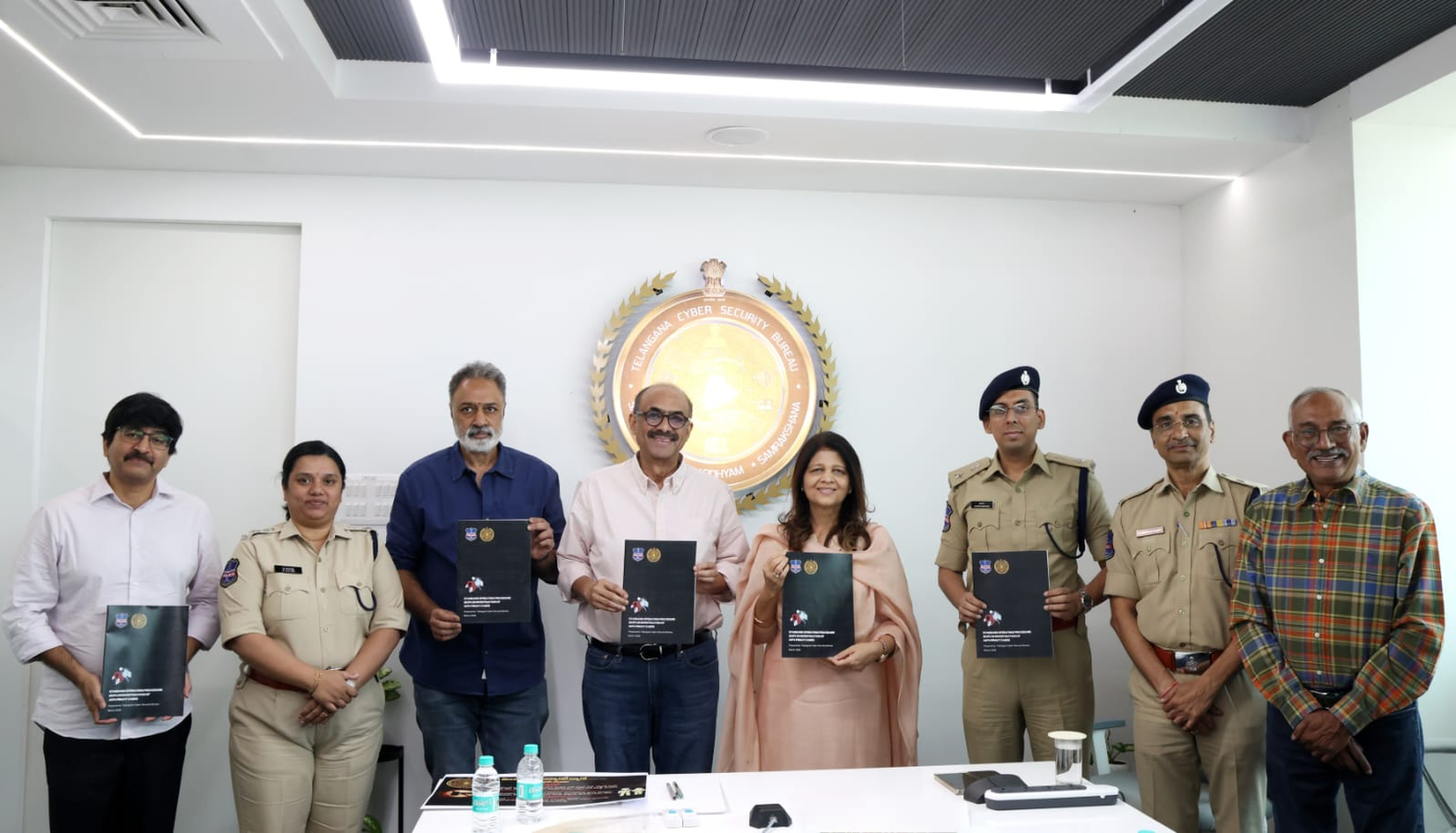
Hyderabad, March 16 – The anti-piracy unit of the Telangana Cyber Security Bureau (TGCSB) launched a new anti-piracy disclaimer on Monday, which will be displayed before movie screenings in theaters, along with a new standard operating procedure (SOP) for investigating piracy cases.
The disclaimer aims to raise awareness among audiences about the legal consequences of film piracy, and a campaign against camcording in cinema halls was also launched.
The TGCSB also launched the Standard Operating Procedure (SOP) for investigating piracy cases, designed to strengthen enforcement against digital film piracy and establish a structured framework for investigation, digital evidence collection, and coordinated action against piracy networks.
The initiatives were formally launched by Shikha Goel, Director, TGCSB, and Daggubati Suresh Babu, President, Telugu Film Chamber of Commerce, during a stakeholder consultation meeting organized by TGCSB in collaboration with the Telugu Film Chamber of Commerce (TFCC) to strengthen cooperation between law enforcement agencies and the film ecosystem in addressing the growing challenge of digital piracy.
In January, the TGSCB, in collaboration with the TFCC, set up an anti-piracy unit at the TGSCB to curb movie piracy.
During the meeting held on Monday, stakeholders discussed the scale and impact of piracy on the film industry.
According to a TGSCB release, industry estimates indicate that the Telugu film industry incurs losses of nearly Rs. 3,700 crore annually, while the Indian film industry loses over Rs. 22,400 crore due to piracy.
The Telangana Police have been actively addressing this challenge and have taken significant enforcement action against organized piracy networks.
Investigations have revealed that piracy generally originates from two primary sources: leakage of HD-quality film content before release at the post-production or digital service provider level, and cam-cording during film screenings in theaters, which accounts for the majority of piracy incidents.
Shikha Goel said that the newly launched SOP provides a comprehensive investigative framework, outlining procedures for registration of FIRs under the relevant provisions of the Copyright Act, Cinematograph Act, and Information Technology Act, forensic examination of pirated content, identification of source theaters through watermarking and server data analysis, coordination with digital service providers and industry stakeholders, preservation of electronic evidence, and action for blocking infringing URLs under applicable IT rules.
The anti-piracy disclaimer launched during the meeting will be displayed before movie screenings across theaters and incorporated into screening packages by digital service providers and exhibitors.
The disclaimer warns audiences that film piracy and unauthorized recording of films are punishable offenses, carrying imprisonment of up to three years and/or a fine of up to Rs. 3 lakhs, or 5 per cent of the production cost of the film, and aims to act as a strong deterrent against illegal recording and distribution of films.
The consultation also emphasized preventive measures across the film distribution chain, including secure handling and transmission of film content, restricted access through authorized authentication systems, vigilance by exhibitors to prevent cam-cording inside cinema halls, retention of CCTV recordings for at least one month after release, and implementation of theatre-specific forensic watermarking to help trace the source of pirated copies.