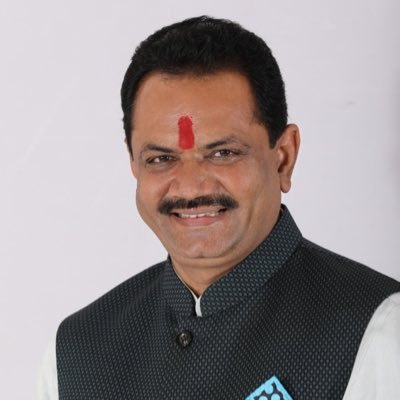
Gandhinagar, February 26 Gujarat's Minister of Agriculture and government spokesperson, Jitu Vaghani, said on Thursday that while the state leads the country in fiscal discipline, opposition-ruled Punjab, West Bengal, and Kerala are lagging behind.
Speaking in the legislative assembly during a discussion on the budget, Vaghani cited the NITI Aayog's 'Fiscal Health Index-2025' report to claim that Gujarat has been placed in the top "Achiever" category for fiscal management.
Punjab, Kerala, and West Bengal have been placed in the last category of "Aspirational" states, he said.
"Gujarat ranks first in fiscal management. But opposition-ruled states like Punjab, Kerala, and West Bengal are at the bottom," Vaghani said, adding that the rankings reflect the differences in governance models.
Gujarat's debt-to-GSDP ratio is 18.2 per cent, well below the prescribed limit of 27 per cent, the minister said, adding, "Punjab's ratio is 47 per cent and Himachal Pradesh's ratio is 45 per cent."
Opposition parties often attempt to portray borrowing in a negative light, but there is a clear distinction between "unproductive borrowing" and borrowing for capital creation, Vaghani said.
"Whenever it comes to debt, the Congress misleads the public. The reality is that the government cannot run the state simply by saving like a housewife. Borrowing for infrastructure such as highways, bridges, dams, and hospitals is a productive investment. That is why Gujarat is number one in financial discipline," he said.
Vaghani also referred to a report by the National Council of Applied Economic Research (NCAER), claiming that Gujarat has performed the best in the country in reducing its debt ratio over the last decade.
Those who have "blindly" engaged in politics for decades are now unable to see the "dawn of development," the minister said.
The Congress reduced budgets to "a web of statistics" during its rule, he claimed, adding, "There was no integrated framework for development. There were only slogans."
Past governments have turned the country's economy into a "disaster economy," said Vaghani.
Referring to the 2008 Mumbai terror attacks, Vaghani alleged that the then government failed to act firmly despite the armed forces being prepared (to take retaliatory action). In contrast, he said, the present leadership has demonstrated resolve in matters of national security.
The Congress delayed major projects such as the Narmada dam for decades, leading to cost escalations and financial burden for the people, he alleged.
Gujarat has now moved from a deficit to a revenue surplus state, and the budget presented by Finance Minister Kanubhai Desai on February 18 will be "written in golden letters" in the history of Gujarat, said Vaghani.
In 2001-02, the budget size was only Rs 36,000 crore, which has increased by 1100 per cent to Rs 4,08,053 crore today, he said.
"Similarly, the per capita income of the state has also increased from Rs 19,713 to Rs 3,01,000, which is 60 per cent more than the national average. Today, Gujarat's contribution to the country's GDP is 8.2 per cent," said Vaghani.