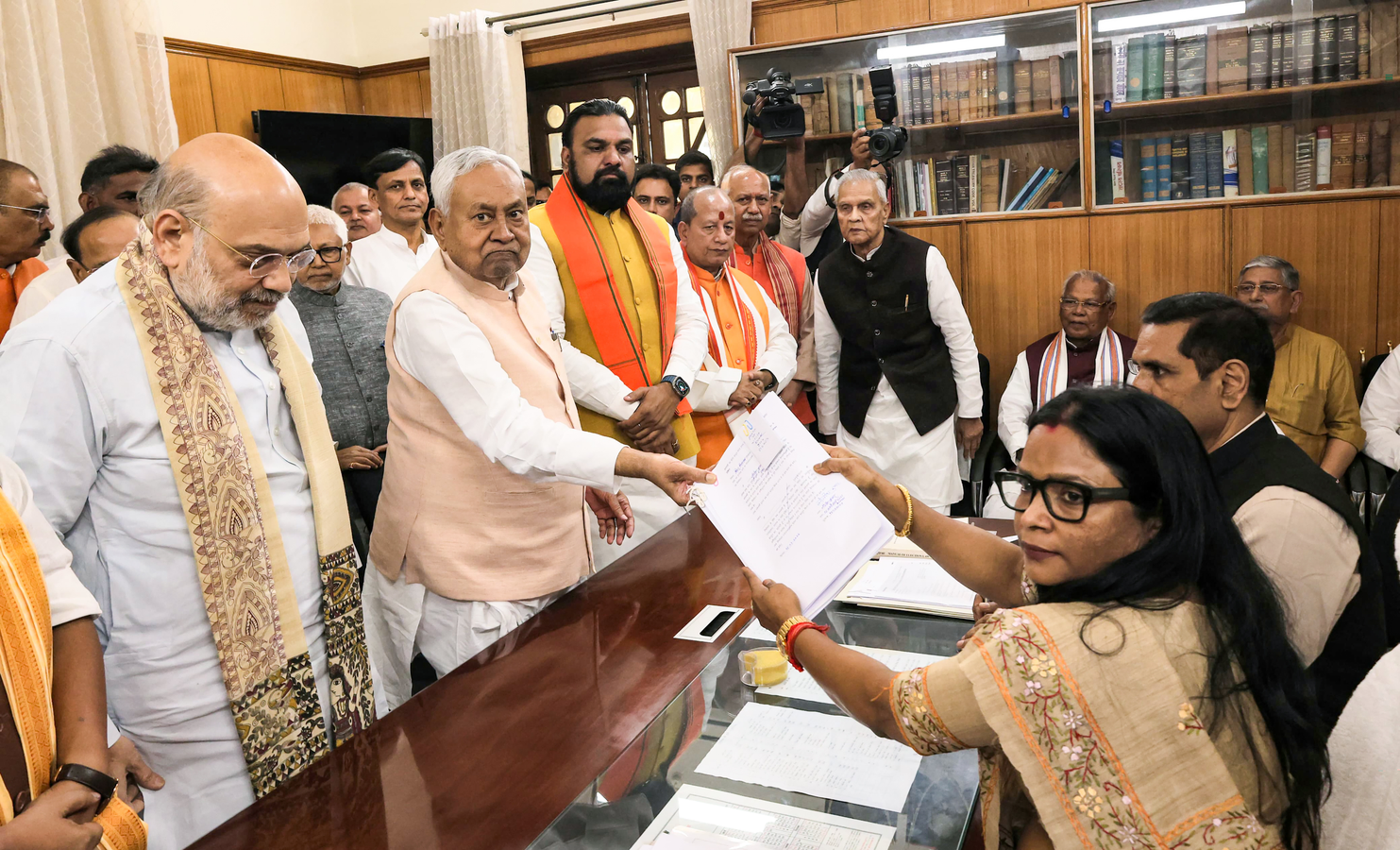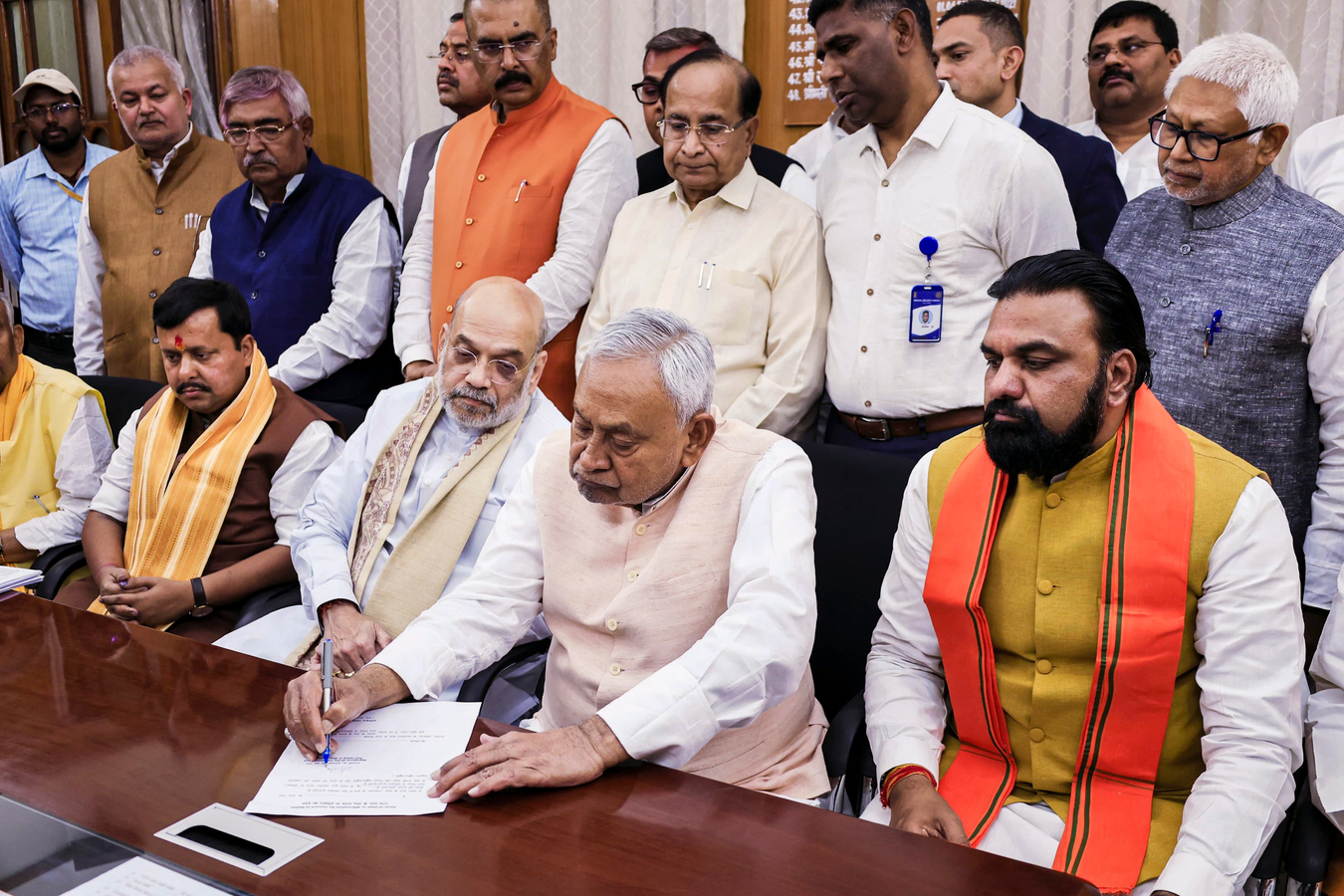
Patna, March 5 Nitish Kumar may well be remembered as a shrewd politician who managed to hold the post of Bihar chief minister for longer than all his predecessors, despite his JD(U) never achieving a majority in the state assembly.
Ironically, however, a section of his loyal supporters see the astute leader as a victim of political maneuvering, even as his opponents insist that he was undone by opportunistic behavior.
The remarks of Madan Sahni, the minister for social welfare and a veteran JD(U) leader, reflected the prevailing sentiment within the party.
"We are surprised by what is happening. It's hard to believe that Nitish Kumar himself made this decision," said Sahni, expressing disbelief over the JD(U) supremo's "long-held ambition" of serving in both houses of Parliament and the state legislature, which he aimed to achieve by winning a seat in the Rajya Sabha in the ongoing biennial elections.
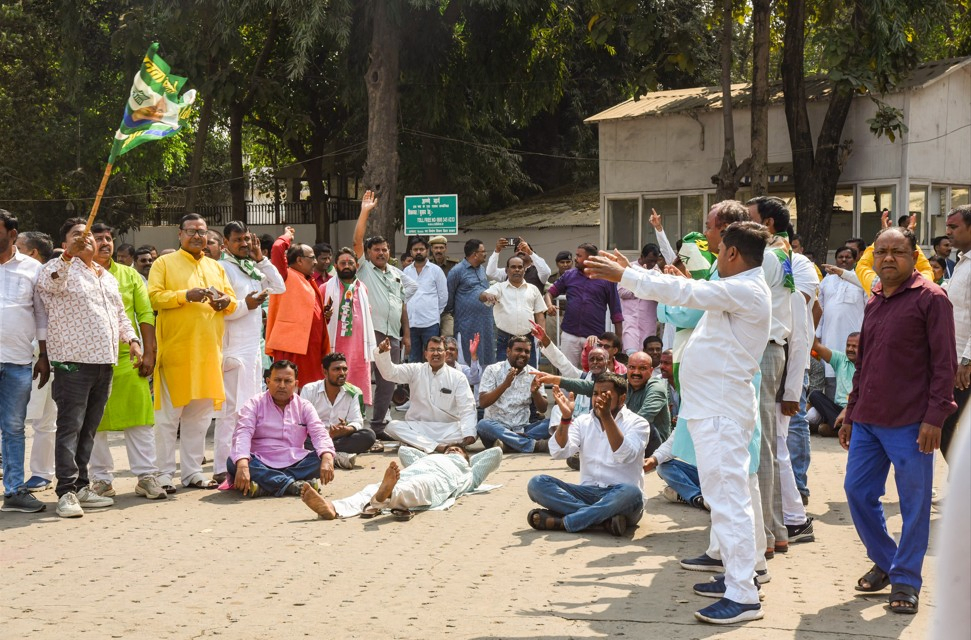
JD(U) workers, who have been prohibited by the police from approaching the chief minister's official residence, vented their frustration by resorting to vandalism at the party office, refusing to believe that their leader, who had once been seen as a potential "Prime Minister material" even by admirers in the BJP, such as late Sushil Kumar Modi, would "resign in such a manner."
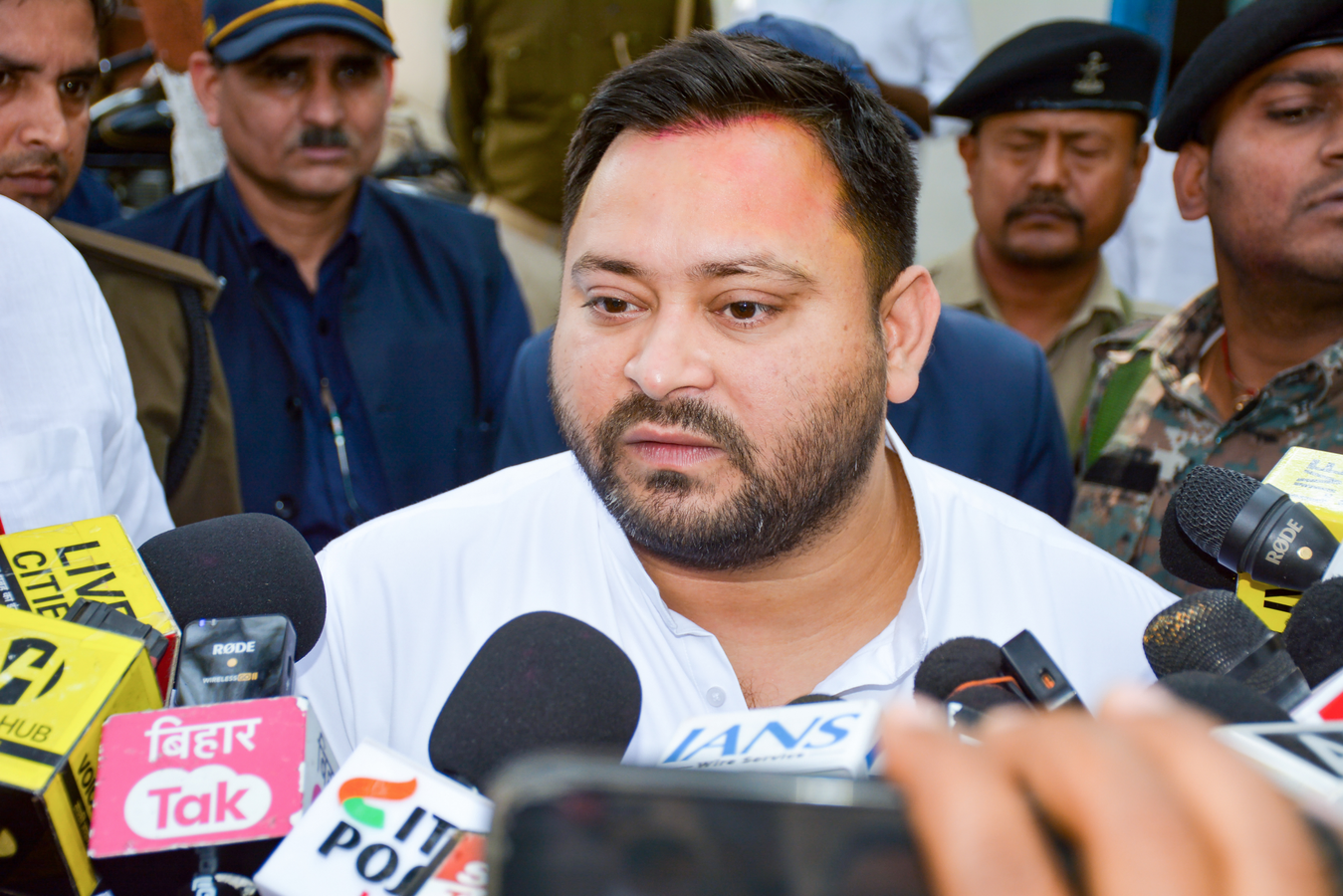
RJD working president Tejashwi Yadav, his former deputy and currently the leader of the opposition, said, "The BJP has created a situation similar to what happened in Maharashtra. But Nitish Kumar is solely responsible. Even while in an alliance, we supported him as Chief Minister, despite having more MLAs, but he chose to withdraw twice."
The JD(U) supremo, who turned 75 last week, has a lot to be proud of. He started his political career as a politically-minded engineering student in the 1970s, and gained prominence through the JP movement launched by legendary socialist leader Jayaprakash Narayan. He only achieved electoral success in 1985, when he won the Harnaut assembly seat in his home district of Nalanda.
Four years later, he was a Member of Parliament, representing Barh, and the rise of the OBCs, as symbolized by Mandal, earned him a place in the ministry led by VP Singh.
Kumar broke away from the Janata Dal in 1995, uneasy with the growing influence of his long-time associate Lalu Prasad, Yadav's father and then Chief Minister of Bihar, who was gaining a cult-like following for his strong advocacy of Mandal and his efforts to restrain the BJP patriarch Lal Krishna Advani, effectively halting the "Ram Rath Yatra."
Kumar's commitment to social justice and communal harmony, along with the support of George Fernandes, led him to establish the Samata Party, which initially allied with the CPI(ML) Liberation, a fledgling ultra-Left group. However, his pragmatic political sense made him realize that this alliance was not electorally viable, and in 1996, he contested as a candidate for the BJP.
His consistent alliance with the BJP earned him a cabinet berth under PM Atal Bihari Vajpayee, who also supported him despite the BJP's numerical advantage, in his bid to become Chief Minister of Bihar in 2000, when the state assembly elections resulted in a hung house.
Kumar is known for his skilled negotiation skills. He convinced Sharad Yadav, another prominent Janata Dal leader, who had fallen out with Lalu Prasad, to join forces, thus creating the new entity known as Janata Dal (United).
The BJP, mindful of its limitations in Bihar due to the perception that it was an "upper caste party," agreed to concede some ground. The JD(U) contested more seats than the BJP in both the 2005 assembly elections, the second of which was held in November, resulting in a resounding victory for the NDA.
Since then, Kumar has never looked back. With even his critics acknowledging that his governance record was superior to that of his predecessors, the NDA achieved its best-ever performance in the 2020 assembly elections, when the JD(U)-BJP combine won 206 out of the 243 seats.
Amid the political changes, Kumar was seen by some as a potential counterfoil to Narendra Modi, his then Gujarat counterpart, and this rivalry led him to sever ties with the BJP when the latter was appointed the head of the saffron party's campaign committee, effectively positioning him as a potential Prime Ministerial candidate.
The JD(U)'s poor performance in the 2014 Lok Sabha elections led Kumar to step down as chief minister, taking "moral responsibility," though he continued to function as a "super CM" while Jitan Ram Manjhi held the position, and eventually ousted Manjhi, with the support of Lalu Prasad, who had agreed to put aside their differences.
The alliance between the two arch-rivals led to a spectacular success in the 2015 assembly elections, which saw the BJP suffer its worst-ever electoral defeat in many years, despite the "Modi wave."
However, the "Mahagathbandhan" proved to be short-lived as Kumar decided, two years later, that it was better to realign with the BJP.
Since then, the derogatory Hindi slang "paltu ram" (turncoat) has stuck to Kumar, despite efforts to restore law and order and promote all-around development with a focus on empowering women.
With his son Nishant, who is in his late 40s, set to enter politics, Kumar may now also face a challenge from his own family.