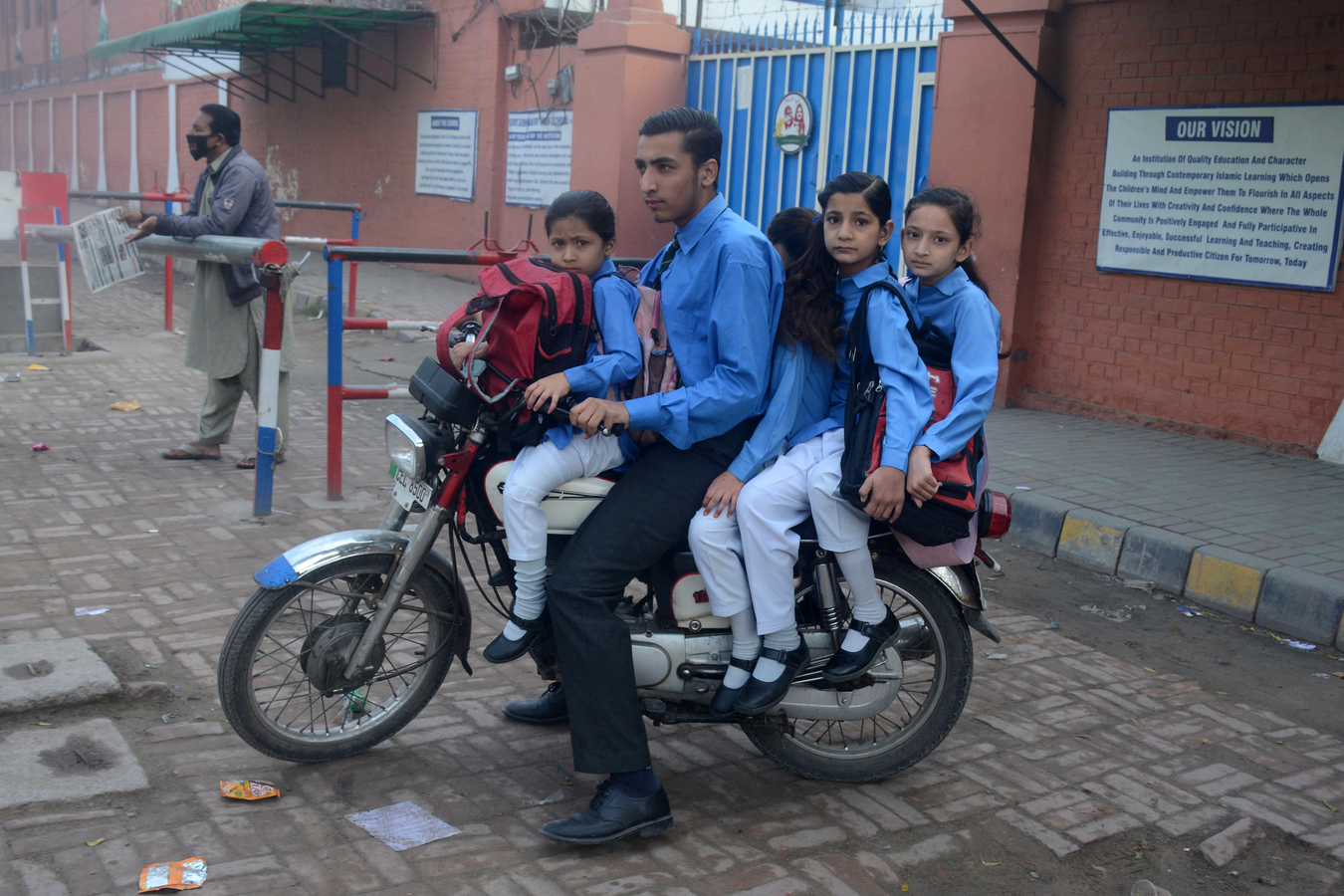
London, March 25. Pakistan’s education system continues to struggle to keep girls enrolled in schools. During their early years, young girls in neatly pressed uniforms attend classes, but many disappear from the education system as they reach adolescence, a report reveals.
"In classrooms across Pakistan, the story often begins with promise. Young girls in neatly pressed uniforms hold textbooks, recite lessons, and pose for photographs that symbolize progress. These early years, frequently highlighted in official narratives and development reports, present an image of expanding access and opportunity. Yet, beyond this carefully framed beginning lies a quieter, less visible reality," Sakariya Kareem wrote in the UK-based newspaper, Asian Lite.
"As these girls approach adolescence, many disappear from the education system altogether—not by choice, but through a gradual process shaped by structural gaps, policy failures, and social constraints. Pakistan’s education system, while capable of enrolling girls, continues to struggle to keep them there," Kareem wrote.
According to recent findings from the 'Status of Girls’ Education in Pakistan' report, supported by organizations such as the Malala Fund, enrolment at the primary level has improved in various parts of Pakistan. However, this progress hides a structural weakness—retention. The transition of girl students from primary to secondary education is the most fragile point in the system.
Girls who complete education up to fifth class face difficulties that effectively end their educational journey. Middle and secondary schools are fewer in number and located at distances that students find difficult to travel to, especially in rural areas. Safety concerns, lack of transport, and social expectations create an environment where continuing education becomes difficult.
The opinion piece states that this pattern is not a single case but a recurring feature seen across the provinces of Pakistan, showcasing systemic shortcomings instead of individual circumstances.
"The broader education landscape reinforces the depth of the problem. According to recent data, approximately 28 per cent of children in Pakistan remain out of school, with girls disproportionately represented in this group. The scale of exclusion translates into millions of children, many of whom never enter a classroom or leave prematurely. The gender disparity is further underscored by literacy rates. Female literacy in Pakistan remains significantly lower than that of males, hovering at around 49 per cent," the Asian Lite report stated.
Observers and education advocates have frequently termed the transition from primary to secondary education in Pakistan as an "invisible wall." Distance to schools is one of the most cited challenges. Secondary institutions are often located at a distance from villages and small towns, making travelling for girl students impractical or unsafe. Families are unwilling to send their adolescent girls to travel long distances for going to schools if there is absence of reliable transport.
"The composition of the teaching staff also plays a role. Reports such as 'The Missing Ustani' by Tabadlab highlight a severe shortage of female teachers, particularly in rural areas. While younger children may be taught by male teachers without resistance, families often view the absence of female educators as a barrier to continuing education for older girls.
"Concerns around safety, cultural norms, and trust contribute to decisions that ultimately remove girls from classrooms. These factors, combined with economic pressures and domestic responsibilities, create a system where withdrawal from education becomes the default outcome," Sakariya Kareem wrote.