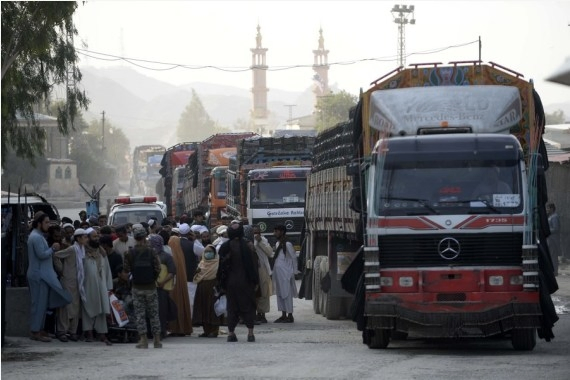
Kabul, February 25 – Pakistan's exports to Afghanistan have sharply declined in the first seven months of the current fiscal year due to trade disruptions and political tensions, local media reported on Wednesday.
According to official data from the State Bank of Pakistan, exports from Pakistan to Afghanistan have more than halved compared to the same period last year. The value has fallen from over $550 million to nearly $230 million from July to January, Khaama Press, Afghanistan's leading news agency, reported.
Border crossings between Pakistan and Afghanistan have remained closed since October last year, halting bilateral trade between the two countries. The border closures followed clashes between Pakistani forces and the Taliban that lasted for eight days. The crossings have not reopened despite several rounds of talks held between officials from Afghanistan and Pakistan, aimed at easing tensions.
The Taliban has urged traders and pharmaceutical importers to explore alternative trade routes and diversify supply sources to avoid shortages in local markets, Khaama Press reported. Taliban officials emphasized the need to reduce reliance on a single transit corridor and urged businesses to consider regional partnerships to ensure a stable supply of essential goods.
Earlier in January, local media reported that Khyber Pakhtunkhwa province of Pakistan witnessed a 53.02% decline in revenue due to the continued closure and suspension of trade at the Pakistan-Afghanistan border since October last year, resulting in the provincial government seeking intervention from the federal government, local media reported.
The Pakistan-Afghanistan border closure has caused revenue losses for Khyber Pakhtunkhwa, as the collection of Infrastructure Development Cess (IDC) has fallen from Pakistani Rupees (PKR) 7.42 billion to PKR 3.48 billion during the first seven months of the current fiscal year, compared to the corresponding period of 2025, Dawn, Pakistan's leading daily, reported.
Muzammil Aslam, Khyber Pakhtunkhwa Chief Minister's financial advisor, wrote a letter to Pakistan's Commerce Minister Jam Kamal, requesting an urgent meeting of provincial and federal stakeholders. Aslam stated that prolonged border disruption was causing serious revenue, economic, and employment consequences for Khyber Pakhtunkhwa. He stated that the initial disruption in cess collection was caused due to a court stay order, which was resolved in November.
Recovery efforts were made, however, these efforts did not produce results as cross-border trade remained suspended. He said that exporters and traders were facing difficulties as their consignments and payments were stuck across the border, and that many businesses were unable to meet their statutory cess obligations due to the trade suspension between Pakistan and Afghanistan.