Geneva, March 28 – Several European politicians, campaigners, and political representatives attending the ongoing 61st session of the UN Human Rights Council in Geneva have called for closer scrutiny of Pakistan's special trade status under the Generalised Scheme of Preferences Plus (GSP Plus) granted by the EU, citing growing concerns over the country's worsening human rights record.
According to a report in EU Today, a meeting titled ‘Pakistan’s GSP+ status: human rights conditionality, treaty obligations and accountability’ heard allegations of religious persecution, political repression, enforced disappearances, and the failure of successive Pakistani governments to safeguard basic rights.
Nikolaos Vrettos, a Greek parliamentarian, highlighted the plight of religious minorities, especially Christians, arguing that Pakistan's blasphemy laws continue to function as a mechanism through which mere accusation could trigger mob violence, imprisonment, and enduring fear, the report stated.
"The situation in Pakistan stands out. It demands our particular attention, especially because of the violence and impunity embedded in laws and policies that the government refuses to reform," EU Today quoted Vrettos as saying.
During the ongoing session, Kasim Khan, son of the former Pakistani Prime Minister Imran Khan, also delivered his remarks and described his father's detention in stark terms.
"My father, Imran Khan, the former Prime Minister of Pakistan, has been in detention for over 960 days. He sits in a small cell designed for solitary confinement, infested with insects and under constant surveillance," the report quoted Kasim as saying.
Stressing that the case should not be seen in isolation, he further said, "My father's case is not an isolated incident. It is just the most visible example of a much wider pattern of repression in Pakistan since 2022."
Kasim argued that "arbitrary detention, denial of family contact, inadequate medical care, and the trial of civilians in military courts" were incompatible with Pakistan's obligation under the GSP+ framework.
Raphael Kalyviotis, a geopolitical analyst, centred his remarks on the persecution of Christians and the continued effect of blasphemy laws, saying, "The systematic persecution of Christians in Pakistan is no regional anomaly. It is a fracture in our global peace, a contagion of intolerance."
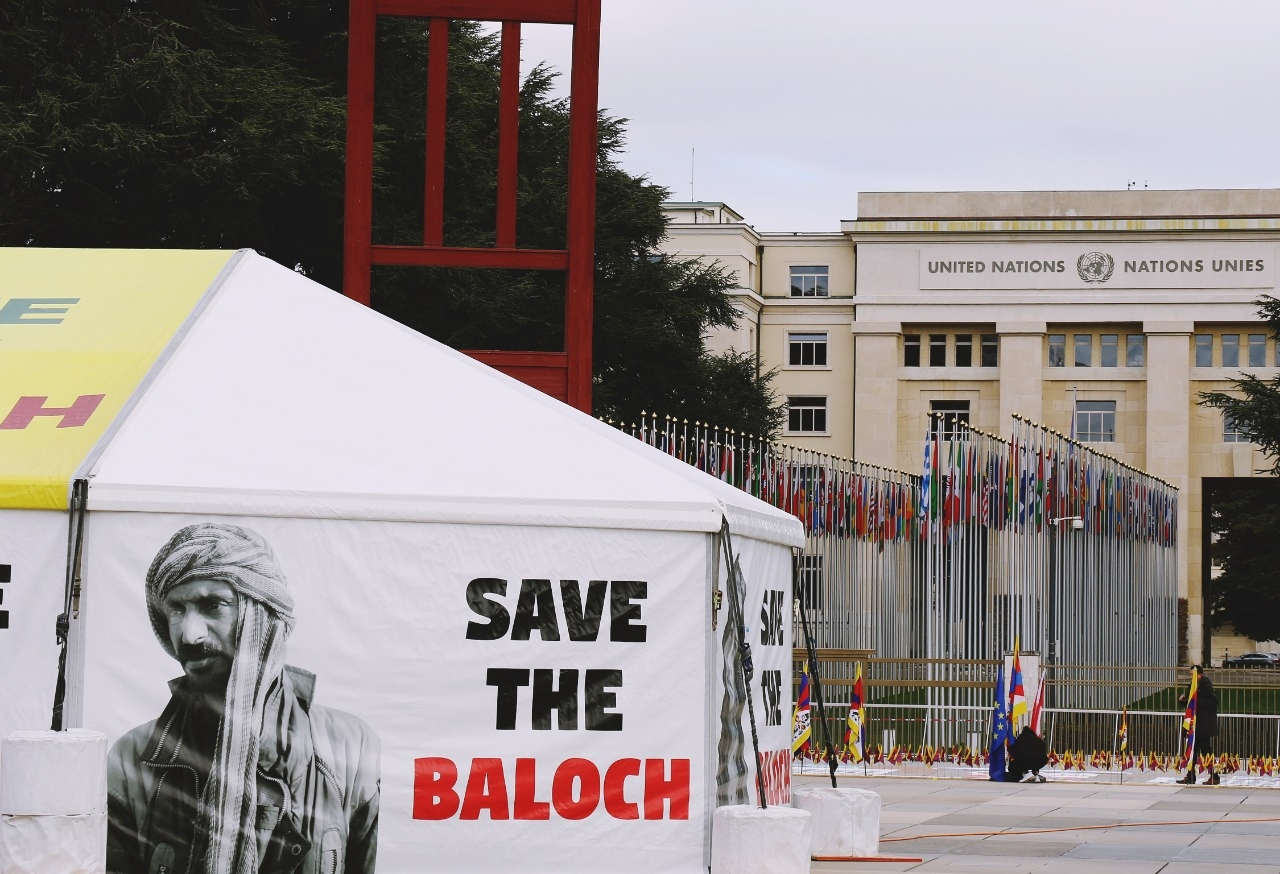
The "most politically awkward intervention," the report said, came from Naseem Baloch, chairman of the Baloch National Movement, who broadened the discussion beyond both religious freedom and the ongoing confrontation between Imran Khan's supporters and the Pakistani authorities.
"For decades, the people of Balochistan have faced systematic and widespread human rights violations," he said.
Citing enforced disappearances, extrajudicial killings, arbitrary detention, and torture, Naseem said human rights group findings documented 1,355 enforced disappearances and 229 extrajudicial killings in Balochistan in 2025, with additional cases already recorded this year.
He underlined that repression in Balochistan had persisted under different governments, regardless of who was in power in Islamabad, adding that when Imran Khan was in power, "the suffering of the people of Balochistan did not come to an end."
The remarks, the report said, carried added weight given the presence of Khan's son and one of his former ministers in the room.
Naseem emphasised that many members of Khan's party are now experiencing the same kind of abuses that Baloch activists, students, and political workers had faced for years.
"Whenever injustice is ignored because the victims are marginalised or politically inconvenient, it does not disappear. It spreads," EU Today quoted the Baloch activist as saying.