Pakistan's situation in the ongoing Middle East crisis highlights a fundamental problem with how its government operates. Modern states utilize a variety of tools to project their power, including strong economies, robust diplomatic networks, technological capabilities, and credible institutions. Pakistan, however, is struggling to achieve this with the resources it has, given years of economic instability, weak institutional development, and ongoing political turmoil. Consequently, Pakistan currently functions more as a security-focused state than a multifaceted diplomatic entity, relying primarily on coercive power or implicit threats for influence. This structural imbalance is increasingly affecting its domestic affairs and its foreign policy.
Pakistan has made desperate attempts to gain the support of US President Donald Trump, offering lucrative deals on rare earth minerals in the disputed Balochistan region. Despite facing significant criticism at home, it has also aligned itself with Washington on the "Peace Initiative." However, the situation has dramatically changed following the US-Israeli strikes on Iran, leading to the assassination of Iranian Supreme Leader Ali Khamenei, a revered figure among Shia Muslims worldwide.
Experts believe that Pakistan's diplomatic standing in the Middle East is severely compromised. It cannot claim any moral high ground, and the current crisis exposes Islamabad's strategic contradictions more starkly than any previous regional crisis.
Pakistan shares a long border with Iran and hosts a significant Shia population that reveres Iranian religious leadership. The assassination of Khamenei, therefore, resonated deeply within Pakistan's domestic political environment.
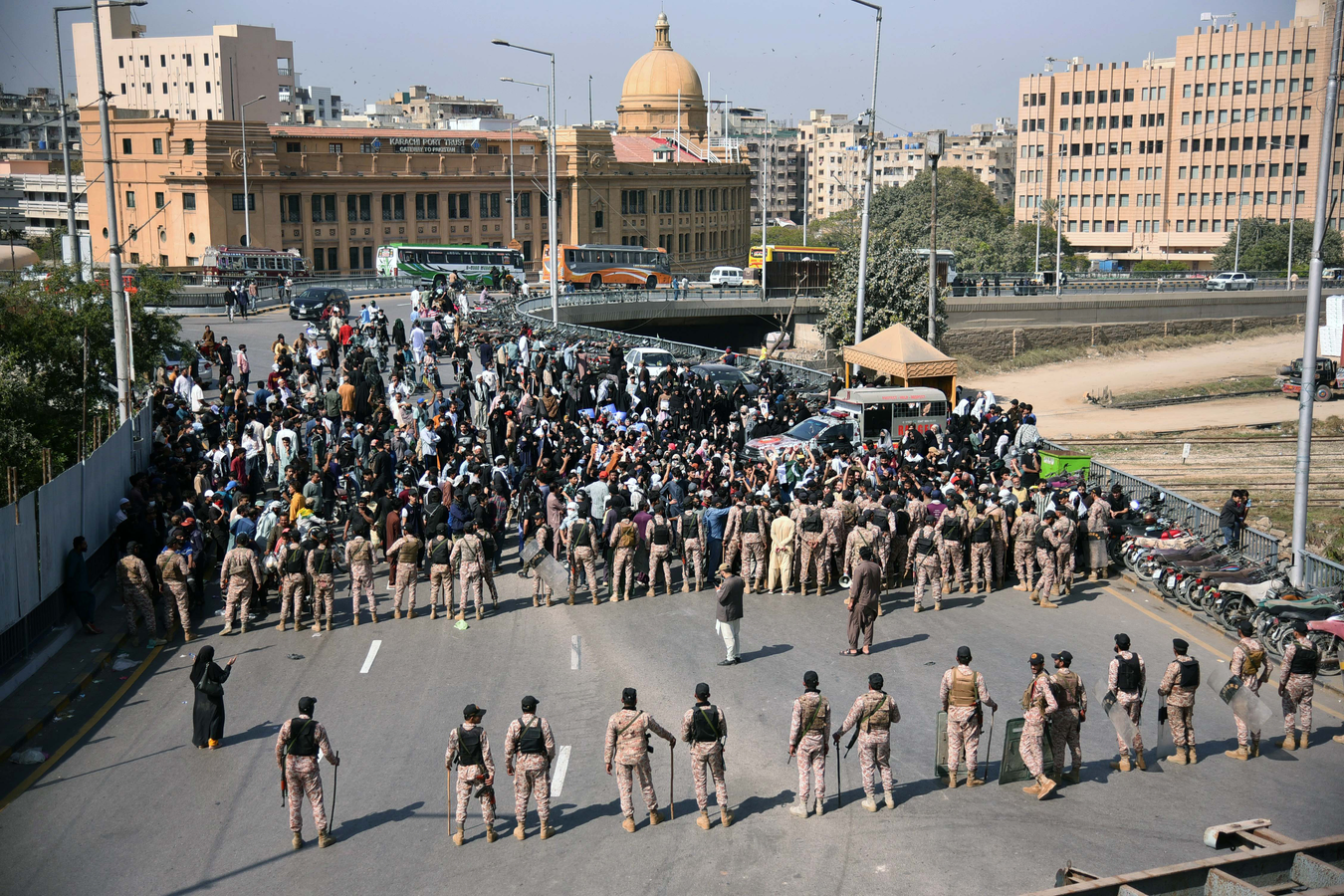
Within hours of Khamenei's assassination, protests erupted in many Pakistani cities. Protesters in Karachi even attempted to storm the American Consulate, demonstrating the potential for regional conflicts to spill over into Pakistan. Pakistan's economy remains heavily reliant on Western lenders and Gulf support, limiting its ability to engage in ambitious geopolitical ventures. This dependence was further complicated by Iranian officials hinting that Pakistan might support Tehran if Israel used nuclear weapons. Islamabad quickly denied this, reiterating its policy of dealing with India and not regional conflicts.
These domestic responses also reveal the underlying governance framework in Pakistan. When faced with complex political and sectarian tensions, the State often prioritizes security over political compromise. Islamabad's primary response has always been coercive containment, whether it involves the ongoing insurgency in Balochistan or the renewed threat from Tehreek-e-Taliban Pakistan along the Afghan border. This reliance on force is not only tactical but also structural. As civilian institutions weaken and the economy struggles to provide stability, the security establishment increasingly becomes the primary means through which the State seeks to maintain order. Pakistan's internal political management mirrors its external approach: issues requiring political solutions are often addressed through security measures.
Pakistan's problems in the Middle East extend far beyond the current crisis. For years, Islamabad has attempted to maintain relationships with rival regional groups while simultaneously engaging with Saudi Arabia and the Gulf monarchies. Saudi Arabia and the Gulf states have provided financial assistance to Pakistan during periods of economic crisis. Conversely, Iran, a neighboring country, is crucial for border security and energy connections. Iran is also a key ally of China, which has significant interests in Pakistan and has been a long-standing patron. China-Iran relations further complicate Pakistan's Middle East calculus. Finding a balance between these competing interests has led to a foreign policy that is more reactive than proactive. The Saudi-led intervention in Yemen in 2015 marked a turning point. When Riyadh requested Pakistan to send troops to fight the Houthis, Pakistan's parliament voted against involvement. This decision was driven by concerns about exacerbating sectarian tensions within Pakistan. However, Saudi Arabia viewed this as a betrayal. The lack of trust that emerged during the Yemen crisis has persisted.
Pakistan's weak economy has further limited its diplomatic options. Islamabad is increasingly reliant on financial assistance from Gulf States to stabilize its foreign exchange reserves and prevent economic collapse. Saudi Arabia and the United Arab Emirates have repeatedly provided financial aid to Pakistan. While such assistance is essential, it also carries political implications. Pakistan's policy towards the Middle East has become transactional, with Islamabad often reacting to the demands of its financial backers rather than shaping regional dynamics. Pakistan's comparative advantage in the region lies in its military capabilities. However, this reliance on force carries the risk of reducing Pakistan to a tool for other states rather than an autonomous actor shaping regional outcomes. This dependence contrasts sharply with India's growing influence in the region. In the past decade, New Delhi has strengthened its ties with Gulf States through trade, technological collaborations, and infrastructure investments. India's economic relationship with the Gulf is significantly stronger than Pakistan's, giving it greater diplomatic leverage.
The most significant threat to Pakistan is not diplomatic embarrassment, but the potential for regional instability to spread. If unrest escalates in Balochistan, Iran's ongoing conflict with Israel and the US could destabilize Pakistan's southwestern border. The province is already grappling with separatist insurgency and political unrest caused by resource extraction projects. A prolonged regional conflict could strengthen militant groups along the Iranian border, making energy and trade flows more difficult. The security situation in Pakistan is already precarious. The return of Tehreek-e-Taliban Pakistan along the Afghan border has put a strain on military resources. A second line of instability along the Iranian border would further complicate security efforts.
The Iran-Israel conflict highlights a fundamental reality regarding Pakistan's strategic stance. States with multiple options for wielding power can manage crises through diplomacy, economic pressure, or by working with institutions. Pakistan is increasingly running out of these options. Its economic instability limits its diplomatic freedom, and its internal political divisions keep its leaders focused on domestic issues. The only remaining option is the security apparatus, which can maintain order at home and occasionally provide strategic support abroad, but it is not strong enough to fundamentally alter the regional political landscape. As long as this imbalance persists, Pakistan's role in world politics will remain reactive and dependent, defined more by the limitations of a state whose primary tool of power is still force than by a clear strategic vision.