New Delhi, February 24 – Leaders from various parties have strongly reacted to the revised Class 8 Social Science textbook published by the National Council of Educational Research and Training (NCERT), which states that the Congress accepted the 1947 Partition as "the only way forward," sparking a fresh debate about how India's history is taught.
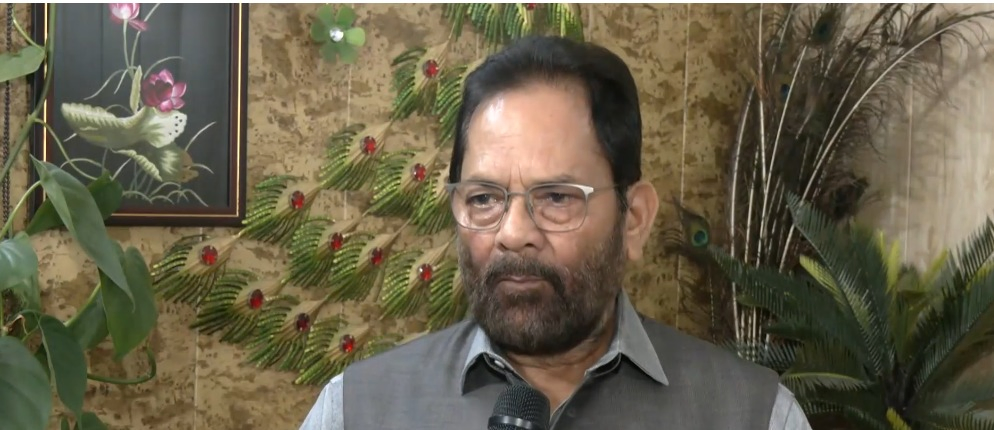
Speaking to IANS, senior BJP leader Mukhtar Abbas Naqvi accused the Congress of distorting historical realities for decades. "The history of the Congress party is quite controversial; that is why, after so many decades, history itself has become rebellious. The Congress tried to push the country's reality, its history, and the contributions of great national figures into the dark pages of history. Now all of this should be presented to the nation and the new generation – and it is," he said.
On the other hand, RJD MP Manoj Kumar Jha urged that the events surrounding Partition should be viewed in context. Referring to Mahatma Gandhi's stance, he said that the leadership of the time faced extraordinary circumstances. "Rivers of blood were flowing at that time. Today it is easy to sit and deliver speeches, but those speaking now may not understand the gravity of the situation back then," he said, adding that the Congress leadership was at the forefront of the freedom struggle.
In Patna, Bihar minister Ashok Choudhary, of the Janata Dal-United, described Partition as an immensely painful chapter in history. "Whenever a partition happens, it causes immense suffering. It was a very painful story – trains were packed with people moving from here to there and from there to here. Very unfortunate," he said, while adding that NCERT is presenting history according to its own perspective.
The revised textbook, released on February 23 in line with the National Education Policy (NEP) 2020, revisits key historical events, including the 1919 Jallianwala Bagh massacre and the 1946 Direct Action Day, alongside expanded discussion on Partition.
The changes have triggered a wider political debate over historical interpretation, academic autonomy, and the portrayal of India's freedom struggle to younger generations.