Prime Minister Narendra Modi has emphasized the need to fully utilize India's diverse climate conditions to increase productivity and export strength. He also stressed the importance of scaling up high-value crop production to make India's agricultural products globally competitive.
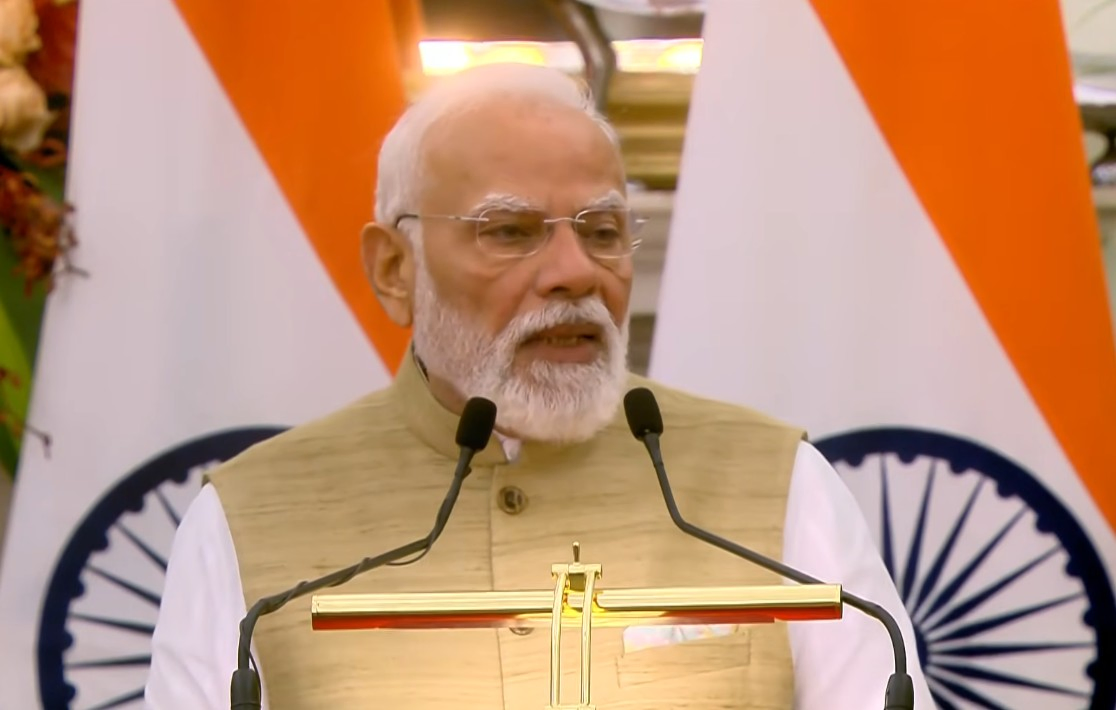
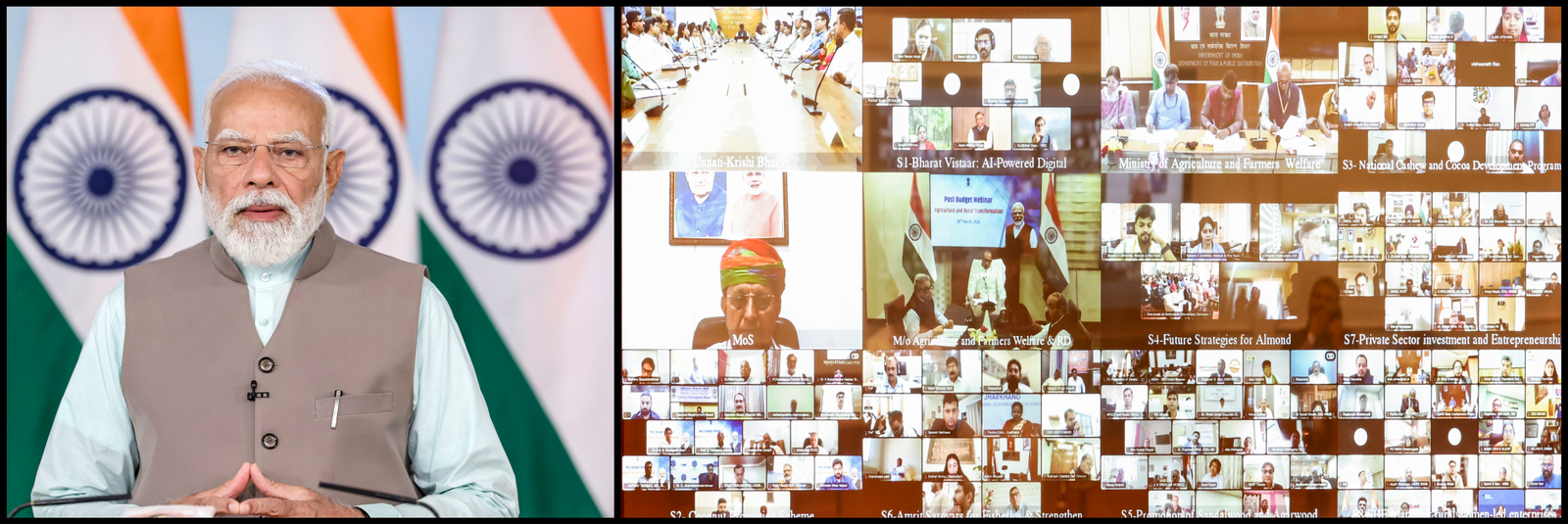
The Prime Minister was addressing a Post-Budget webinar on the theme of "Agriculture and Rural Transformation" through video conferencing yesterday. He highlighted the shifting global demand and the necessity of making the Indian agricultural sector export-oriented.
Mr. Modi called for a unified approach involving experts, industry, and farmers to meet global quality and branding standards, and emphasized the importance of setting clear goals to connect local farmers with global markets. He noted that export-oriented production will lead to rural employment through processing and value addition.
He stated that the Union Budget 2026-27 has also focused on high-value agriculture, including cashew, cocoa, sandalwood, and that the National Mission on Edible Oil and Pulses and the National Mission on Natural Farming are all strengthening the agricultural sector.
The Prime Minister said that today, the world is becoming more conscious about health, with a strong focus on holistic healthcare and organic food.
On the fisheries sector, Mr. Modi said that India is the world's second-largest fish producer. He highlighted that while approximately 4.5 lakh tonnes of fish are currently produced in various reservoirs and ponds, there is potential for an additional 20 lakh tonnes of production. He said that fisheries can also become a major platform for export growth.
Mr. Modi emphasized the need for new business models in hatcheries, feed, and logistics to realize the potential of the Blue Economy. He encouraged strong coordination between the fisheries department and local communities.
He advocated for crop diversification over single-crop dependency to mitigate risks, and cited missions for edible oils, pulses, and natural farming as tools to boost the sector's strength.
The Prime Minister also spoke on the technology culture in agriculture, referencing e-NAM and the development of digital public infrastructure. He noted the creation of Kisan IDs and digital land surveys as transformative steps.
Mr. Modi highlighted that the Pradhan Mantri Awas Yojana, the Swamitva Yojana, the PM Gramin Sadak Yojana, and financial assistance to self-help groups have continuously strengthened the rural economy.
He added that the animal husbandry sector is a high-growth pillar of the rural economy. Mr. Modi highlighted that the government has successfully achieved the target of creating three crore Lakhpati Didis, and the country has set a target to add another three crore Lakhpati Didis by 2029.
He urged entrepreneurs to increase investment in areas of storage and innovation in agri-fintech and supply chains to energize the rural landscape.