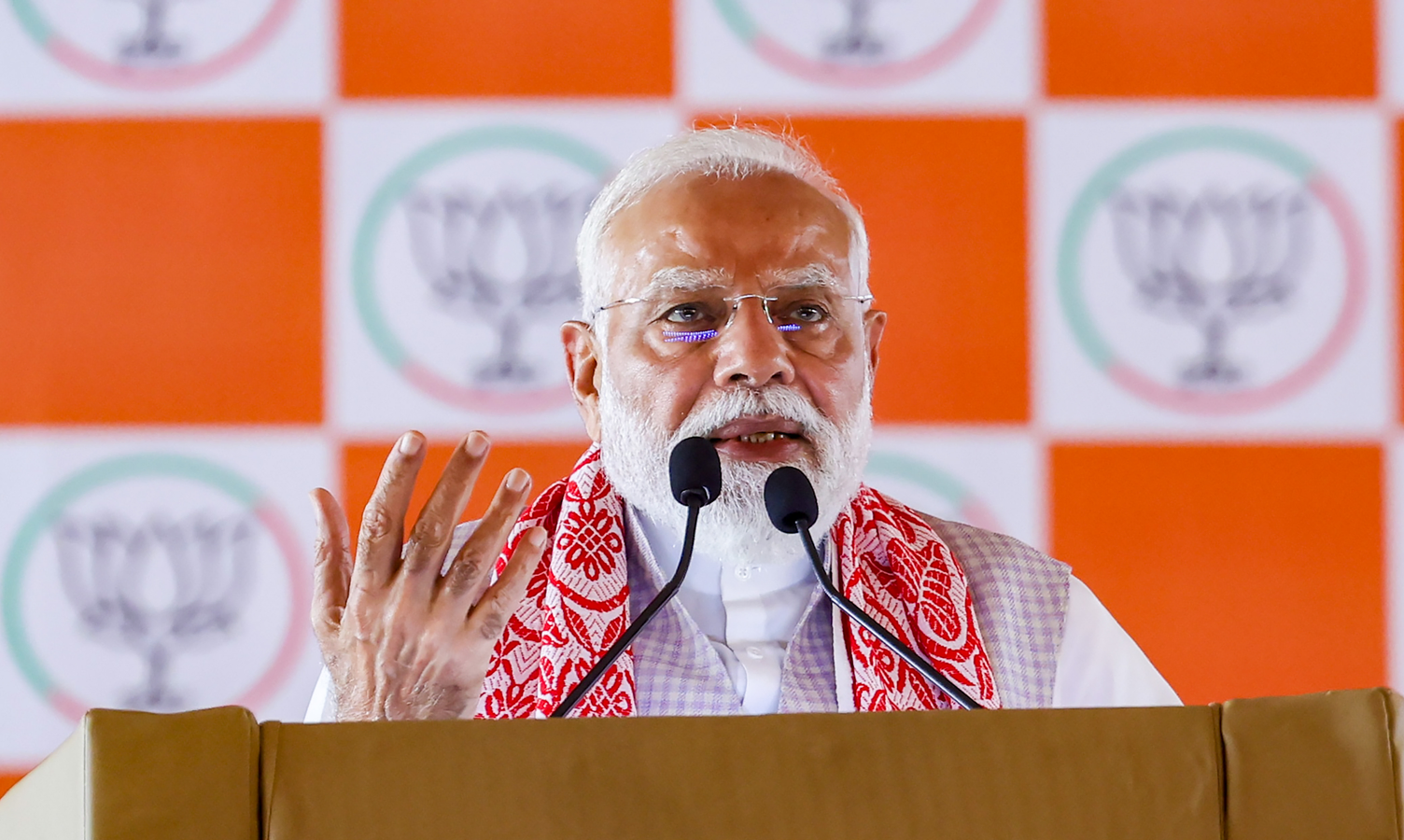
New Delhi, April 6 – Prime Minister Narendra Modi on Monday praised the country's scientists for designing and building the prototype fast breeder reactor at Kalpakkam, Tamil Nadu, independently.
The Prime Minister stated that India has taken a significant step in its civil nuclear program, advancing the second stage of its nuclear program.
"The prototype fast breeder reactor, designed and built independently at Kalpakkam, has achieved criticality," he said.
The Prime Minister added that this advanced reactor, capable of producing more fuel than it consumes, reflects the depth of the country's scientific capabilities and the strength of its engineering enterprise.
PM Modi said that this is a decisive step towards harnessing the country's vast thorium reserves in the third stage of the program.
"This is a proud moment for India. Congratulations to our scientists and engineers," the Prime Minister said.
In 2024, Prime Minister Modi witnessed the commencement of "core loading" at the 500 MWe PFBR unit in Kalpakkam, Tamil Nadu.
During the visit, he toured the reactor vault and the control room and received a briefing on the facility's key features.
Once operational, India will become the second country, after Russia, to operate a commercial fast breeder reactor.
Reflecting the "Aatmanirbhar Bharat" initiative, the PFBR was fully designed and constructed independently by BHAVINI, with significant contributions from over 200 Indian industries, including micro, small, and medium enterprises (MSMEs).
The reactor will initially use Uranium-Plutonium mixed oxide (MOX) fuel. The Uranium-238 "blanket" surrounding the fuel core undergoes nuclear transmutation to produce more fuel, hence the designation "breeder."
The use of Thorium-232 as a blanket is also planned at this stage.
"Through transmutation, thorium will create fissile Uranium-233, which will be used as fuel in the third stage," the Prime Minister had stated.
The FBR thus functions as a stepping stone for the third stage of India's nuclear program, facilitating the full utilization of the country's abundant thorium reserves.
India can also use thorium cycle-based processes to extract nuclear fuel.
This is of particular significance to India's nuclear power generation strategy, as India has one of the world's largest thorium reserves, which could provide power for as long as 60,000 years.