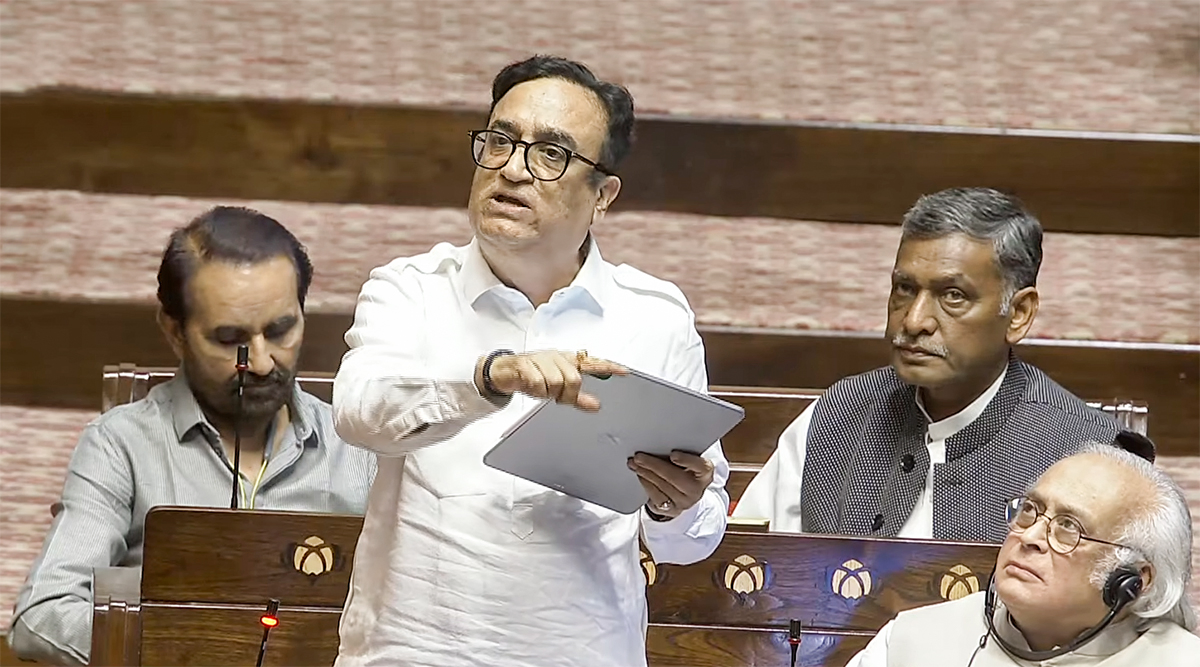
New Delhi, April 11 – All India Congress Committee (AICC) Treasurer and former Delhi Assembly Speaker Ajay Maken on Friday accused the government of failing to address air pollution in the National Capital, claiming that the city's air quality has reached alarming levels.
In a social media post, Maken cited data from the Central Pollution Control Board (CPCB) to highlight that the Delhi PM2.5 level on Friday was almost four times higher than the 15 µg/m³ safe limit set by the WHO.
The senior Congress leader expressed concern over the "deteriorating" air quality in the city, where the PM2.5 level on Friday stood at 54 µg/m³.
The former Delhi transport and power minister cited a Lancet study finding that high PM2.5 levels cut life expectancy in north India by more than 5 years.
In an animated video statement on social media, Maken said that on April 10, all 35 weather monitoring stations in the city recorded PM2.5 levels above the WHO 24-hour safe limit (15 µg/m³).
"Ten out of the 35 stations recorded PM 2.5 levels above India's own NAAQS limit (60 µg/m³)," he said.
As a solution to the air pollution problem, the Congress leader suggested promoting public transport and increasing parking fees and road taxes on private vehicles to discourage Delhiites from using personal modes of transport.
"All new public transport vehicles, including DTC buses, cluster buses, autos and taxis, must be electric within two years," said Maken, a Rajya Sabha MP.
He also suggested that all CNG buses more than 10 years old must be taken off the road. "No extensions, no exceptions," he said.
Maken's statement on Delhi's poor air quality coincided with the Delhi government's circulation of EV policy 2.0 on Friday to seek public feedback.
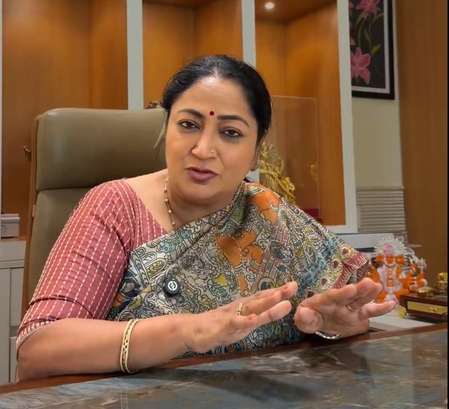
Earlier, Delhi Chief Minister Rekha Gupta allocated Rs 22,236 crore, or around 21.44 per cent of the 'Green Budget' 2026–27, for improving air quality and for green initiatives, including clean Yamuna, to secure a pollution-free future for the next generation.
Highlighting key features of the 'Green Budget' for 2026–27, an official said that of the total state budget of Rs 1,03,700 crore, Rs 22,236 crore has been allotted to 17 departments receiving phased allocations to ensure coordinated action across sectors.