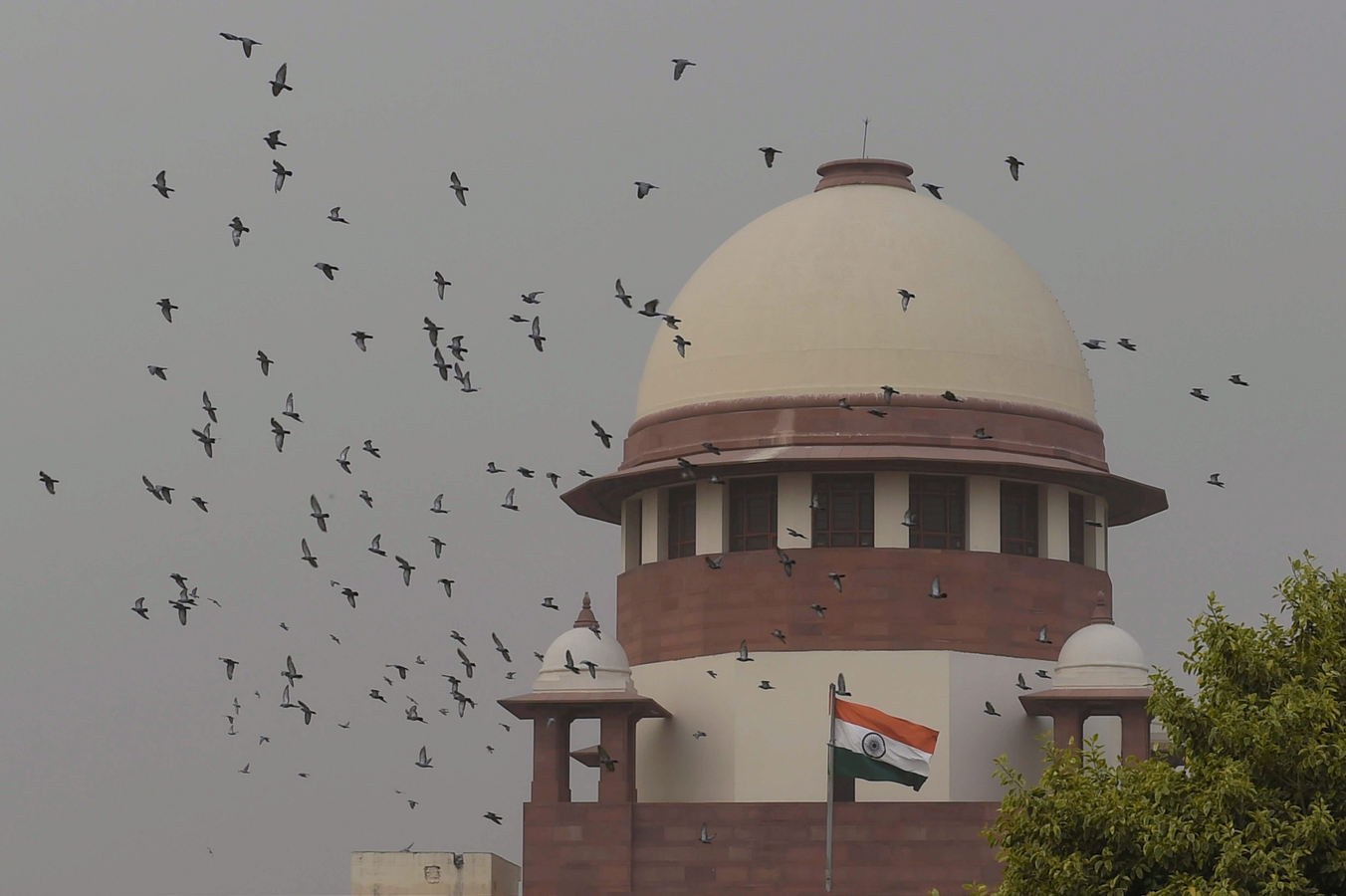
New Delhi, February 17 Observing that justice is not served by following the majority sentiment or under public pressure, the Supreme Court said on Tuesday that while outrage is understandable in high-profile cases, it should never dictate the investigation.
A bench of Justices Rajesh Bindal and Manmohan said that allowing public sentiment to shape the outcome of an investigation risks miscarriages of justice.
"The court emphasizes that justice is not served by following the majority sentiment or public pressure. Justice is served by truth, established through evidence and impartial investigation. While public outrage is understandable in high-profile cases, it should never dictate the course of the investigation. Investigations require careful collection of evidence, impartial analysis, and conclusions based on facts."
"A society committed to fairness must recognize that investigators and courts serve the truth, not popularity. Their independence is not a luxury but the foundation of justice itself," the bench said.
The observations came while upholding the two-year jail term of a man challenging his conviction for abetting the suicide of Telugu actress Pratyusha in 2002.
The court also criticized Dr. Muni Swamy, who conducted the post-mortem of the actress, and pointed out that even though there was a doctor on duty on February 25, 2002, he came to the mortuary on his own and performed the autopsy.
The bench said it was surprising as Swamy was neither on duty at the mortuary nor on call duty as a professor.
"The premature and erroneous opinion of Dr. Muni Swamy unleashed a wave of public controversy. Media reports amplified his conclusions, leading to widespread suspicion of the investigators and calls for immediate action against the alleged perpetrators."
"This demonstrates how a single erroneous report, when prematurely publicized, can distort public perception and derail the course of justice," the bench observed.
It said the impact of a doctor issuing an erroneous post-mortem report and publicising it through the media goes far beyond individual misconduct.
"It spreads misinformation, erodes trust in investigative agencies and institutions, such as the police and the judiciary, prejudices public opinion, traumatizes the victim's family, and undermines the rule of law."
"Such misconduct does not merely harm one case; it corrodes public trust in medicine, law, and governance, destabilizing peace and harmony in society. It also violates the sub-judice rule, which restricts commentary on matters under judicial consideration to preserve fairness and integrity," the apex court said.
It held that Swamy's conduct in furnishing an erroneous report, publicising it prematurely, and thereby violating professional ethics and the sub-judice rule constitutes contempt of court.
"It also breaches medical ethics, which demand competence, honesty, and diligence. However, in view of his demise, this court refrains from imposing any further consequences," it said.
Pratyusha died in Hyderabad on February 24, 2002.
The gist of the case against Gudipalli Siddhartha Reddy, according to the remand report, is that Pratyusha and he were in love for six years.
While the relationship was acceptable to Pratyusha's mother, Reddy's mother did not agree to the alliance, which is why they decided to commit suicide.
On February 23, 2002, they travelled in a car, purchased a bottle of pesticide, mixed it with cola, and consumed it. However, they ultimately decided not to die.
They drove to the Care Hospital in Hyderabad in the car driven by Reddy. Despite medical care, Pratyusha died, while Reddy survived.