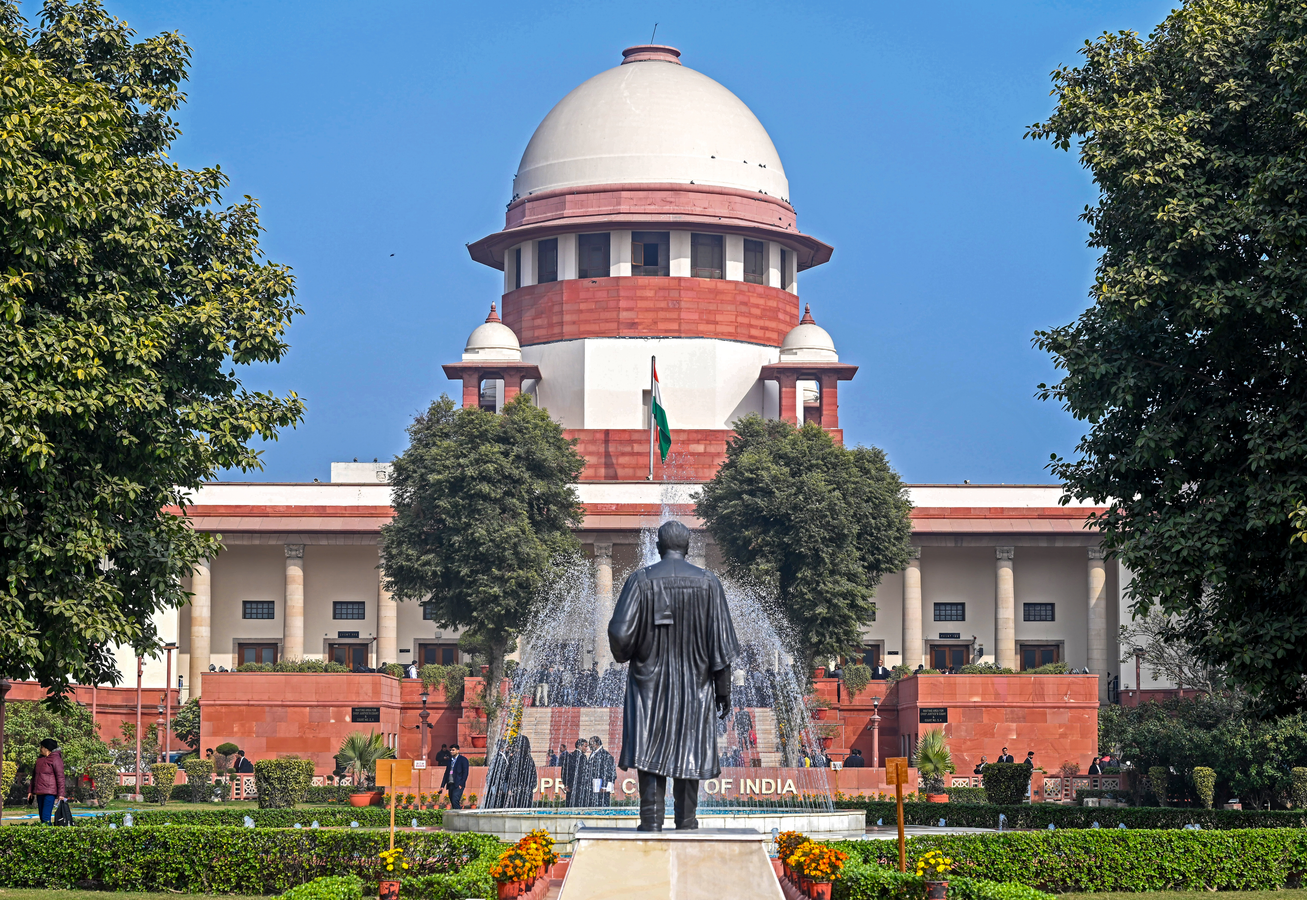
New Delhi, February 23 – The Ministry of Health and Family Welfare has informed the Supreme Court that the decision to reduce the qualifying percentile for NEET-PG 2025–26 was made after careful consideration by expert bodies, taking into account the large number of vacant postgraduate medical seats and the need to optimally utilize national healthcare infrastructure.
An affidavit filed by the Directorate General of Health Services (DGHS) stated that the challenge to the January 13 notification issued by the National Board of Examinations in Medical Sciences (NBEMS) – which reduced the qualifying cut-off percentiles for postgraduate medical admissions to abnormally low, zero, and even negative levels after the results were declared and two rounds of counseling were completed – was unfounded, as it concerned an academic and policy determination made within the framework of the National Medical Commission (NMC) Act, 2019.
"It is respectfully submitted that the challenge pertains to an academic and policy determination made by competent statutory authorities under the National Medical Commission Act, 2019, in the public interest and within the scope of expert regulation," the affidavit stated.
Referring to the scope of judicial review, the Centre argued that the writ petition is "not maintainable" as it questions a policy decision made by expert bodies, considering the availability of seats and healthcare requirements in India.
The affidavit clarified that NEET-PG is not intended to certify minimum clinical competence, which "is already established by the MBBS qualification itself," but to generate a merit list for allocating limited postgraduate seats.
"The NEET-PG scores are a reflection of relative performance and the examination design, which cannot be interpreted as proof of clinical incompetence," it stated.
The Centre informed the Supreme Court that approximately 70,000 seats were available for the 2025–26 academic session, with 31,742 seats under the All-India Quota (AIQ). After the second round of counseling, 9,621 AIQ seats remained vacant.
"A meeting was convened on December 30, 2025, to review the percentile cut-off, considering the anticipated vacant seats and the need to optimally utilize available postgraduate seats," the affidavit stated, adding that the meeting's minutes recorded that nearly 20,000 postgraduate seats, including DNB seats, were likely to remain vacant nationwide after the second round of counseling.
According to the affidavit, this decision made an additional 1,00,054 candidates eligible to participate in the third round of counseling, increasing the total number of eligible candidates to 2,28,170.
"This measure does not compromise academic standards, does not alter the merit list, and does not provide any undue advantage to any institution," the affidavit stated.
The Centre said that similar reductions had also been implemented in previous years, adding that the qualifying percentile had been reduced to zero across all categories in the 2023 academic session.
Responding to concerns regarding patient safety, the Ministry of Health and Family Welfare said that all postgraduate trainees work under the constant supervision of senior faculty and specialists, and final competence is assessed through MD/MS examinations, where candidates must achieve at least 50% marks in both theory and practical examinations without any relaxation.
"PG seats represent significant public resources and training capacity, and leaving these seats vacant would result in the wastage of valuable national investment in infrastructure, faculty, and hospital facilities," it stated.
Relying on Supreme Court precedents, the Centre argued that courts ordinarily refrain from interfering in academic or policy matters unless decisions are shown to be arbitrary or unconstitutional.
"It is not the Court's role to intervene in public policy matters, especially when decisions are made in the public interest and within the framework of expert regulation," the affidavit quoted.
Arguing that "reducing the qualifying percentile is a proportionate administrative measure intended to prevent seat wastage and strengthen specialist healthcare capacity," the Union government urged the Supreme Court to dismiss the writ petition as "without merit."
Earlier, a Bench of Justices P.S. Narasimha and Alok Aradhe had issued notices to the Union government, the NBEMS, the NMC, and the MCC following a public interest litigation (PIL) seeking restoration of the original qualifying standards prescribed in the NEET-PG 2025 Information Bulletin.
The plea, filed before the Supreme Court by advocate Satyam Singh Rajput, contended that the reduction of qualifying standards is arbitrary, unconstitutional, and violates Articles 14 and 21 of the Constitution, besides posing a serious threat to patient safety, public health, and the integrity of postgraduate medical education.
It argued that permitting candidates with zero or negative scores to enter specialist training dilutes merit at the apex level of medical education and undermines minimum standards of professional competence.
Terming the move "unprecedented and extreme," the petition stated that NEET-PG, which is meant to function as a national screening mechanism, has been converted into "an instrument certifying failure as eligibility," and further challenged the reduction on the ground that the "rules of the game" cannot be altered after the selection process has commenced and results have been declared.