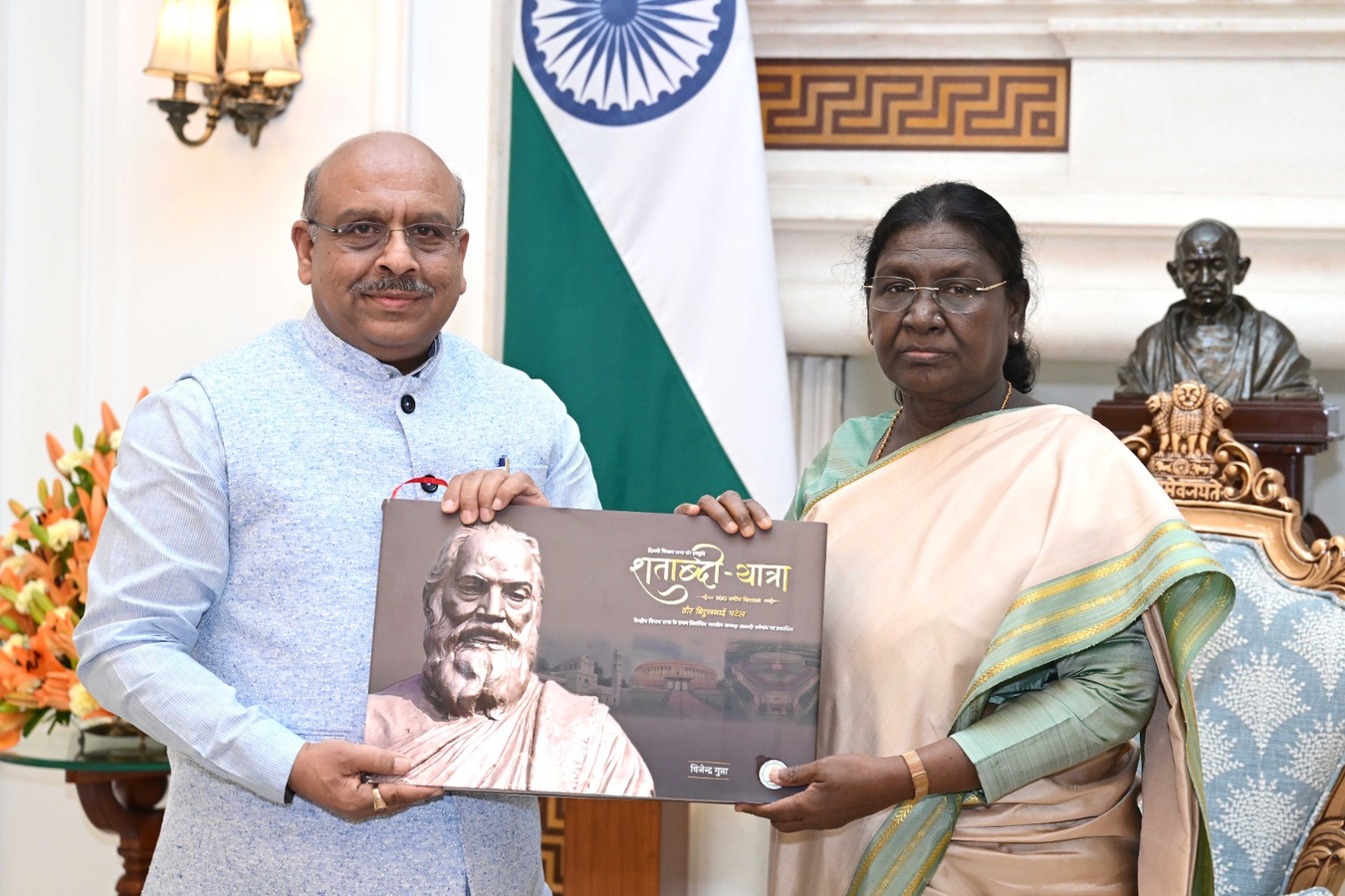
New Delhi, March 30 – Delhi Assembly Speaker Vijender Gupta met with President Droupadi Murmu on Monday, a meeting that coincided with the anniversary of the historic March 30, 1919, Rowlatt Satyagraha incident in Chandni Chowk, Old Delhi.
Gupta briefed her about the heroic incident, in which freedom fighters from the capital played a key role in opposing the Rowlatt Act, which allowed for the arrest of any Indian without a warrant and detention without trial for up to two years.
He also informed the President about the historical significance of March 30. On this day in 1919, Swami Shraddhanand led a fearless, non-violent protest against the oppressive Rowlatt Act at Chandni Chowk in Delhi.
The Speaker also presented her with a Coffee Table Book, "Shatabdi Yatra, Vir Vithalbhai Patel," published by the Delhi Assembly Secretariat, according to an official statement.
The President said, "We must keep the flame of remembrance burning brightly. The sacrifice of our martyrs is the fuel for this flame, and we must never let it flicker."
She added, "It is vital that today's generation understands the heavy price paid for our freedom. This history must remain alive in the hearts and minds of our youth as a source of eternal inspiration."
Addressing the aspirations of the younger generation, the President remarked, "In today's competitive world, being career-oriented is commendable. Whether you aspire to be a doctor, lawyer, professor, or scientist, my best wishes are with you. However, I urge you to always put the Nation First."
"Whatever you become, never let the spirit of patriotism and the memory of our martyrs fade from your heart," she said, expressing condolences for those who fell in the 1919 Delhi massacre.
She appreciated the Assembly's efforts in documenting this history, noting that such records serve as a milestone in keeping the flame of liberty alive.
The President reviewed the historical accounts of the 1919 incident, acknowledging its significance in India's journey toward independence.
Gupta also briefed the President about a landmark event in India's freedom struggle that occurred following the passage of the oppressive Rowlatt Act within the very walls of the current Delhi Legislative Assembly (then the Central Legislative Assembly).
He told her that the day was marked by the presence of Mahatma Gandhi, the Father of the Nation, in the visitors' gallery.
Gupta's meeting with the President aimed to pay tribute to the sacrifices made during one of the earliest and most defining moments of mass resistance in Delhi.