Brazzaville, March 15 – More than three million registered voters in the Democratic Republic of Congo will be heading to the polls on Sunday for the country's presidential election, with polling stations open from 7 a.m. to 6 p.m. local time.
According to a decree by the Ministry of the Interior, 6,620 polling stations have been set up across 4,011 centers in the 15 departments that make up the country, Xinhua news agency reported.
A total of seven candidates are in the running, including incumbent President Denis Sassou N'Guesso.
Under the electoral law, the President is elected through direct universal suffrage in a two-round majority system.
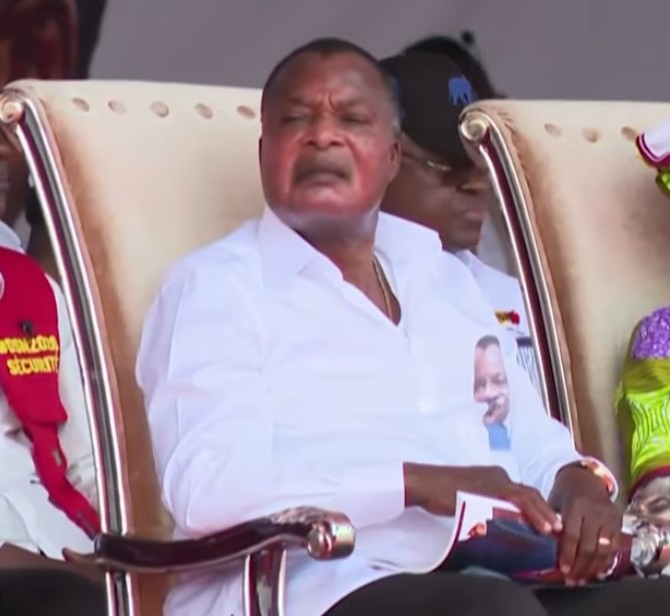
Incumbent President Denis Sassou N'Guesso, 82, is running for a fifth consecutive term under the banner of the Presidential Majority, a coalition comprising nearly 20 political parties.
Other candidates include Joseph Kignoumbi Kia Mboungou, a Member of Parliament and the leader of "The Chain" Party, who is running for the fifth time since 2002.
Anguios Nganguia Engambe, President of the Party for Action of the Republic, is competing for the fourth consecutive time since 2009.
According to media analysis, while six candidates are standing against Sassou N'Guesso, the main Opposition is divided and largely absent, leaving him set to win another five-year term.
Observation missions from the International Organisation of the Francophonie and the African Union have arrived in Brazzaville.
During his election campaign, Sassou N'Guesso underlined his economic record, having pushed to modernize the country's infrastructure and develop the gas and agriculture sectors in a bid to make Congo self-sufficient.
Sassou N'Guesso first led Congo-Brazzaville under a one-party system from 1979 to 1992 before losing the first multi-party elections, whose winner he then overthrew in a civil war in 1997.
He was re-elected in 2002, 2009, 2016, and 2021 in votes the Opposition said were neither transparent nor democratic.
He has maintained a firm grip over the former French colony, which gained independence in 1960 and has traditionally maintained close ties with both France and Russia.
The third-largest oil producer in sub-Saharan Africa, Congo-Brazzaville depends heavily on hydrocarbons, which account for more than three-quarters of export earnings.