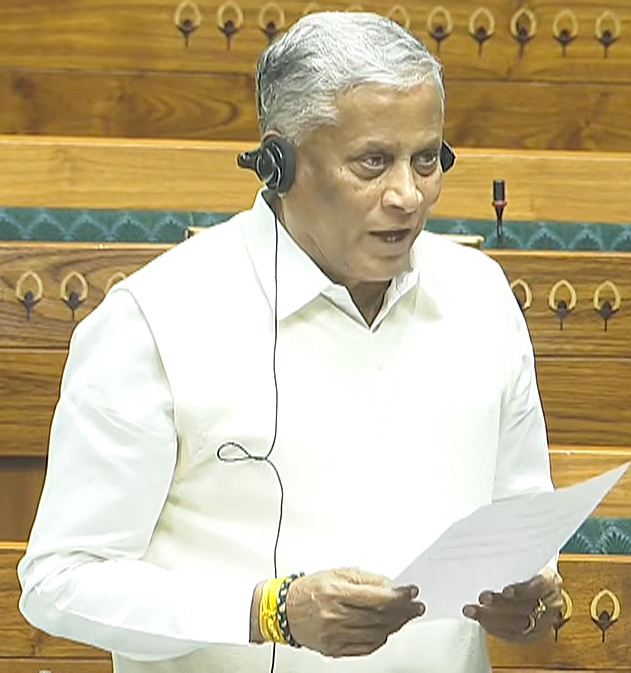
New Delhi, March 30 Out of approximately 19.36 crore rural households in the country, around 15.82 crore (81.71% of households) reportedly have tap water supply in their homes, the Rajya Sabha was informed on Monday.
In a written reply, Minister of State for Jal Shakti V. Somanna stated that at the start of the Jal Jeevan Mission (JJM) - Har Ghar Jal in August 2019, only 3.23 crore (16.7% of rural households) reportedly had tap water connections.
This initiative ensures a regular and long-term supply of water of prescribed quality through tap water connections.
He said that the department undertakes an assessment of the functionality of household tap water connections provided under the Mission through an independent third-party agency selected using standard statistical sampling methods.
During the Functionality Assessment, 2024, it was found that 98.1% of households in surveyed villages had tap connections, and 87% of households with tap connections reported receiving water in the past week, indicating overall progress.
The Assessment 2024 found that 84% of households receive water according to schedule; 80% of households were found to be receiving a minimum of 55 LPCD (liters per day per capita) of water; 76% of households were found to be free from bacteriological contamination, and 81% of households of the supply source were found to be free from chemical contamination. Considering the parameters of quantity, quality, and regularity, 76% of household tap connections were found to be functional, he said.
The Minister of State said that a number of steps have been taken to plan and implement JJM across the country, including regular review of implementation, workshops/conferences/webinars for capacity building, training, knowledge sharing, and field visits by a multi-disciplinary team to provide technical support.
Detailed Operational Guidelines for the implementation of JJM, Margdarshika (guidelines) for Gram Panchayats & VWSCs to provide safe drinking water in rural households, and Guidelines on a special campaign to provide piped water supply in anganwadi centres, ashramshalas and schools have been shared with States/UTs to facilitate effective planning and implementation of Jal Jeevan Mission, he said.
For online monitoring, JJM–Integrated Management Information System (IMIS) and JJM–Dashboard have been put in place. Provision has also been made for transparent online financial management through the Public Financial Management System (PFMS), he said.