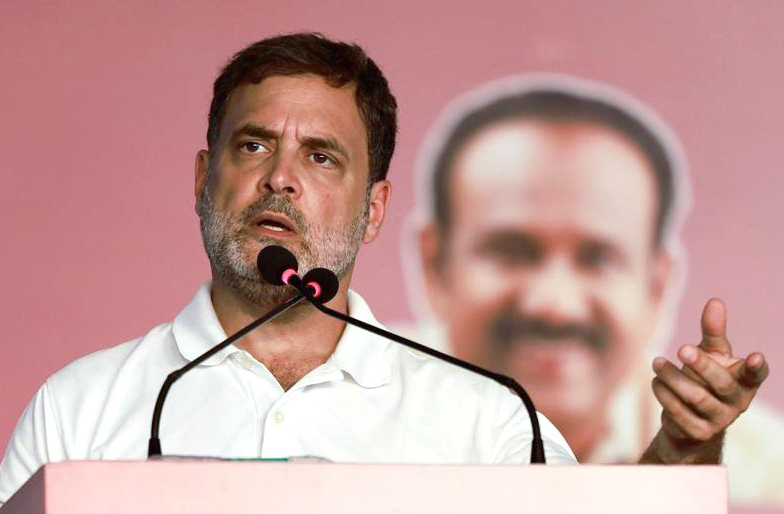
New Delhi, April 4 Leader of the Opposition in the Lok Sabha, Rahul Gandhi, alleged on Saturday that the Union government was “hiding the truth about foreign surveillance,” similar to Chinese-made CCTV cameras, “covering up its failures,” and “putting every citizen’s security at risk.”
In a Facebook post, the Congress leader said: “The government recently banned the public use of Chinese CCTV cameras. However, Chinese cameras are still installed in government buildings. Banned Chinese apps are reappearing under new names. Foreign AI platforms are processing sensitive data. And the government has nothing to say about it.”
He added that he had asked the Ministry of Electronics and IT in Parliament, but their response was long and did not answer the actual questions.
Gandhi attached a copy of his question and the response from Minister of State for Electronics and Information Technology, Jitin Prasada.
According to him, the ministry’s response provided no specific details, no answers, not even the names of the platforms involved.
He pointed out that it did not name the countries of origin of these cameras, how many are certified as secure, which foreign AI platforms are processing government data, or which banned apps are still running under new names.
“Even five years after the government admitted that the 10 lakh Chinese cameras it was using posed risks of data transfer, it has not clarified whether the cameras watching us are safe or not,” he posted, claiming, “This is a deliberate conspiracy to keep India in the dark.”
Gandhi ended the Facebook post by saying: “By hiding the truth about foreign surveillance and covering up its failures, the PM Modi government is putting every citizen’s security at risk.”
In its response to the Lower House, the Ministry pointed out that the government is aware of the cybersecurity risks posed by digital technologies and that “In the last 12 years, numerous efforts have been made to strengthen India’s digital ecosystem.”
Prasada outlined the steps taken to protect India’s telecom networks, noting that in 2021 the government “undertook decisive steps to implement National Security Directive on Trusted Sources”, ensuring that “only from trusted sources are deployed in the telecom networks in the country”.
He also outlined strengthening the legal framework for network security and data protection.
“The government has notified the Telecommunication Act, 2023, containing extensive provisions for security of telecommunication networks in the country and Digital Personal Data Protection Act, 2022, containing a legal framework to ensure protection of personal data,” said the minister’s written statement.
It added the major reforms initiated for strengthening the security of CCTV systems, including documentation of the origin of critical components, tests against vulnerabilities that could allow unauthorised remote access, where accredited labs would only decide these.
“At present, 507 models of CCTV cameras are certified for compliance with Essential Requirements,” it added, saying, “Government departments have been restricted from buying CCTV equipment that does not meet these criteria.”
Meanwhile, the statement also noted that 652 mobile applications have been blocked due to concerns regarding data security and other malpractices, in accordance with relevant rules.
The ministry also mentioned certain additional measures implemented to enhance cybersecurity posture, including the National Cyber Coordination Centre (NCCC) implemented by India’s national cybersecurity agency CERT-In to examine and detect cybersecurity threats.