Jodhpur, April 4 The Rajasthan High Court has revised the concluding remarks of its recent judgment on transgender reservation, in which it made critical observations on the Transgender Persons (Protection of Rights) Amendment Act, 2026, stating that it removed their right to self-identify their gender.
The bench comprising Justices Arun Monga and Yogendra Kumar Purohit refused to delete the concluding remarks entirely, but agreed that some paragraphs within them should not have been included.
"The court has clarified and ordered the removal of some text, which the court said was included by mistake and was neither intended nor necessary," said Vivek Mathur, counsel for a 29-year-old transgender petitioner seeking clarification related to the concluding remarks.
This revision comes three days after the court's March 30 ruling in a petition challenging a 2023 state notification placing transgender persons within the OBC category without a distinct reservation framework.
In its original judgment, the court had appended concluding remarks, expressing concern that the 2026 amendment marked a departure from the constitutional principle of self-perceived gender identity as recognized by the Supreme Court.
The now-deleted portions had cautioned that conditioning legal gender recognition on certification or administrative scrutiny risked reducing an inviolable aspect of personhood to a state-mediated entitlement.
The court had also warned against statutory developments that could dilute constitutional guarantees or render transgender rights illusory by procedural constraints.
In its revised order, however, the high court removed these observations, clarifying that they were not essential to the adjudication of the case.
The updated concluding remarks adopt a more restrained tone, describing the amendment as part of a changing legal landscape, while emphasizing that the directions issued in the main judgment remain grounded in the legal position as it stood on the date of the ruling.
At the same time, the court reaffirmed the constitutional foundation of gender identity, stating that the right to self-identify one's gender is an intrinsic facet of dignity, autonomy, and personal liberty under Articles 14, 15, 16 and 21 of the Constitution, and underscoring that selfhood is not a matter of concession, it is a matter of right.
The bench further directed that any policy framework developed by the Rajasthan government in compliance with its ruling must remain within the contours of the law as it existed on March 30, 2026.
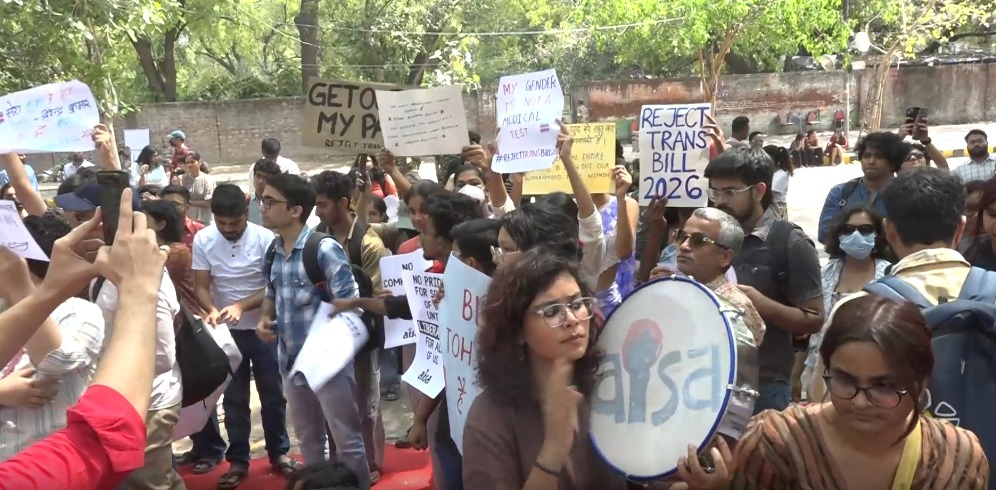
The Transgender Persons (Protection of Rights) Amendment Bill, 2026, was passed by the Lok Sabha on March 24 and received the Rajya Sabha's nod the next day. It received the President's assent on March 30.
The high court also ordered that the earlier version of the judgment be replaced with the corrected one.
However, the substantive directions of the judgment remain unchanged, including the grant of 3 per cent additional weightage in marks to transgender candidates in public employment and educational admissions, and the constitution of a committee to examine their marginalisation and recommend an appropriate reservation framework.