New Delhi, April 3 The historic city of Jaipur is set to turn 300 in 2027, and the Rajasthan government has planned year-long celebrations, starting later this year, to commemorate the milestone, Deputy Chief Minister Diya Kumari said on Friday.
Jaipur – the capital of Rajasthan – was founded by Maharaja Sawai Jai Singh II on November 18, 1727.
"Jaipur, as a historic city, will complete its 300 years in 2027. A series of events will be held to commemorate the occasion," Kumari told
When asked when the celebrations would begin, she said the plan is to start them sometime around November this year, leading up to the city's 300th anniversary next year.
Chief Minister Bhajan Lal Sharma has envisioned "grand celebrations" for the tricentenary of Jaipur, she said.
On Friday evening, Kumari participated in 'Ayodhya Parv 2026' at the Indira Gandhi National Centre for the Arts (IGNCA) here.
In her address, she suggested that an edition of Ayodhya Parv could also be hosted in Jaipur as part of the planned celebrations to mark the city's 300 years.
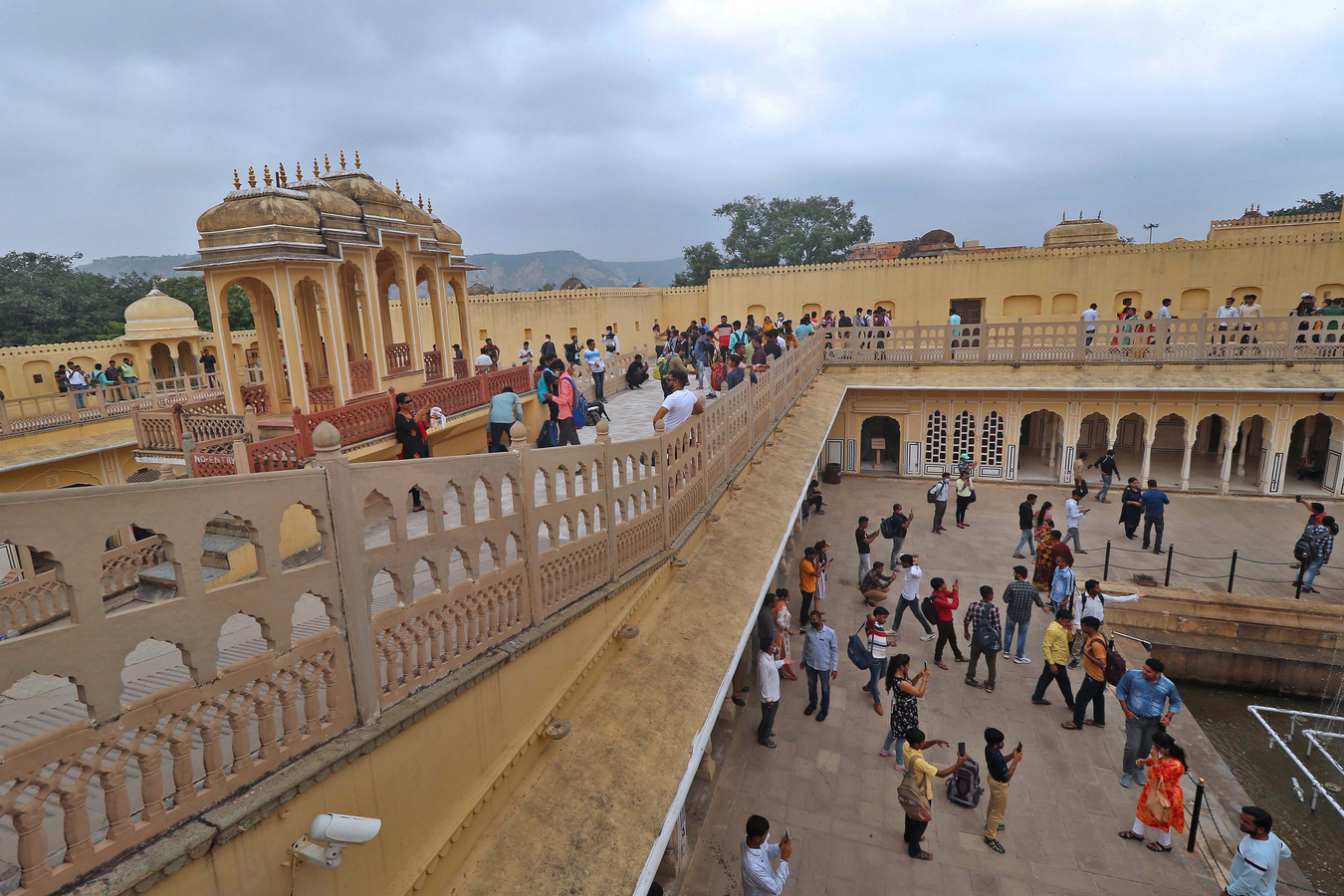
Jaipur is famous for its iconic heritage buildings, such as the Hawa Mahal and the City Palace, among others, which have ornate architecture and a rich culture that attract both domestic and foreign tourists.
On March 19, Rajasthan Diwas celebrations were held at the Albert Hall Museum in Jaipur, showcasing the state's rich cultural heritage through curated folk music and traditional performances.
The Albert Hall Museum, also known as the Government Central Museum, was named in honour of the then Prince of Wales, Albert Edward, son of Queen Victoria, who laid its foundation during a visit to Jaipur in 1876.
Maharaja Sawai Jai Singh II was a Kachwaha Rajput who ruled Jaipur from 1699-1743.
Before Jaipur, his capital was Amber, located 11 km from the city. With the increase in population, the king felt the need to shift the capital.
Another reason to shift the capital was the scarcity of water in the Amber region, according to the website of a district court of Jaipur.
Jaipur is believed to be the "first planned city" of India.
Several books on architecture and many architects were consulted before preparing the layout of Jaipur, it says.
"Jai Singh was concerned about the security of the city, and hence, he utilized his scientific and cultural interests to build it. Vidyadhar Bhattacharya, a scholar in mathematics and science from Bengal, assisted Jai Singh in designing the city's architecture.
The construction of the city started in 1727, and it took around four years to complete the major palaces and roads.
"Jaipur was divided into nine blocks, two of which comprised state buildings and palaces. The remaining seven blocks were allotted to the general public to live in.
"From the security point of view, huge walls were built around the city along with seven strong gates. It is believed that the architecture of the city was the best in the Indian subcontinent at that time," the website says.
In 1878, the whole city was painted pink to welcome the Prince of Wells, Albert Edward, bringing the name 'Pink City' into existence.
In keeping with the charm of the historic era, all state buildings and historical places in Jaipur are painted in pink colour.
The walled city of Jaipur was inscribed on the list of UNESCO World Heritage Sites in 2019.
"The city's urban planning shows an exchange of ideas from ancient Hindu and early modern Mughal as well as Western cultures.
"The grid plan is a model that prevails in the West, while the organization of different city sectors ('chowkris') refers to traditional Hindu concepts," the UNESCO website says.