In Kolar, Karnataka, Defence Minister Rajnath Singh stated that the investment in the H-125 helicopter program is expected to exceed ₹1000 crore and create numerous jobs, serving as a "prime example" of mutually beneficial partnerships with friendly countries in the high-end manufacturing sector.
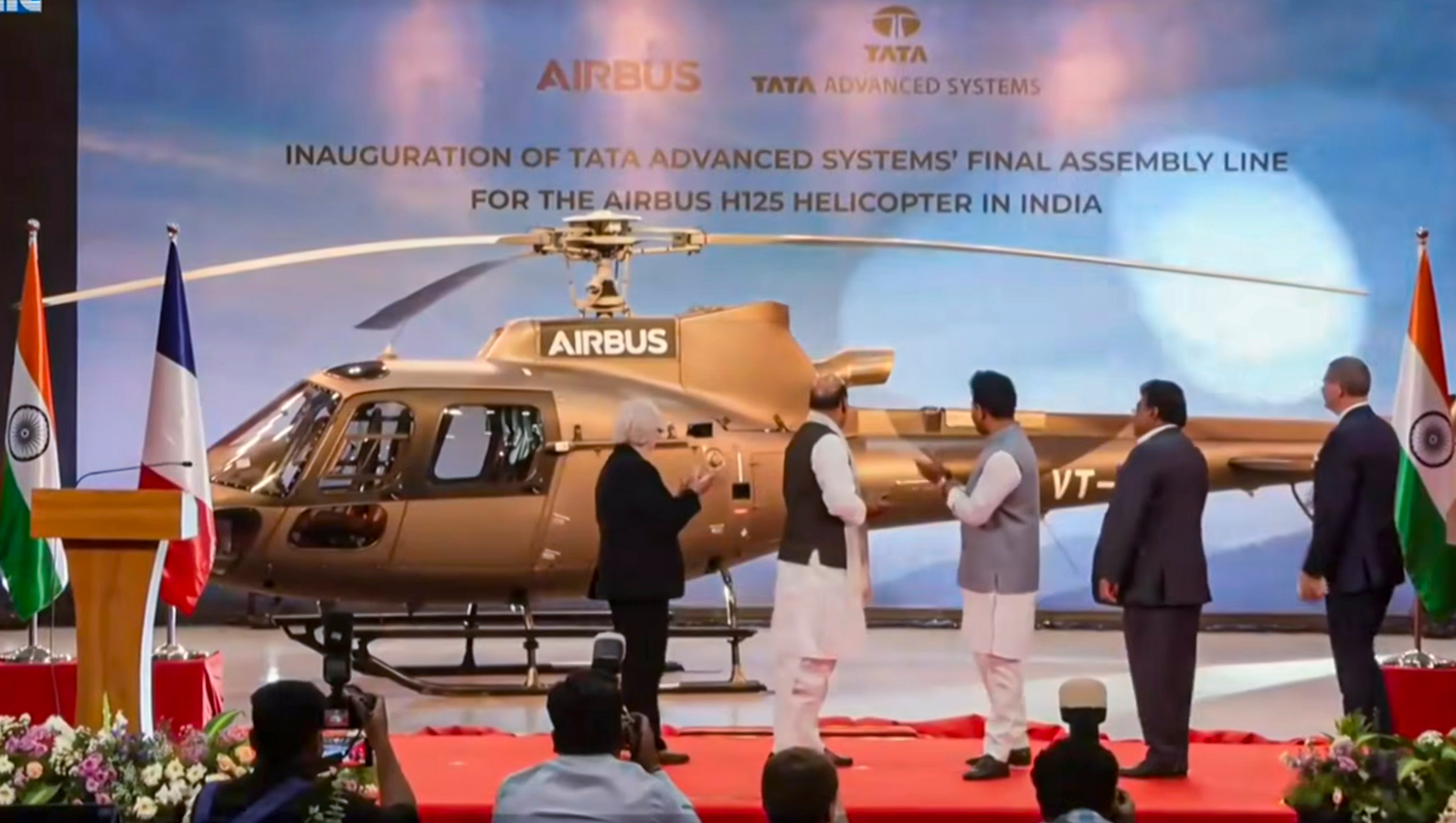
He made this statement during the inaugural ceremony of the final assembly line of the H-125 helicopters.
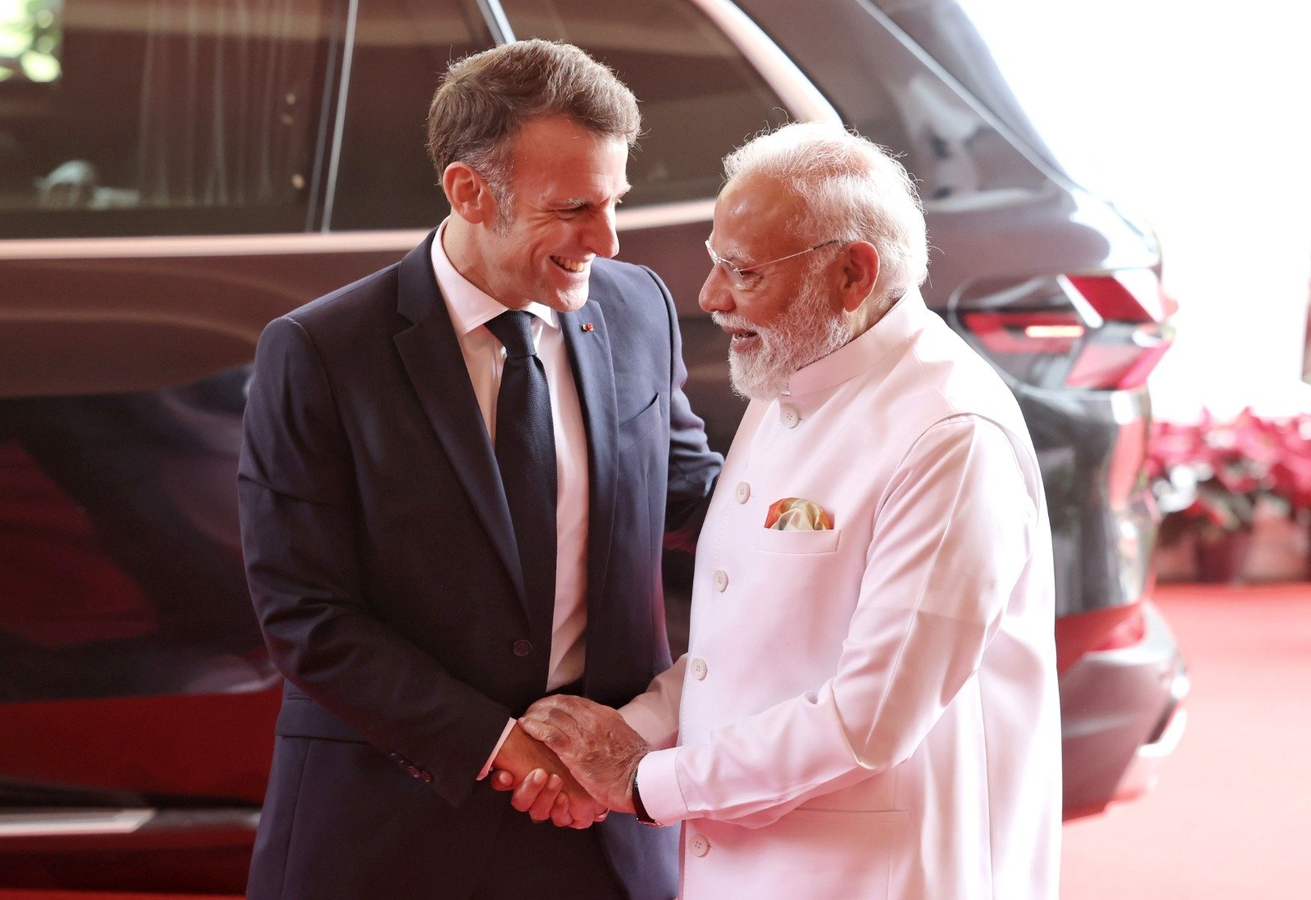
Prime Minister Narendra Modi and French President Emmanuel Macron virtually inaugurated the Airbus H125 light utility helicopter Final Assembly Line at Tata-Airbus' facility in Vemagal Industrial Area, Kolar, from Mumbai.
Singh, accompanied by his French counterpart Catherine Vautrin, congratulated Tata Advanced Systems and Airbus Helicopters on the inauguration and highlighted their earlier collaboration.
"This project is a prime example of mutually beneficial partnerships with friendly countries in the high-end manufacturing sector," Singh said.
"The investment in the H-125 program is projected to exceed ₹1000 crore and will likely create direct and indirect employment opportunities for our skilled and hardworking younger generation," he added.
The H-125, known for its exceptional reliability, versatility, and outstanding performance under diverse operating conditions, has proven to be one of the most effective and trusted single-engine helicopters globally, he noted.
He recalled that Tata Advanced Systems and Airbus had previously collaborated on a project in Vadodara, Gujarat, for the C-295 aircraft, which he described as a symbol of how Tata, and India in general, can collaborate with international OEMs to contribute to the vision of a stronger India.
Singh emphasized that "Make in India" and self-reliance are cornerstones of India's economic policy since 2014.
He recalled that this policy initiative was launched by Prime Minister Modi, which commits India to achieving self-reliance in critical technology and the manufacturing of high-end products and equipment through mutually beneficial partnerships.
"For over a decade, India has been developing its industrial sector through large-scale infrastructure building, capital infusion into key sectors through various incentive schemes, and creating a level playing field to attract investment," he said.
He added that the government has also focused on supporting small and medium industries and strengthening the startup ecosystem. Overall, the focus has been on holistic industrial development, which caters to domestic demand and addresses the needs of other countries.
Highlighting reforms in the defence sector, Singh said these measures have increased the contribution of the private sector in the defence industrial ecosystem.
Historically, Indian defence production was largely public sector-oriented due to high capital investment and long gestation periods, which resulted in a private sector contribution far less than desired.
However, with reforms such as the corporatisation of ordnance factories, the establishment of defence industrial corridors, and other initiatives to increase the private sector's share in total defence production, it now accounts for almost a quarter of the country's total defence production.
Defence exports have also increased significantly, placing India among the top exporters in the world, he said.
Singh said that this growth has given a massive boost to MSMEs and ancillary sectors, which now number over 16,000, with many foreign companies sourcing components from Indian MSMEs.
He invited companies to deepen the partnership through meaningful technology transfer and offer platforms to meet the security needs of other countries.
Union Civil Aviation Minister K. Rammohan Naidu, who also attended the event, said that the H125 final assembly line set up by Tata and Airbus marks a defining moment for India's aerospace sector, calling it "a proud symbol of rising confidence in India's high-precision aerospace capabilities."
He described defence and civil aviation as "two strategic pillars of the Indo-French partnership" and said the new facility would reinforce "a single integrated aerospace ecosystem" by assembling both civil and defence variants.
Noting that India has risen from the 10th to the third largest civil aviation market in just 11 years, Naidu asserted that the country now has "the market, the export potential, the policy ecosystem, the skilled workforce, and the strategic global partnerships to emerge as a rotary-wing manufacturing hub."
"The future of rotary aviation in South Asia will be designed, manufactured, certified, maintained, and exported from India," he said, adding that the country is "not just flying high, but flying past all horizons" under the Make in India and Viksit Bharat 2047 visions.
Tata Advanced Systems CEO and MD Sukaran Singh said, "Here, we will begin building helicopters without any government or defense orders."
"However, we will be ready to supply the defense forces as and when they require. The first helicopter will fly out of this facility by mid-2027."