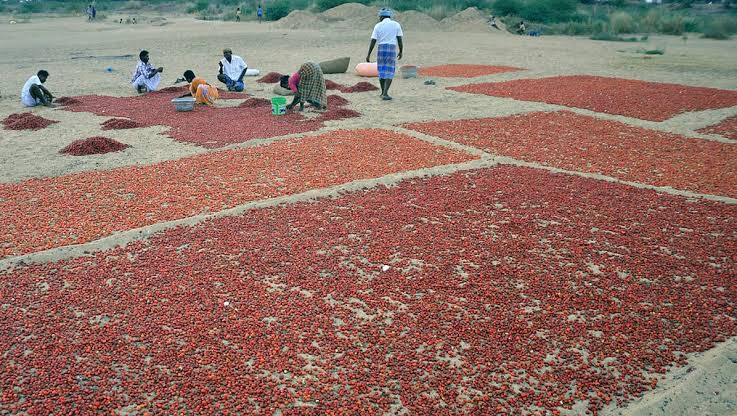
Ramanathapuram, March 1 – A sharp decline in arrivals has sent chili prices in Ramanathapuram, Tamil Nadu, soaring to record levels, with Mundu and Samba varieties fetching over Rs 20,000 per quintal in the open market.
Officials attribute the surge to reduced cultivation area, widespread pest infestation, and drought conditions. They have also urged the Tamil Nadu government to announce drought relief to offset mounting crop losses.
Chili remains the largest horticultural crop cultivated in the district. This year, the crop has been raised on approximately 13,500 hectares, a drop of more than 1,500 hectares compared to last year’s 15,500 hectares.
Horticulture department officials said the decline is largely due to severe fungal disease outbreaks during the previous season, which resulted in heavy yield losses and discouraged farmers from expanding cultivation.
With the harvest season now underway, prices have nearly doubled from usual levels due to poor arrivals in markets.
M. Ramar, a traditional chili farmer and exporter from Ramanathapuram, said that Mundu chili, which typically fetches between Rs 13,000 and Rs 20,000 per quintal, is currently being traded at Rs 25,000 to Rs 36,000 per quintal.
Similarly, Samba chili prices have climbed from the usual Rs 12,000 - Rs 15,000 range to between Rs 20,000 and Rs 25,000 per quintal. Data from the agriculture marketing department indicates that regulatory market prices are also significantly elevated.
Samba chillies are being sold at around Rs 220 per kg, while Mundu varieties are touching Rs 360 per kg – nearly twice the average rates seen during normal harvest seasons.
Farmers blame the steep price rise on poor yields caused by pest attacks, fruit rot disease, and prolonged dry spells.
Senior horticulture officials confirmed that preliminary assessments show over 2,500 hectares of chili crops have been affected by pest infestations, with drought conditions further aggravating the damage. “Only those with assured irrigation facilities or the capacity to purchase water through tankers managed to sustain their crops,” said Ayyapan, a chili farmer. “Others faced severe losses.”
With uncertainty looming over overall output this season, farmers have called on the state government to provide drought compensation and strengthen pest management support to stabilize production in the coming years.