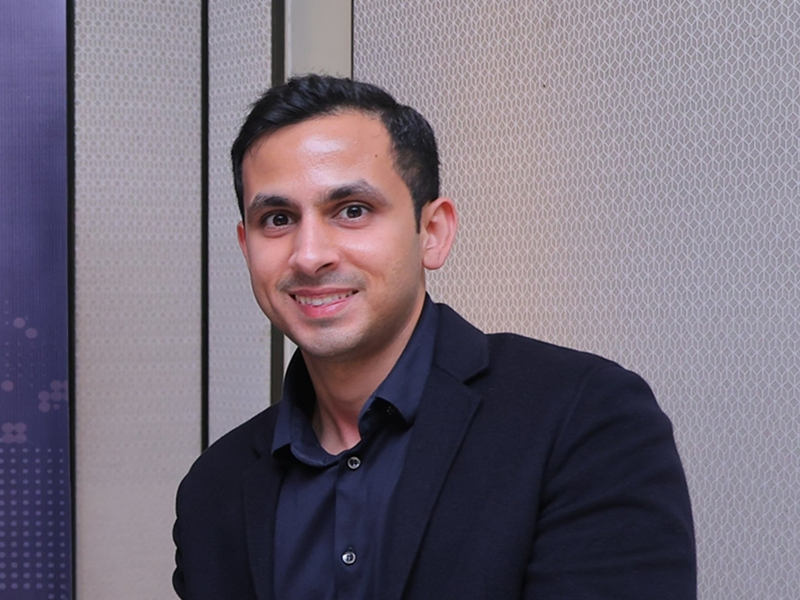
Srinagar, March 11 – Away from the public eye, a young Kashmiri Pandit is quietly working to reshape the image of Kashmir for the younger generation, without the unpleasant baggage of migration and community bitterness created by violence over the past three decades.
Twenty-six-year-old Arhan Bagati grew up in Delhi after his family left the Valley. He studied in the United States but eventually chose to return to Kashmir, bringing with him his global experience and perspective.
He now lives in the picturesque Nishat area of Srinagar, overlooking Dal Lake, with the Zabarwan mountain range providing a backdrop to what he calls his "new home."
Arhan says he has chosen to rebuild his professional and civic life in the place where his family once lived. Undeterred by the terror attack in Pahalgam last year, he says that terror cannot dictate how people live their lives.
He co-produced the Bollywood film "Ground Zero," starring Emraan Hashmi. Before entering filmmaking, Arhan gained national attention as the youngest Deputy Chef de Mission of India's contingent at the Tokyo Paralympics.
He later served as an ambassador for the Paralympic Committee of India and founded digital initiatives to support Indian Paralympic athletes at international competitions.
His work focuses on systems and access rather than symbolism.
In Srinagar, he founded the Kashmir Yumberzal Applied Research Institute, known as KYARI, a policy think tank that aims to produce applied research on civic and social issues in Jammu and Kashmir.
The institute describes its mission as identifying developmental challenges and proposing practical solutions. Arhan says that KYARI is a vehicle to focus on important but often overlooked issues, and through it he hopes to produce meaningful work that can help bring about change.
He was among the youngest recipients of a Jammu and Kashmir government award for social reform and empowerment. He has described the recognition as validation that young people need not wait their turn to contribute.
After graduating from Harvard, Arhan aims to return and work full-time with KYARI. He says he has always tried to consciously connect ground realities with public policy, adding that nothing can substitute the effort required to understand the complexities of local challenges before attempting solutions.
His return is also symbolic in that he hopes to challenge the perception that coexistence between Muslims and Kashmiri Pandits has become a thing of the past.
Arhan says he wants to rebuild trust across communities and contribute to a new model of Kashmiri leadership – globally educated yet locally invested – even as the journey presents both opportunities and constraints.