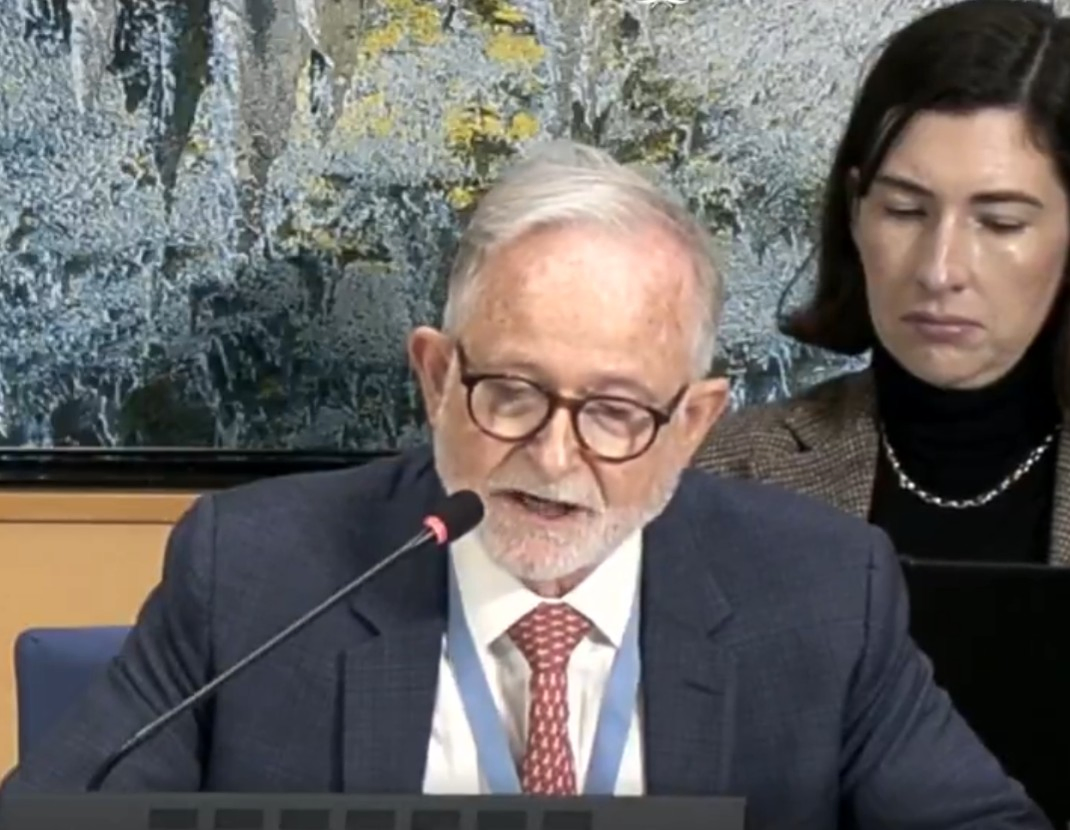
Kabul, April 1 – UN Special Rapporteur on the human rights situation in Afghanistan, Richard Bennett, has criticised the continued ban preventing Afghan women from accessing UN offices, calling the policy discriminatory and unjustifiable, according to local media reports on Wednesday.
Bennett called on Tuesday for the lifting of restrictions on Afghan women's access to UN premises, warning that this constitutes a serious attack on women's rights and their ability to work. Bennett joined 27 other UN experts in criticising the ongoing policy, Afghanistan's leading news agency Khaama Press reported.
He termed the measures as an unjustifiable attack on women's right to employment, emphasising that it weakens the delivery of life-saving humanitarian aid. He warned that banning women from UN offices directly impacts aid delivery in Afghanistan, where female staff is needed to reach women and children.
In their latest report, UN experts termed the continued exclusion of women from UN premises as a direct attack on fundamental rights, particularly the right to work. They added that there is no acceptable cultural, religious, or administrative justification for the policy.
Bennett's statement comes as the UN and rights groups continue to warn that restrictions on Afghan women and girls are pushing Afghanistan deeper into isolation, poverty, and humanitarian distress. International officials said such policies are not only harming Afghan women but also damaging the social and economic future of Afghanistan.
Since 2021, Afghan women have faced restrictions on education, employment, travel, and public life, sparking repeated criticism from the international community. Female aid workers are important in Afghanistan as many humanitarian programmes rely on women, as they are able to directly assist girls and women.
On March 26, the new academic year in Afghanistan schools began without girls returning to classrooms above sixth class for the fifth consecutive year. The classes started amid calls for reopening schools for girls above sixth class, local media reported.
The Taliban's Education Ministry said that the new academic year started with senior officials attending a formal ceremony while classes also resumed in colder provinces, Khaama Press reported.
UNICEF's Regional Director for South Asia, Sanjay Wijesekera, called for the reopening of schools for girls, stressing that hope, dignity, and the future begin with education.
Afghanistan's former President Hamid Karzai also called for allowing girls to study above sixth class and warned that denying girls education and restricting women's work could seriously harm Afghanistan's stability, progress, and self-reliance.
The Taliban has barred girls from studying above sixth grade in schools. Furthermore, authorities have barred girls from studying in universities, institutes, and many other learning spaces, limiting their academic and professional futures.