Kuala Lumpur, March 7 – Malaysia has recently held phone conversations with several Middle Eastern leaders, urging peaceful approaches and restraint to ease rising tensions in the region.
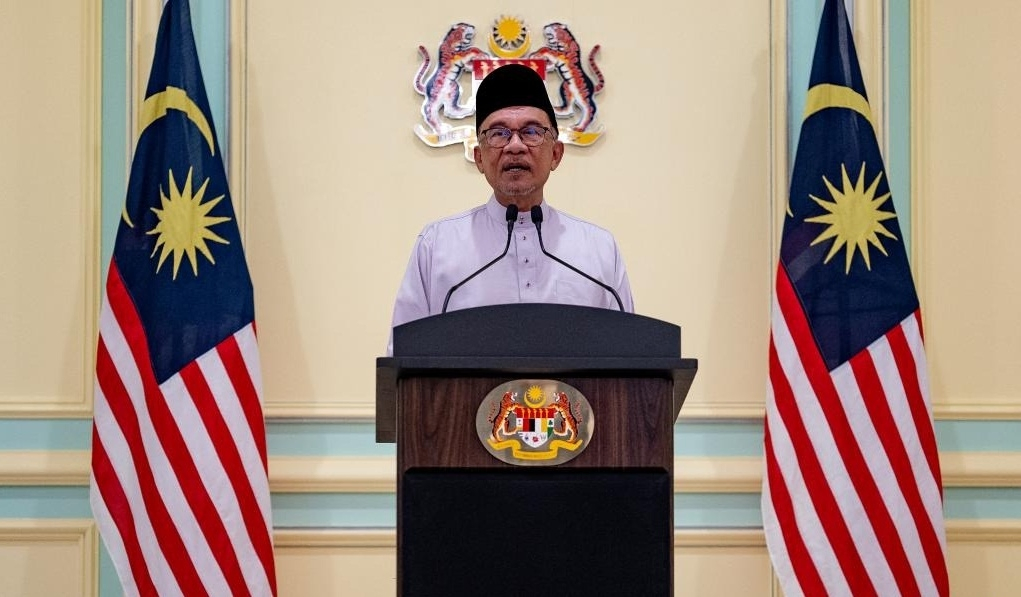
Malaysian Prime Minister Anwar Ibrahim said in several posts on social media on Saturday that Malaysia's position was conveyed during separate phone conversations recently with Qatari Prime Minister and Foreign Minister Sheikh Mohammed bin Abdulrahman bin Jassim Al-Thani, United Arab Emirates' President Sheikh Mohamed bin Zayed Al Nahyan, and Bahraini Crown Prince and Prime Minister Salman bin Hamad Al Khalifa.
Anwar said they exchanged views on the current developments in Qatar and Bahrain, as well as the wider Middle East region, following the attacks on Iran.
"I also appreciate the efforts of the governments of Qatar and Bahrain in ensuring the safety and welfare of Malaysians residing in both countries. We agreed that all parties should prioritize peaceful approaches and exercise restraint from any actions that could jeopardize regional stability and security," he said.
Meanwhile, Anwar also held a phone conversation with Iranian Foreign Minister Seyed Abbas Araghchi to convey Malaysia's sympathy and solidarity with the people of Iran during this extremely difficult time, according to Xinhua news agency.
Anwar said Malaysia is also deeply concerned over the prolonged conflict's implications for global peace, stability, and well-being.
The United States and Israel launched massive attacks on Iran on February 28, killing Khamenei, multiple senior military commanders, and hundreds of civilians. Iran has responded with multiple waves of missile and drone attacks targeting Israel and US assets across the region.
However, analysts say that Malaysia's ringgit is expected to remain relatively resilient despite rising geopolitical risks in the Middle East, with the currency potentially outperforming regional peers due to strong economic fundamentals and robust demand in the technology sector.
Maybank Investment Bank said in a note on Friday that, despite the recent conflict posing significant risks, it sees the ringgit still performing better than other peers, given that Malaysia is a net oil importer.
According to the research house, the country's strong fundamentals, current account surplus, fiscal prudence, and political stability all play a part in helping the ringgit better weather the challenging environment.
"Furthermore, higher oil prices can actually lead to higher dividend payments from state-owned enterprises towards the budget," it added.