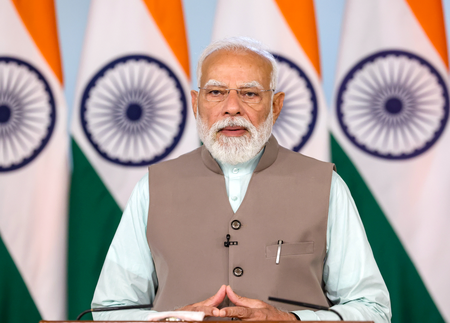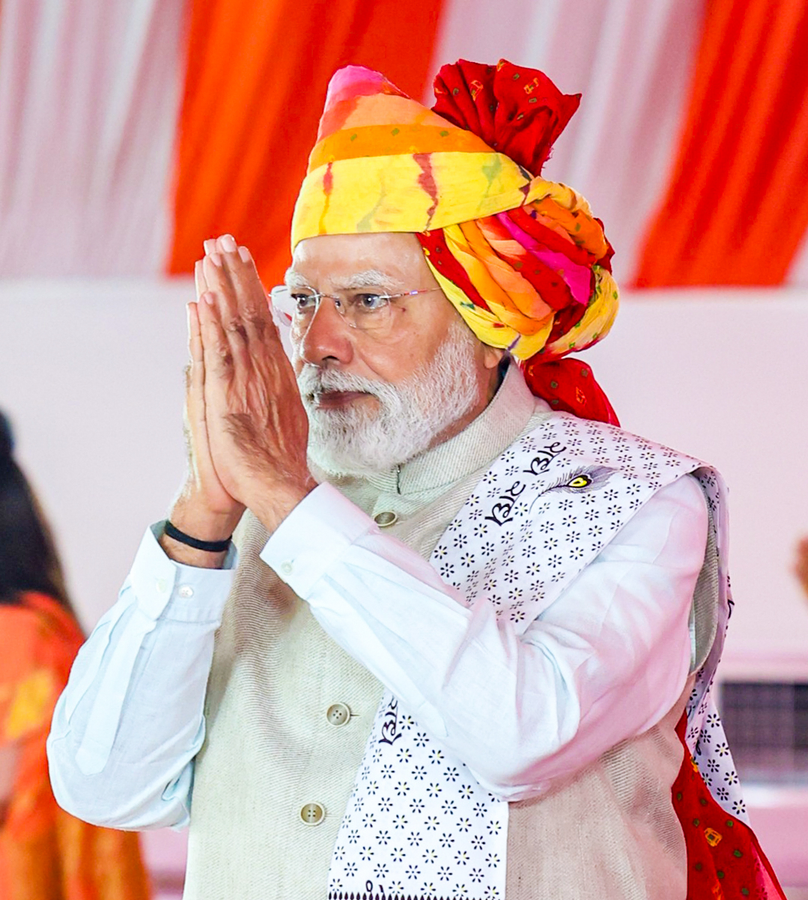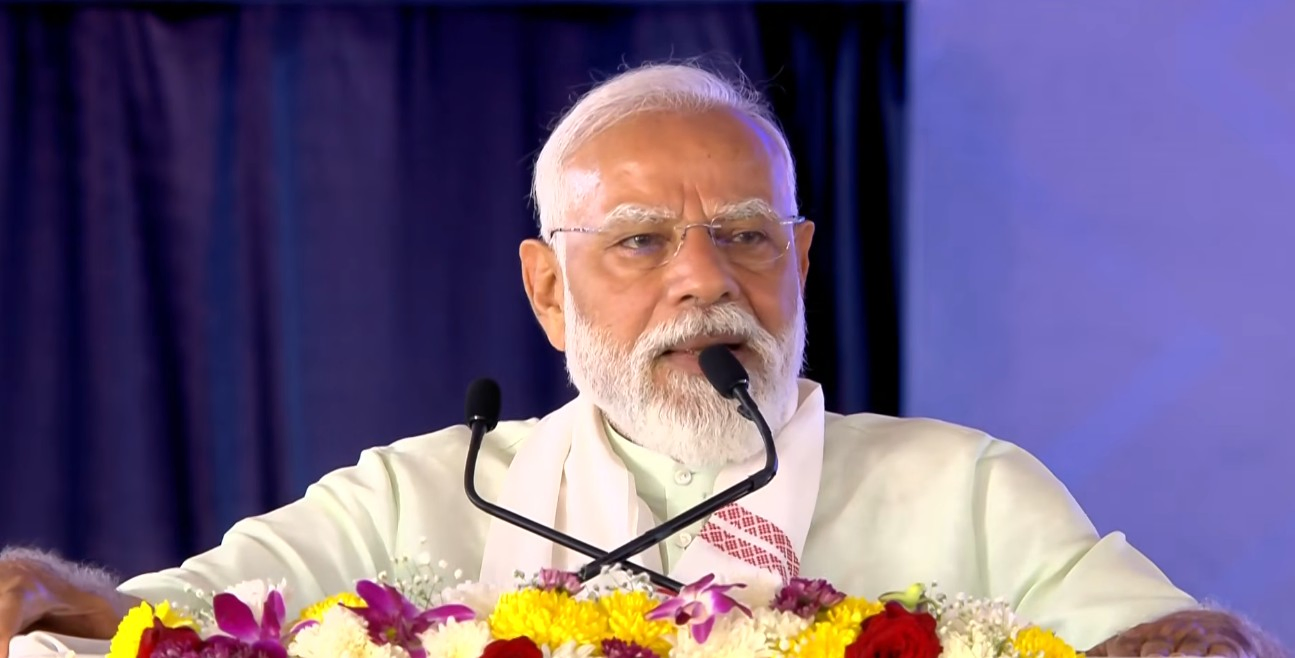
New Delhi, March 8 – Prime Minister Narendra Modi on Sunday launched a strong criticism of the previous AAP-led Delhi government for "delaying development projects" for the people of Delhi and contrasted it with the Rekha Gupta administration's introduction of several development projects for the national capital.
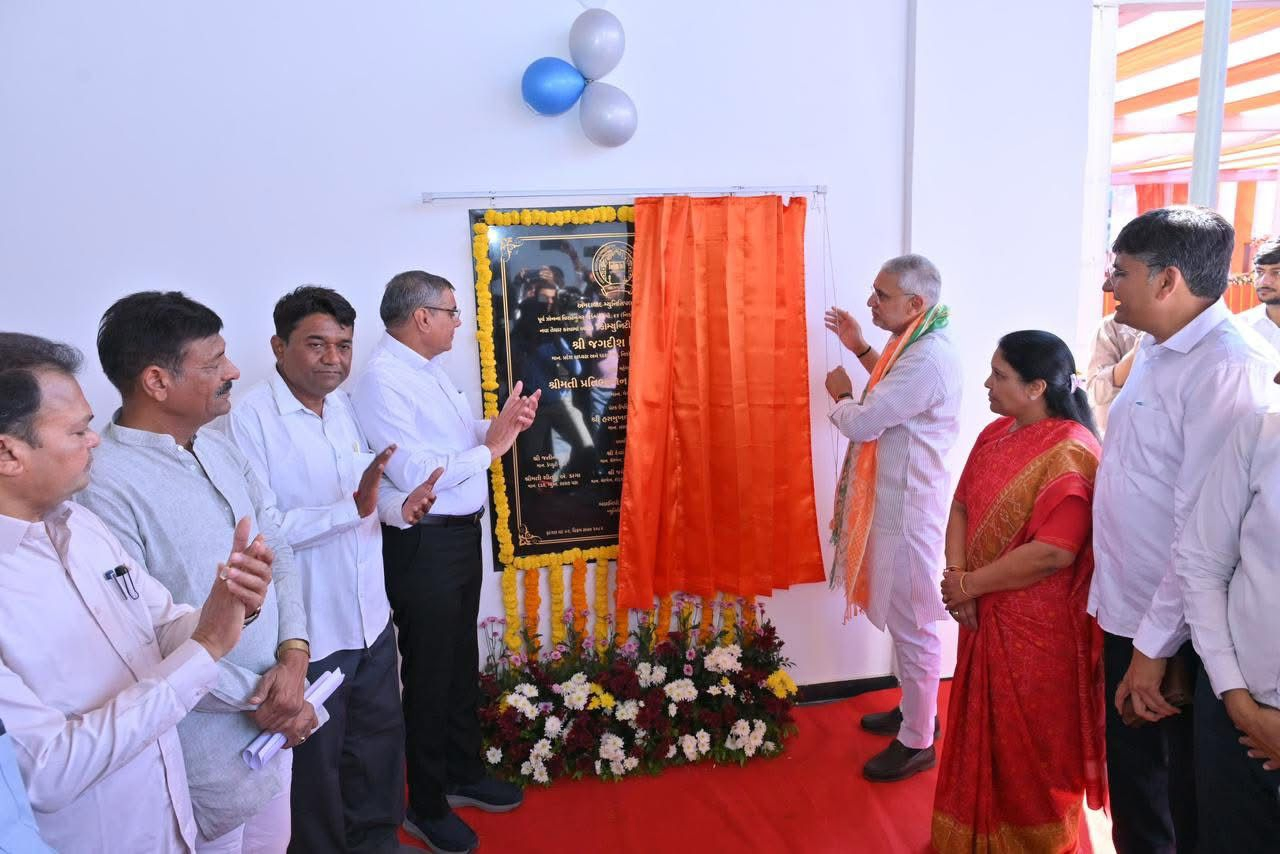
PM Modi also laid the foundation stone and inaugurated multiple development projects worth over ₹33,500 crore in New Delhi.
Addressing a large gathering at a DDA ground in Burari, New Delhi, PM Modi said, "We are gathered here to give a new momentum to Delhi's development journey. We have inaugurated and laid foundation stones for several development projects worth ₹33,500 crore. This includes expanding metro connectivity and providing residential spaces for several government employees, among other things."
The Prime Minister also distributed cards to beneficiaries of the Ayushman Bharat and PM Swanidhi schemes.
"A year ago, you all elected the BJP's double-engine government with full trust, and now, the results are already visible. I congratulate everyone on these development projects," he said.
In his address on International Women's Day, PM Modi said, "India is writing a new chapter of women's empowerment. Under the successful leadership of CM Rekha Gupta, the capital is being developed. Whether it's politics, administration, science, sports, or social initiatives, India's women are making progress in every field."
"When anyone thinks about the great democracy of India, Delhi always comes to mind. Delhi is not only the country's capital but also India's identity and a symbol of India's strength. That's why, Delhi's development is not just about one city, but also about the entire nation," the Prime Minister said.
"The more modern and well-connected Delhi is, the more effectively India will showcase its capabilities. That's why I'm happy that today, our Delhi is moving forward, enriched with facilities and infrastructure," he added.
Recalling the past, PM Modi said, "There was a time when only the problems of Delhi were discussed. It used to take hours to reach one part of the city from another. People used to waste their time waiting for buses and auto-rickshaws. However, things are changing now."
He mentioned the recently launched Namo Bharat train connecting Delhi to Meerut in Western Uttar Pradesh.
The Prime Minister inaugurated and laid the foundation stone for Delhi Metro projects worth approximately ₹18,300 crore. He also inaugurated two new corridors of the Delhi Metro.
These include the Majlis Park-Maujpur Babarpur (Pink Line) corridor of around 12.3 km and the Deepali Chowk-Majlis Park (Magenta Line) corridor of around 9.9 km. These new connections will benefit several areas of Delhi, including Burari, Jagatpur-Wazirabad, Khajuri Khas, Bhajanpura, Yamuna Vihar, Madhuban Chowk, Haiderpur Badli Mor, Bhalaswa, Majlis Park, among others.
"There isn't such extensive connectivity in any other major city in the world. The new projects launched today will provide significant benefits to the people of the national capital, especially those from East and North East Delhi. Now, commuting will be much easier for everyone," PM Modi said.
PM Modi laid the foundation stone for three new corridors under Phase V-A of the Delhi Metro, covering a route length of around 16.10 km. These new corridors are R.K. Ashram Marg to Indraprastha, Aerocity to Indira Gandhi Airport Terminal-1, and Tughlakabad to Kalindi Kunj.
These corridors will provide direct connectivity to several important locations in the national capital and improve connectivity for residents travelling between Noida, South Delhi, and the airport.
The Prime Minister also criticized the previous AAP-led government, saying, "These development projects are also a testament to how important it was for Delhi to get rid of the 'AAPda' (AAP's problems). If the AAP government was in power, the Metro Phase-4 project would have been completed much earlier. However, due to political considerations, they halted these projects for the benefit of lakhs of Delhiites."
"After the formation of the BJP government, things have changed," he said, highlighting the new development projects, including new DTC, DEVI, and electric buses, under the Rekha Gupta government.
With the construction of the peripheral expressway, PM Modi said, "Millions of vehicles no longer need to enter the city. The BJP government is also working on cleaning the Yamuna River, for which projects worth crores of rupees have been initiated."
"The AAP government was largely unresponsive to the problems of the people of Delhi. They also neglected the healthcare sector. We also urged them to implement the Ayushman Scheme. However, the AAP government never cared about the poor," he said.
"In the past year alone, several Ayushman Arogya Mandirs have been established here. Now, the Ayushman scheme is also being implemented here, and a lot of people are benefiting. The difference is clear. The AAP government was focused on 'less work, more excuses'," he added.
Earlier in the day, Prime Minister Modi visited the General Pool Residential Accommodation (GPRA) Redevelopment Plan in New Delhi's Sarojini Nagar and handed over the keys of the Type-5 quarters to the female allottees.
These projects, spread across key locations such as Sarojini Nagar, Netaji Nagar, Kasturba Nagar, and Sriniwaspuri, are part of the government's program to modernize GPRA colonies and create world-class infrastructure for government employees and administrative offices.
The projects, worth ₹15,200 crore under the GPRA plan, have been redeveloped through an innovative self-sustainable financial model that ensures redevelopment is carried out without burdening the public exchequer.
Under this model, the government is developing and monetizing a limited portion of the project area for commercial and residential space to finance the entire project.
The revenue generated from this is being used to fund the redevelopment of modern government housing, supporting infrastructure, and public facilities.
The redevelopment plan will provide more than 9,350 modern flats for government employees, along with the creation of approximately 48 lakh square feet of office space, which will significantly enhance administrative efficiency while also generating monetisation potential.