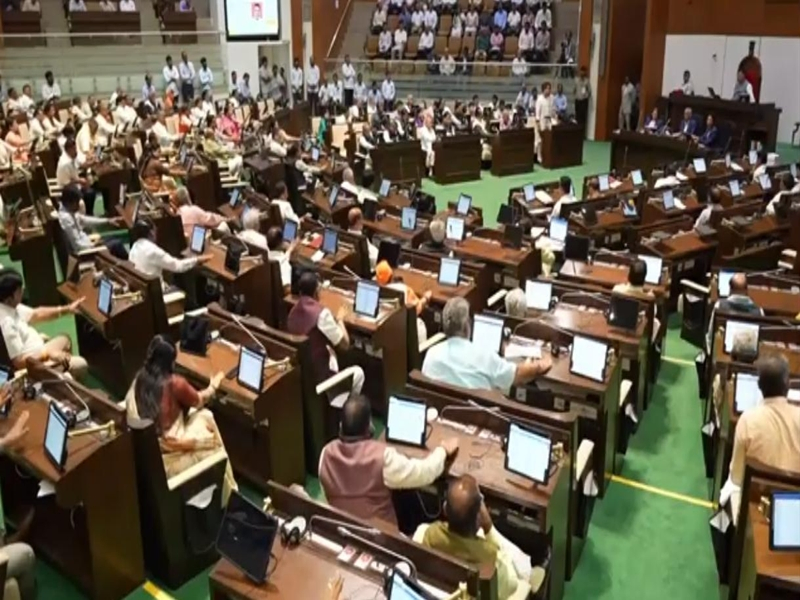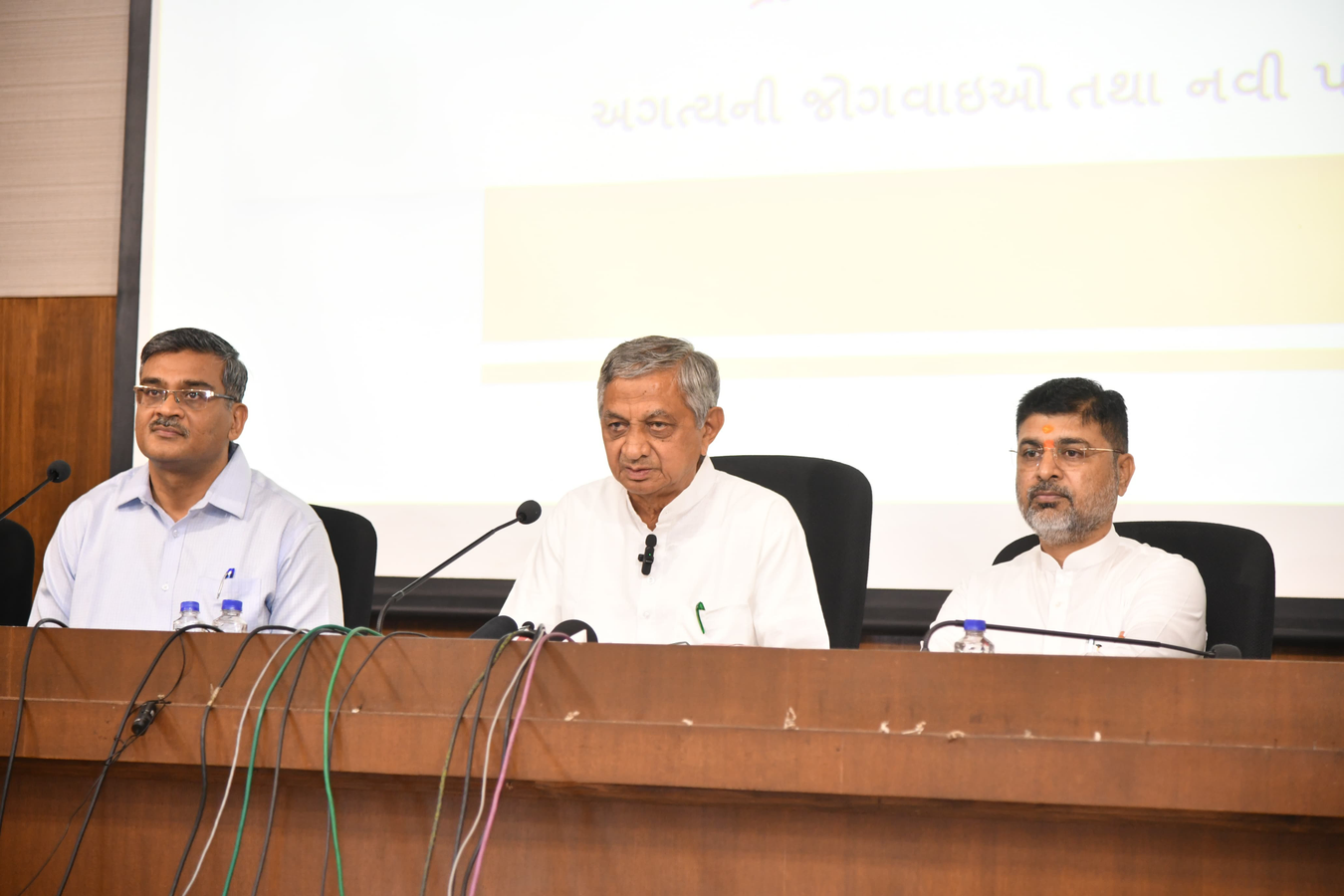
Gandhinagar, March 14 – The Gujarat government has announced its spending priorities for the 2026-27 fiscal year, with a focus on rural housing, sanitation, rural employment, skill development, and labor welfare. This follows the passage of the state budget, and ministers have detailed the allocations and program expansions.
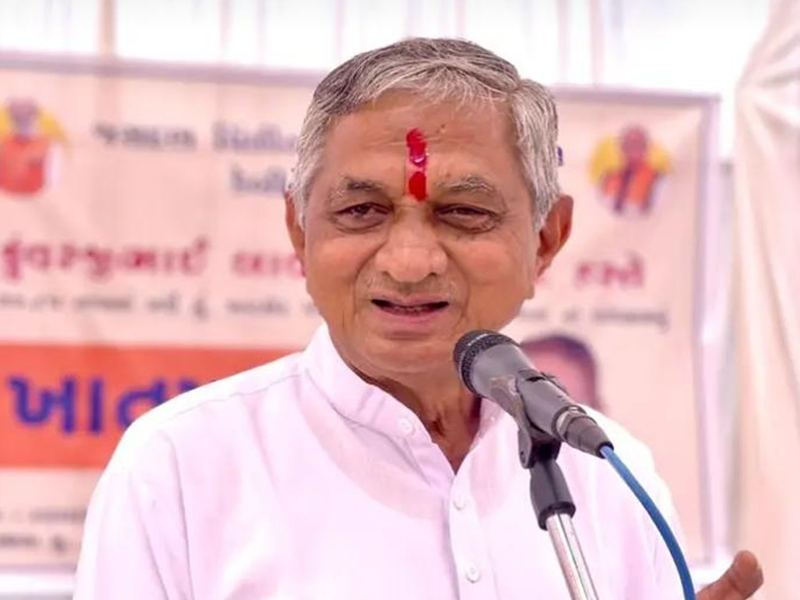
Minister of Rural Development, Kunvarji Bavaliya, stated that the Rural Development Department has been allocated ₹5,479 crore for 2026-27.
This represents an increase of ₹779 crore compared to the previous year's allocation of ₹4,700 crore.
Bavaliya said that this increase indicates the government's commitment to strengthening rural infrastructure and livelihoods.
A significant portion of the funds will be allocated under the Pradhan Mantri Awas Yojana (Gramin), with ₹1,755 crore being provided. This will assist approximately 18,000 beneficiaries who have reached the roof-casting stage of their house construction, with an additional ₹50,000 each being provided. This translates to a total allocation of ₹90 crore.
Beneficiaries will receive ₹2,72,820 (for tribal beneficiaries) and ₹2,32,920 (for non-tribal beneficiaries).
The government has also allocated ₹737.91 crore for the Swachh Bharat Mission (Gramin) during 2026-27.
This includes a new provision of ₹50 crore for a liquid waste management system to treat wastewater in rural areas, as part of sanitation and wastewater management initiatives.
Plans include the implementation of end-drain treatment works in 400 villages across the state.
Furthermore, ₹1,500 crore has been earmarked under the 'VB G-RAM-G' scheme for rural employment.
Bavaliya stated that the government plans to extend the guarantee for manual wage employment from 100 days to 125 days.
He also mentioned that provisions are in place to pay unemployment allowances if employment is not provided within the stipulated time.
The minister also highlighted provisions aimed at strengthening women's livelihoods.
A total of ₹48 crore has been allocated under the 'Lakhpati Didi' Empowerment Scheme for 2026-27. This will support approximately 10,000 experienced "Lakhpati Didis" each year, providing assistance for production, packaging, and value addition to their enterprises.
The government plans to establish Gram Haat marketplaces, with a ₹20 crore allocation, to provide a permanent sales platform for products made by women's self-help groups. These marketplaces will be established on government land in municipal corporations, municipalities, and tourist locations.
An additional ₹25 crore has been allocated to support the production, marketing, and online sales of "Sakhi Mandal" products through e-commerce platforms.
Bavaliya also outlined the plans of the Labour, Skill Development, and Employment Department for the same financial year, stating that ₹2,902 crore has been allocated for programs aimed at strengthening youth employability and labor welfare.
He stated that this budget will play a crucial role in realizing the Prime Minister's vision of Viksit Bharat @ 2047 and Atmanirbhar Bharat through Viksit Gujarat.
Among the new initiatives, ₹226 crore has been allocated for the Namo Gujarat Skill and Employment Mission to improve employability among young people.
Under the PM Setu scheme, Industrial Training Institutes will be upgraded through a hub-and-spoke model at a cost of ₹200 crore.
An allocation of ₹40 crore has also been made under the Namo Kaushalya Laxmi scheme to encourage female students studying in Industrial Training Institutes.
Assistance of ₹15,000 will be provided for one-year courses and ₹24,000 for two-year courses. Several labour welfare programmes are also set to expand.
The Shramik Annapurna scheme has been allocated ₹200 crore and will see the addition of 300 new Annapurna booths where workers can obtain meals for ₹5.
Under the Shramik Basera scheme, ₹150 crore has been allocated to provide accommodation facilities for construction workers at affordable rates, while ₹160 crore has been earmarked to add 50 new Dhanvantari health vans to provide healthcare services to labourers.
Construction workers are eligible for accident insurance assistance of ₹3.5 lakh in cases of death or permanent disability.
The Agariya housing scheme has been allocated ₹25 crore to provide houses equipped with solar panels and basic facilities for salt pan workers.
Bavaliya said assistance of ₹3 lakh would be provided at the time of diagnosis to individuals suffering from silicosis, while ₹4 lakh would be provided to families in the event of death caused by the disease.
Highlighting departmental performance, he said Gujarat currently has 559 Industrial Training Institutes (ITI) with a combined training capacity of 2,18,516 seats, including 11,448 seats for women, while 15 dedicated ITIs are functioning for persons with disabilities.
Up to February in the current financial year, employment opportunities were provided to 2,60,878 candidates through 1,215 job fairs organised across the state, he said.
According to Bavaliya, a 2023–24 survey places India’s unemployment rate at 3.2 per cent, compared with 1.1 per cent in Gujarat.
He also said six drone pilot training centres approved by the DGCA have been sanctioned in the state.
Through Kaushalya – The Skill University, more than 600 drone pilots and over 1,200 trainees have been trained in drone manufacturing.
Under the Chief Minister Skill Development Initiative, 4,27,861 trainees were trained during 2025–26.
The number of registered factories in the state increased from 50,017 in March 2025 to 51,033 by February 2026, reflecting an addition of 1,016 factories in one year.
During 2025, officials inspected and certified 8,447 boilers and 339 economisers across the state, while 579 new boilers and 10 economisers were registered.
No accidents were reported in certified boilers during the year.
The government has also set a target of strengthening the state’s skill ecosystem and plans to train more than 60,000 people over the next four to five years.